 English
 عربى
عربى Español
 中文简体
中文简体
+86-0572-5888031

0
ENG
Office Chair for Sciatica: Applications, Selection Criteria, and Practical Guidance
 Home / Media / Industry News / Office Chair for Sciatica: Applications, Selection Criteria, and Practical Guidance
 Office Chair for Sciatica: Applications, Selection Criteria, and Practical Guidance
 2026.09.23
 Industry News
Content
Stand up after a long stretch of focused desk work and feel a hot, electric line running from your lower back, through the buttock, and down the back of one leg. That is how sciatica usually announces itself in an office. The short answer on chairs: no seat will cure sciatica on its own, but the right one removes the three physical triggers that make desk work worse — constant pressure behind the thighs, a flattened lumbar curve, and a locked 90-degree hip angle. In practice, that means the chair you want is not the one with the thickest cushion or the highest price tag. It is the one with genuine seat depth adjustment, a backrest that reclines and locks, and lumbar support that actually moves to where your spine curves.
Why Sitting Makes Sciatica Worse
The sciatic nerve is the largest nerve in the human body. It exits the spine between the L4 and S3 vertebrae, threads through the pelvis, passes under or through the piriformis muscle, and travels behind the thigh all the way to the foot. Everything a bad chair does wrong lands on this pathway.
Classic spinal load studies found that sitting raises pressure inside the lower lumbar discs by roughly 40 percent compared with standing, and slumping pushes that figure higher still. A rolled pelvis flattens the natural lumbar curve, which shifts load toward the rear of the disc — the same area where the nerve roots exit. At the same time, hips held above 90 degrees of flexion for hours tighten the piriformis and hamstring tissue that sits directly over the nerve.
The third trigger gets the least attention: stillness. Spinal discs receive nutrition through movement, so even a technically correct posture becomes a problem when it is held for two hours without a break. A good chair for sciatic trouble works with this reality, letting you change angles often instead of freezing you in one.
The Chair Features That Reduce Sciatic Pressure
Seat depth and edge shape
Depth is the most overlooked adjustment and, for nerve pain, arguably the most important. A seat that is too deep presses into the back of the thighs, right where the branches of the sciatic nerve run. Look for a seat slider or a waterfall front edge that curves downward, and set it so two or three fingers fit between the seat edge and the back of your knee.
Recline and synchro-tilt mechanisms
Upright 90-degree sitting is not the healthy default people assume. Load measurements consistently favor an open hip angle of roughly 100 to 130 degrees, which lowers disc pressure and lets the lumbar curve keep its shape. A synchro-tilt mechanism matters here because it moves the seat and backrest at a fixed ratio as you lean, keeping your feet planted instead of letting them drift forward. Lock the backrest between 105 and 120 degrees for calls and reading, and rock gently while you work.
Chairs built around a true synchro-tilt mechanism make this angle easy to hold through a full workday:
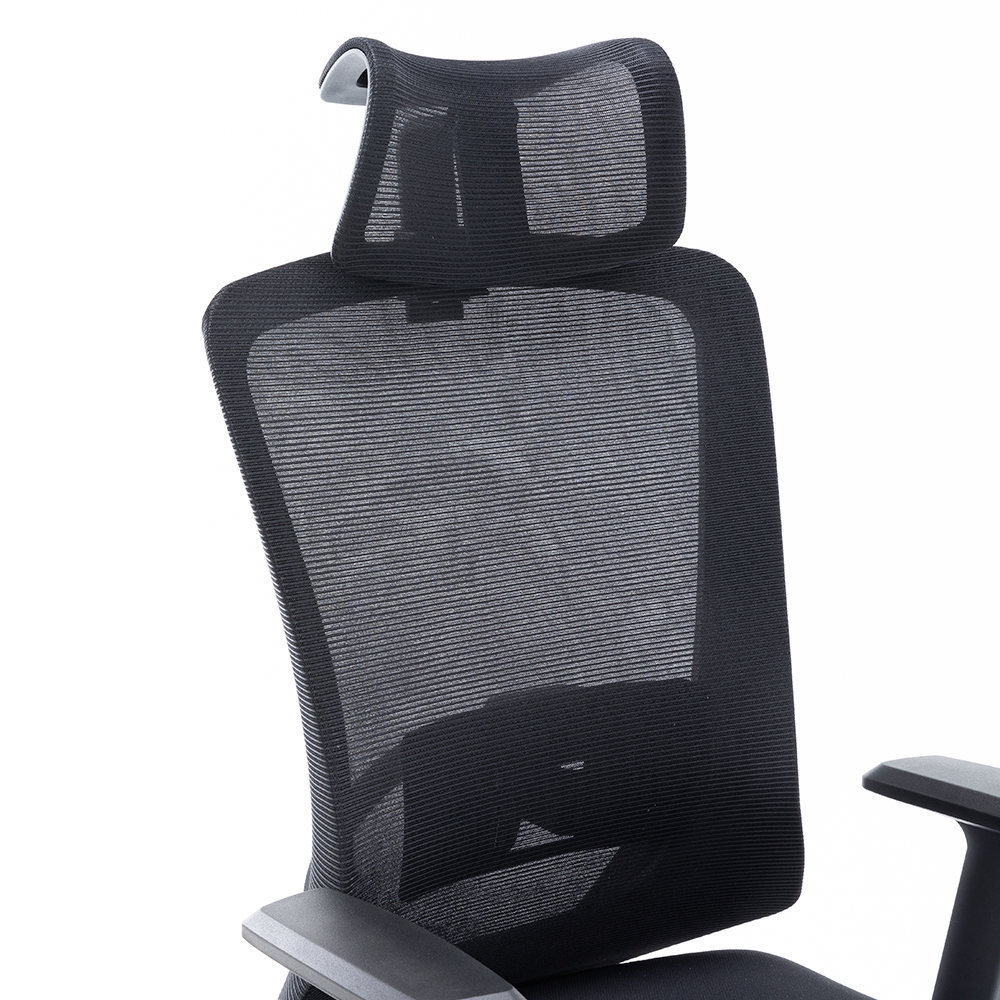 ZY-6009 Mesh Office Chair with Synchronic Tilt MechanismWith a synchronic pallet mechanism letting seat and backrest recline together, this mesh chair helps you hold a healthy reclined angle through long workdays while its adjustable height and tilt tension suit different body types.View Product →
Adjustable lumbar support
A fixed foam bump in the wrong spot does nothing. The support needs to sit at your belt line, filling the gap between the backrest and the inward curve of the lower back, and it needs both height and depth adjustment to match different body sizes. One of our mesh models pairs an adjustable foam lumbar pad with a ventilated backrest for exactly this reason:
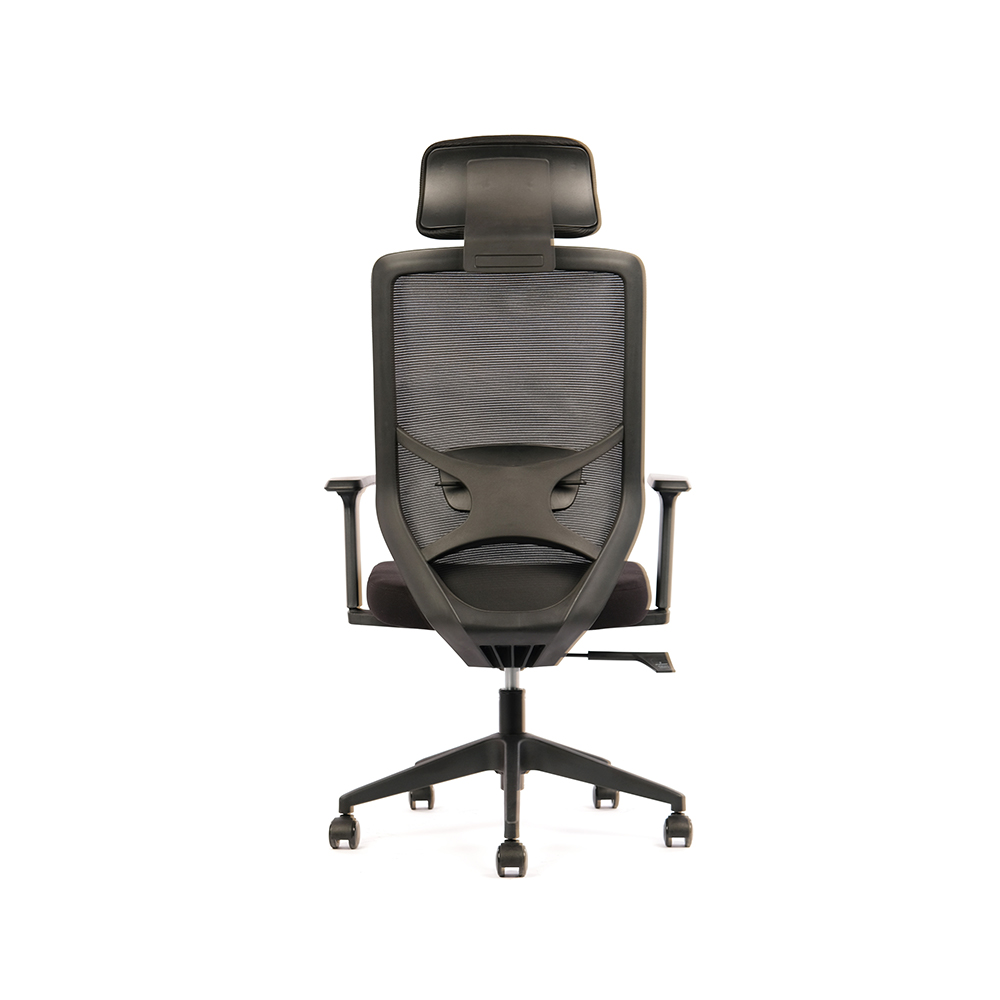 ZY-6034 Mesh Office Chair with Adjustable Foam Lumbar SupportThis mesh chair pairs a height-adjustable foam lumbar pad with a ventilated backrest, placing support at your belt line to fill the lower-back gap and keep you cool during extended sitting.View Product →
Seat height and armrests
Set the height so your feet rest flat and your knees sit level with, or slightly below, your hips. Armrests set at elbow height take a measurable share of upper-body load off the spine every time you pause to think, which adds up across an eight-hour day.
Rule of thumb: if a chair cannot change seat depth, recline angle, and lumbar position, it cannot adapt to a sciatic nerve — no matter how good the foam feels in the showroom.
| Adjustment | Why it helps | What to check before buying |
|---|---|---|
| Seat depth | Keeps pressure off the nerve branches behind the thighs | Seat slider or waterfall edge; two-finger clearance behind the knee |
| Synchro-tilt recline | Opens the hip angle to lower lumbar disc load | Locks at multiple angles with smooth tension control |
| Lumbar support | Maintains the curve where nerve roots exit the spine | Adjusts in height and depth, not a fixed bump |
| Seat height | Keeps knees level with or below the hips | A range around 450–505 mm covers most adult users |
| 2D/3D armrests | Removes upper-body load during pauses | Elbows rest at about 90 degrees without shrugging |
How to Set Up an Office Chair for Sciatica Relief
A sciatica-friendly setup: reclined and open hip angle, clearance behind the knees, lumbar pad at the belt line, feet supported.
- Raise or lower the seat until your feet are flat on the floor and your knees bend at roughly 90 to 100 degrees.
- Slide the seat until a two-to-three-finger gap remains behind your knees.
- Recline the backrest to about 110 degrees and position the lumbar pad at your belt line.
- Set the armrests so your elbows rest at 90 degrees and your shoulders drop.
- Shift position, recline, or stand briefly every 30 to 45 minutes — movement is part of the answer, not a distraction from it.
It helps to follow a complete buying guide for chairs and back pain when dialing in these numbers, because the order in which you make the adjustments changes the final result.
Mesh Back or Cushioned Seat for Nerve Pain?
Material affects sciatica more indirectly, through heat and pressure distribution. Full mesh backrests breathe and hold consistent tension, which helps you stay reclined without overheating. All-mesh seats, however, can concentrate pressure on the sit bones and the back of the thighs — the exact spots that nerve pain sufferers want to protect. The combination many people end up preferring is a tensioned mesh backrest paired with a contoured foam seat and a waterfall front edge: the foam cushions the bony points while the back stays cool. For hot climates or non-air-conditioned offices, this pairing is usually the safer default, and a model like the one below shows how the two work together:
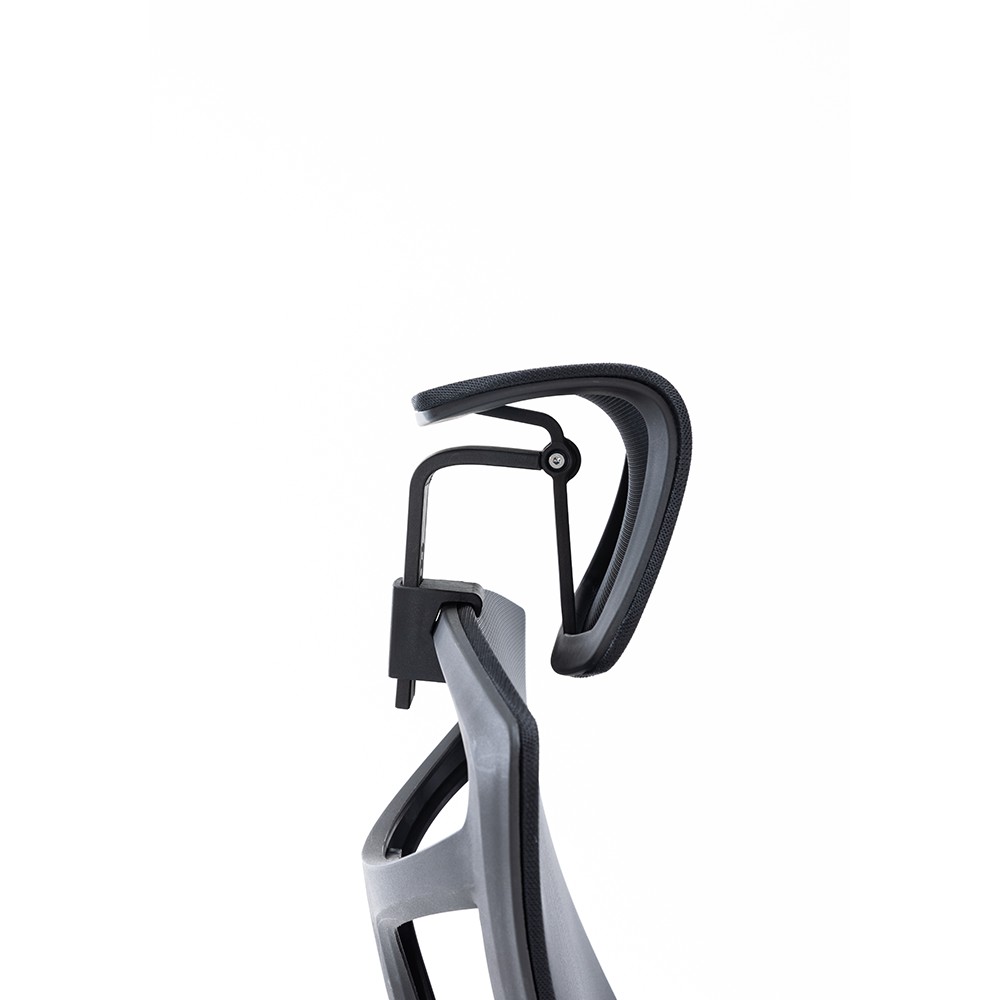 ZY-6003 Mesh Back Office Chair with Original Foam SeatCombining a breathable mesh backrest with a contoured original foam seat, this chair cushions the sit bones while keeping the back cool, a balanced pairing for heat, pressure relief, and long-hour comfort.View Product →
A Buying Checklist for Offices and Wholesale Teams
For office managers and wholesale buyers, sciatica complaints rarely arrive as complaints — they show up quietly as absenteeism and short-focus work sessions. When specifying chairs for a mixed-height team, the same feature list scales up, but a few manufacturing details deserve extra attention:
- Adjustable rather than decorative lumbar support across the full height range, since one fixed pad cannot serve both a 155 cm and a 190 cm user
- Synchro-tilt mechanisms tested to recognized methods such as BIFMA or EN 1335 cycles
- Class III or Class IV gas springs and reinforced nylon or metal star bases for long-term safety
- A supplier with an in-house QC team and test room, so quality holds across a 500-unit order and not just the approval sample
Manufacturers with vertically integrated production — their own injection molding, sewing, welding and assembly lines — can usually adapt seat depth, lumbar pad shape and upholstery at reasonable cost, which matters when you are equipping real people rather than a showroom. Newer models such as the ZY6812 ergonomic office chair were developed around precisely this brief: multi-point adjustability at a contract-friendly price.
One honest caveat: a chair manages only the mechanical side of sciatica, and persistent symptoms — numbness, leg weakness, or pain running below the knee — deserve a clinician's assessment alongside any equipment change. But the equation for most desk workers is straightforward. Reduce the pressure behind the thighs, keep the lumbar curve supported, open the hip angle, and move often. A chair that delivers those four things turns an eight-hour day from a source of irritation into something your back can tolerate — and on the good days, barely notice.
QUICK LINKS
PRODUCTS
CONTACT & INFORMATION
-
 PHONE NUMBER
 -
 EMAIL
EMAILstellazhang@yimiga.com
-
 ADDRESS
No 366, Jingtu Road, Dipu Street, Anji County, Huzhou City, Zhejiang province, China. PC 313300.
CONNECT WITH US
Be the first to know about our news and updates.


Copyright © Zhejiang Zhongyi Furniture Co., Ltd.
All Rights Reserved.
 浙公网安备33052302000377号
浙ICP备14003933号-2
浙公网安备33052302000377号
浙ICP备14003933号-2
 Wholesale Ergonomic Chair Manufacturers