 English
 عربى
عربى Español
 中文简体
中文简体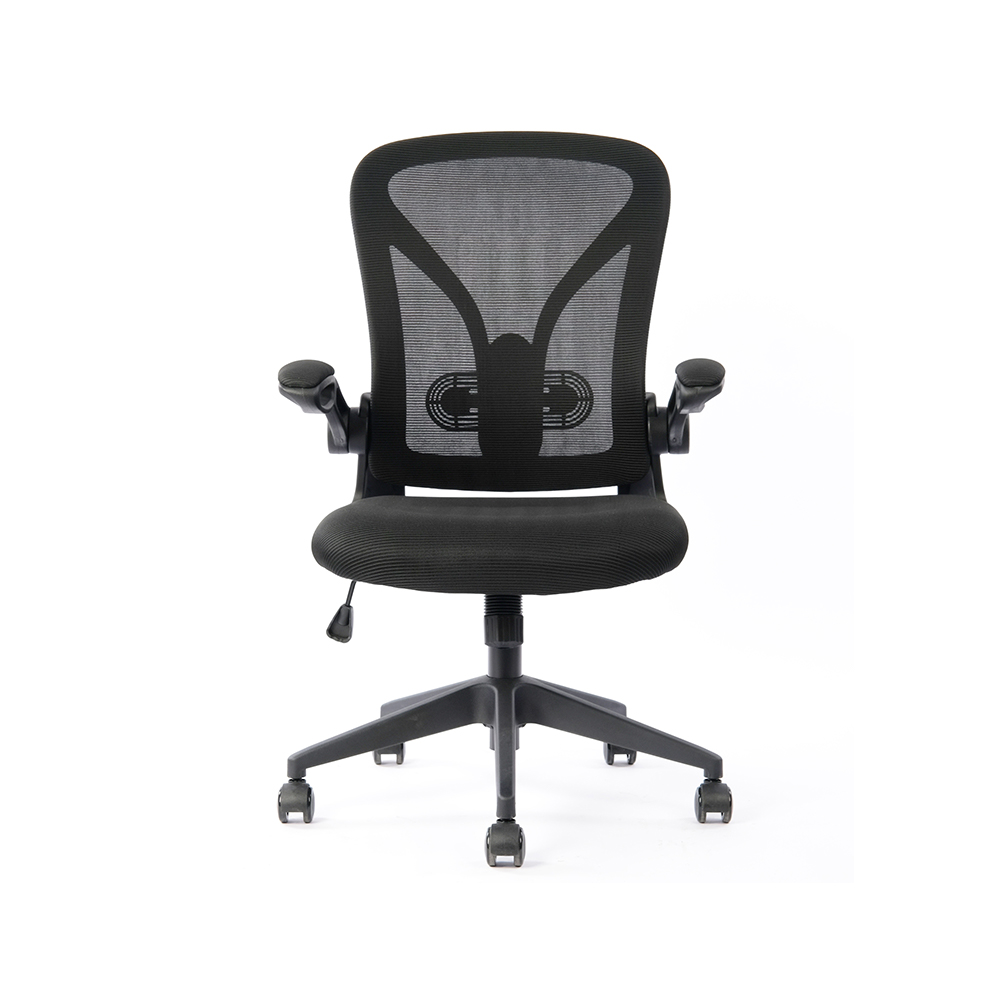
+86-0572-5888031

0
ENG
How to Make a Chair More Comfortable: Adjustment, Support, and Setup Fixes
 Home / Media / Industry News / How to Make a Chair More Comfortable: Adjustment, Support, and Setup Fixes
 How to Make a Chair More Comfortable: Adjustment, Support, and Setup Fixes
 2026.09.18
 Industry News
Content
- 1 Why a Chair Starts to Feel Uncomfortable
- 2 Fix the Four Contact Points in Order
- 3 The Adjustment Numbers That Actually Matter
- 4 Lumbar Support: Position Matters More Than Thickness
- 5 Cushions, Padding, and When They Help
- 6 Recline, Armrests, and Footrests
- 7 Maintenance Fixes for a Chair That Used to Feel Fine
- 8 Different Chairs, Different Comfort Rules
- 9 Repair or Replace: A Simple Decision Rule
Most chair discomfort is a fit problem, not a padding problem. Set the seat height, seat depth, lumbar contact point, and arm support in that order, and you will usually solve the majority of what makes a chair hurt by mid-afternoon.
By 3 p.m. the front edge of your seat is pressing into the back of your thighs, your lower back has gone numb, and you keep shifting your weight every few minutes. Nothing on the chair looks broken, and in most cases nothing is broken. The chair is simply set up for a different body than yours.
We manufacture office chairs, dining chairs, leisure chairs, and bar stools in Anji, Zhejiang, and the same question comes up in every sample review: why does a chair that feels perfect to a 178 cm visitor feel wrong to a 160 cm one? The answer is almost always geometry. A chair has four places where your body meets it, and each one has a target range. Get all four inside range, and the chair stops being something you notice.
Why a Chair Starts to Feel Uncomfortable
Three things go wrong, and only one of them is about softness.
One height cannot fit everyone. Popliteal height, the distance from the floor to the underside of your thigh, ranges from roughly 380 mm to 520 mm across adults. A fixed-height dining chair works for the middle of that range and fails at both ends. An office chair with a 100 mm gas lift range covers far more people than one with a 60 mm range, which is why travel range is a more useful specification than the number of adjustment levers.
Pressure concentrates. When you sit, the seat pan carries roughly three-quarters of your body weight, and most of it lands on a small area of the pelvis. That load is fine for twenty minutes and tiring for three hours unless the foam or mesh spreads it across the whole seat pan.
Components age quietly. In our own testing room, low-density foam seats lose visible height within 12 to 18 months of daily use, and mesh that was once taut becomes soft. A chair that felt fine two years ago can be out of adjustment today without any single part failing. If you are still at the buying stage, our guide to choosing an adjustable office chair covers the travel ranges worth checking before you commit.
Fix the Four Contact Points in Order
Order matters, because changing the seat height changes everything above it. Work top-down and you will adjust the same chair three times.
- Feet and floor. Feet flat, knees at 90 to 100 degrees, hips level with or slightly higher than the knees. If the hips drop below the knees, pressure shifts onto the tailbone.
- Seat pan. Leave two or three finger widths, about 50 to 75 mm, between the back of your knee and the front edge of the seat. A pan that is too deep forces you to slide forward and lose back contact.
- Backrest and lumbar. Your shoulder blades and lower back should touch the backrest at the same time, with the deepest support at the belt line rather than the mid-back.
- Armrests. Elbows at roughly 90 degrees, forearms resting, shoulders dropped. If your shoulders lift to reach the armrests, the armrests are too high.
The Adjustment Numbers That Actually Matter
These are the ranges we use when checking a sample chair against different body sizes. They are wide enough to be practical and narrow enough to be useful.
| Adjustment | Target | How to check | Common mistake |
|---|---|---|---|
| Seat height | Knees 90 to 100 degrees, hips level or 10 to 20 mm higher | Sit back, then slide a flat hand under your thigh | Setting it high so feet rest on tiptoe |
| Seat depth | 50 to 75 mm gap behind the knee | Two or three fingers between calf and seat edge | Perching on the front third of the seat |
| Backrest angle | 100 to 110 degrees for desk work, 120 to 135 degrees for lounging | Shoulders stay in contact without leaning forward | Locking the backrest at a hard 90 degrees |
| Armrest height | Elbow height with relaxed shoulders | Arms rest without lifting the shoulders | Armrests that push the shoulders upward |
| Cushion height | 25 to 40 mm of foam that recovers after sitting | Press with the palm and watch it spring back | Stacking two cushions and raising seat height |
Lumbar Support: Position Matters More Than Thickness
The lower back curves inward by roughly 20 to 30 mm at the belt line. Lumbar support exists to fill that curve, not to push you forward. A thick pillow placed too low levers the pelvis forward, which is why some people feel worse after adding one. A thin support placed correctly, at the height of the iliac crest, does more.
Fixed-height lumbar pads are the usual culprit. On a chair where the pad cannot move, users under about 165 cm tend to meet it in the mid-back and users above 185 cm meet it near the pelvis. A height-adjustable lumbar pad plus a backrest that also moves vertically solves both cases in one mechanism, which is why we build both adjustments into most of our mesh models.
If you would rather start from a chair that already includes a height-adjustable lumbar pad and a 520 mm wide seat pan instead of retrofitting one, that is a faster route to comfort than any accessory.
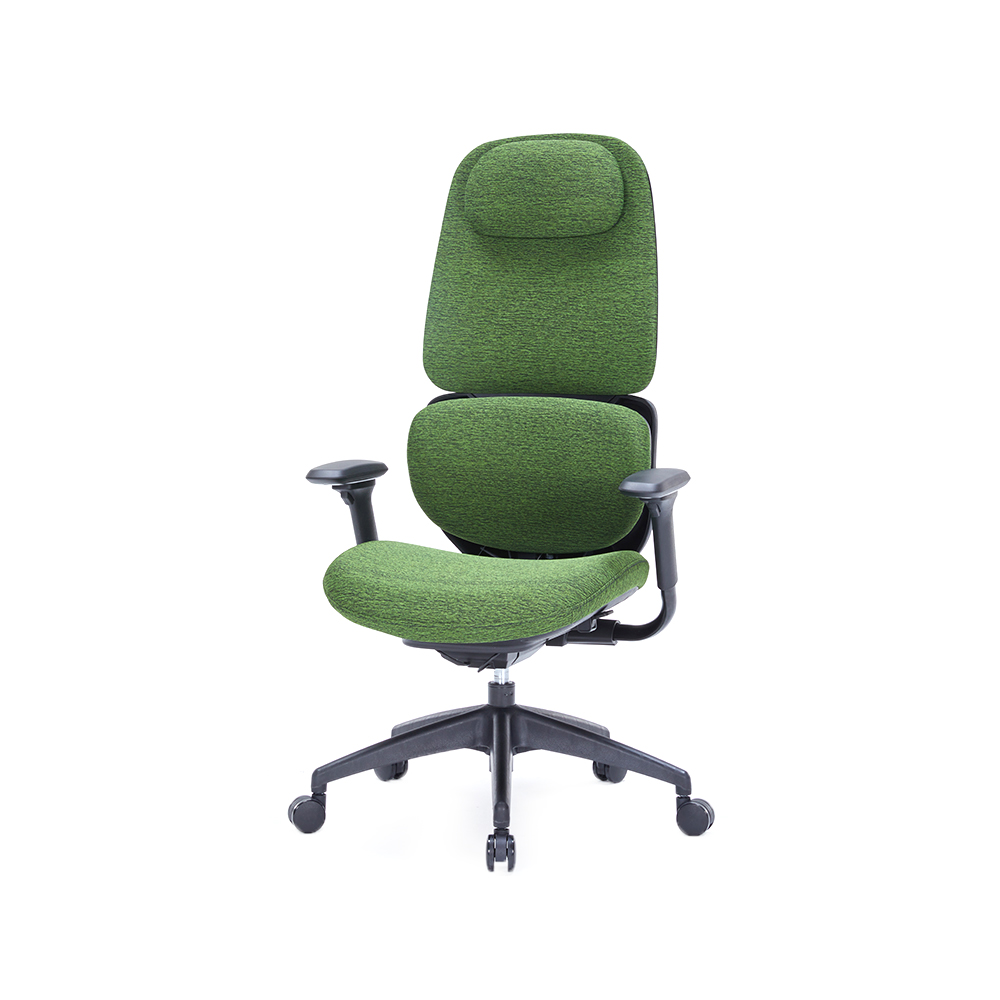 ZY-6813 520mm Seat width black Mesh Office ChairProduct SpecificationView Product →
Cushions, Padding, and When They Help
Cushions fix two problems and create a third. They help when the seat pan is too hard or the foam has already compressed. They cause trouble when they are too thick: every 10 mm of extra cushion height lifts your seat, and above about 50 mm the front edge starts pressing behind the knee and reducing circulation.
After adding any cushion, recheck the seat height and depth numbers in the table above. In practice, a 25 to 40 mm memory foam layer with a density in the 25 to 35 kg/m³ range holds its shape for years, while a cheap low-density pad flattens within a season and changes the fit again.
Material choice matters just as much for an eight-hour day. Mesh moves air and stays cooler, while upholstered options feel softer at first and warmer in summer. Textile changes the experience more than a few millimetres of foam: a corduroy fabric office chair with a plywood seat frame gives a softer, more settled feel than an all-mesh back, and it wears differently too.
Recline, Armrests, and Footrests
Recline is the cheapest comfort upgrade on any chair. Set the tension so you can push the backrest with light effort, then use the tilt lock to hold the angle you want. A reclined backrest shifts load from the lumbar spine to the backrest itself, and 10 degrees of recline often does more than an extra cushion.
Armrests should support the forearm along its length, not just the elbow. A 2D arm with a soft PU pad lets you match both height and width to your shoulders; a fixed arm usually sits at one height that suits a narrow band of users.
Shorter users often need a footrest rather than a lower chair, because lowering the seat below the knees increases hip pressure. A footrest keeps the thighs supported while the seat stays at the correct height. The same logic applies to gas lift travel: a 60 mm stroke in a Class IV cylinder covers fewer body sizes than a 100 mm stroke, even though both are considered reliable components.
Where several of these features matter at once, a chair with a back-height-adjustable backrest, 2D arms with soft PU pads, and a 60 mm Class IV gas lift is a practical baseline for mixed-height teams.
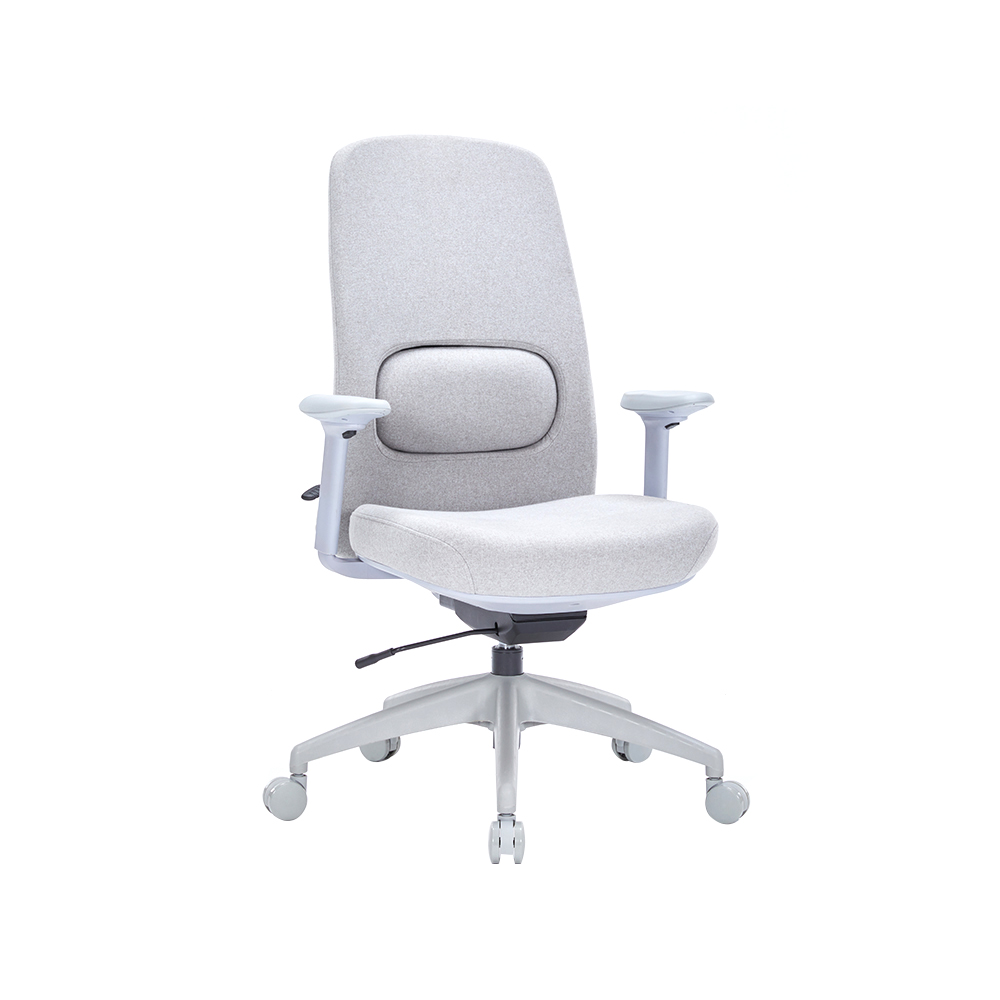 Zy-6815 350 Nylon Star Base Swivel Mesh Office ChairProduct SpecificationView Product →
Maintenance Fixes for a Chair That Used to Feel Fine
Before you buy anything, spend fifteen minutes on the chair you already own. These are the checks that recover the most comfort.
- Tighten the five star base bolts and the arm brackets every six months. Small gaps turn into wobble and wobble changes your seating angle.
- Clean hair and grit out of the castors. On hard floors, swap hard nylon castors for soft PU ones to cut noise and the small jolts that break concentration.
- Replace a sinking gas lift rather than repairing it. Those cylinders are sealed units, and a quality Class III or Class IV replacement is inexpensive.
- Check foam height by pressing the seat with your palm. If the cushion no longer springs back, an added 25 mm pad will restore most of the original feel.
- Treat squeaks with dry silicone or PTFE spray, not oil. Oil attracts dust and ends up making the noise worse.
- Look at the seat pan screws and the back bracket. Loose hardware there changes the effective backrest angle by several degrees.
Different Chairs, Different Comfort Rules
Office seating gets most of the attention, but the same geometry applies everywhere, with different numbers.
Dining chairs typically sit at 450 mm with a table between 720 and 760 mm, which leaves 250 to 300 mm of clearance for your legs. A backrest that curves around 100 to 110 degrees supports a meal comfortably; deeper curves belong in lounges, not at a dinner table.
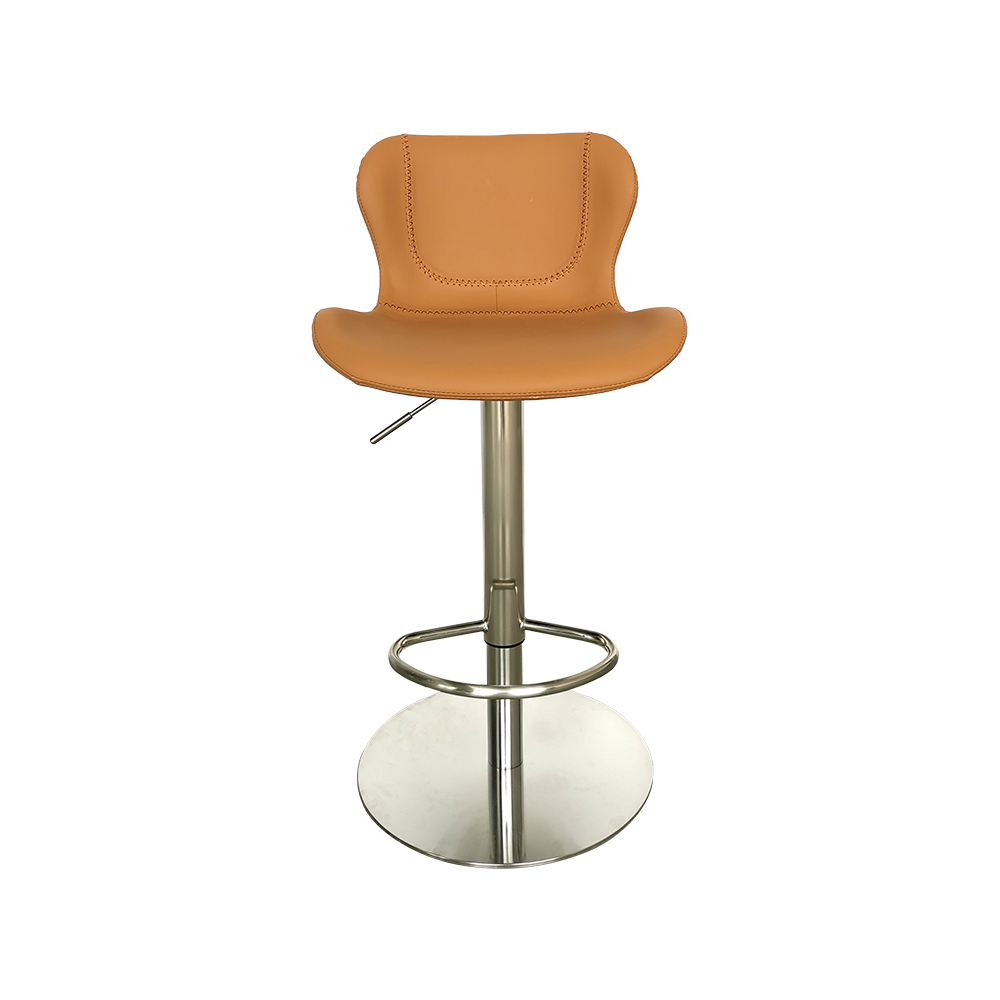
Bar stools need height matched to the counter, not to your preference: 650 mm for a 900 mm counter, 750 mm for a 1050 mm counter. The footrest ring is not decoration. On a 750 mm stool your feet hang roughly 350 mm above the floor, and without that ring the weight ends up on the thighs.
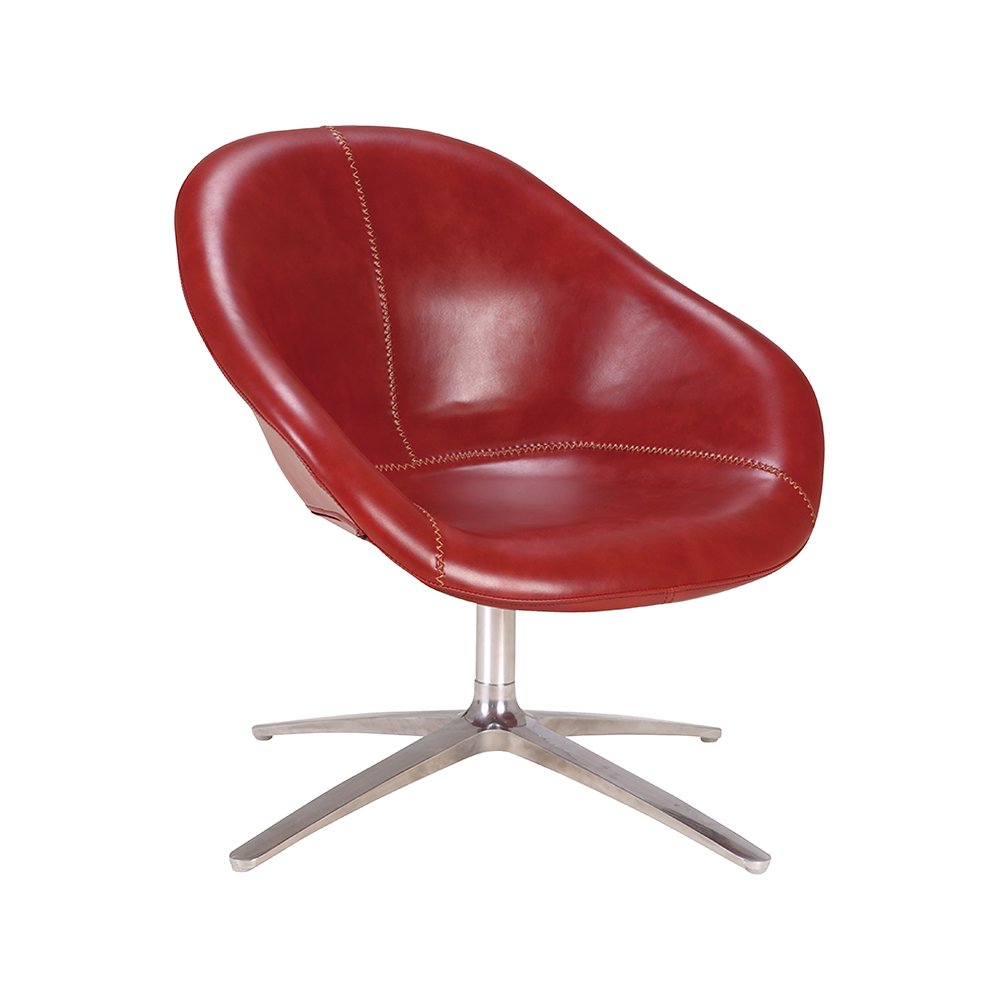
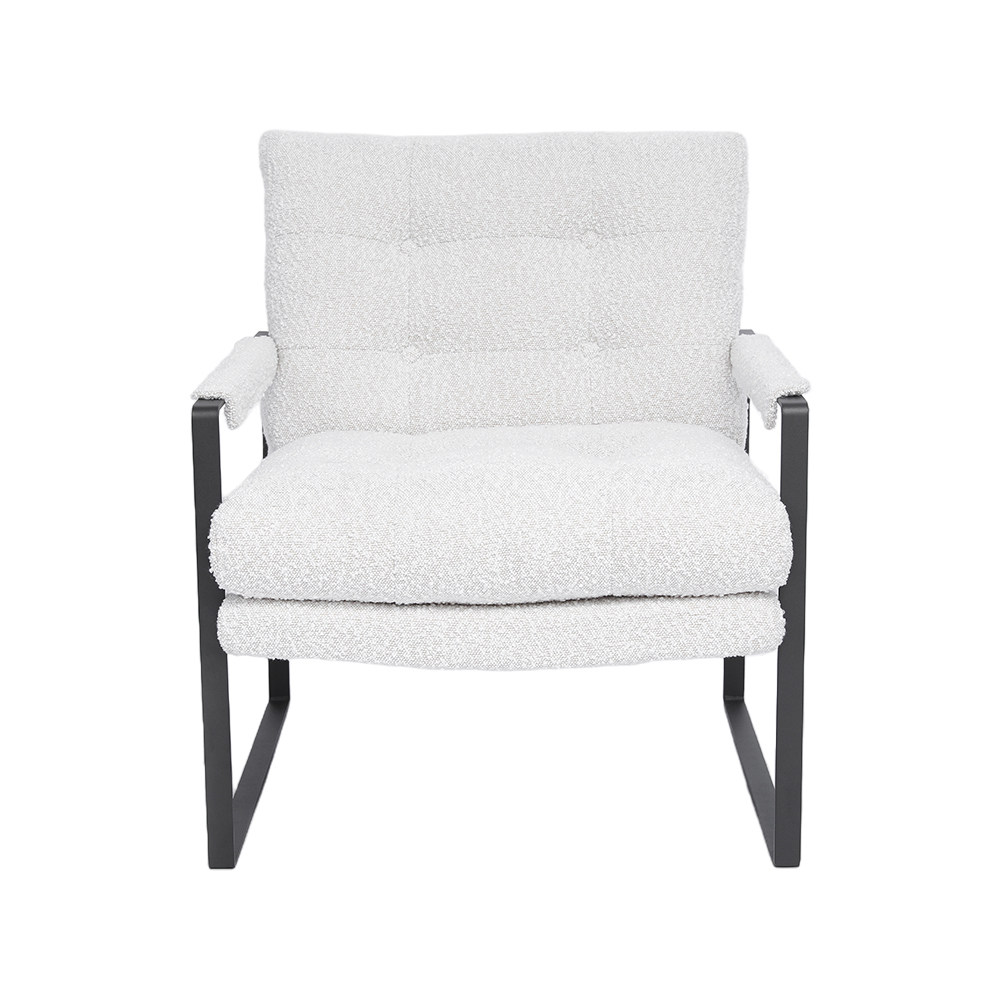
Leisure chairs trade adjustability for shape. A 400 to 430 mm seat height, a 200 to 250 mm armrest above the seat, and a back angle between 100 and 110 degrees cover most reading and resting positions, and a metal frame keeps that geometry stable for years rather than months.
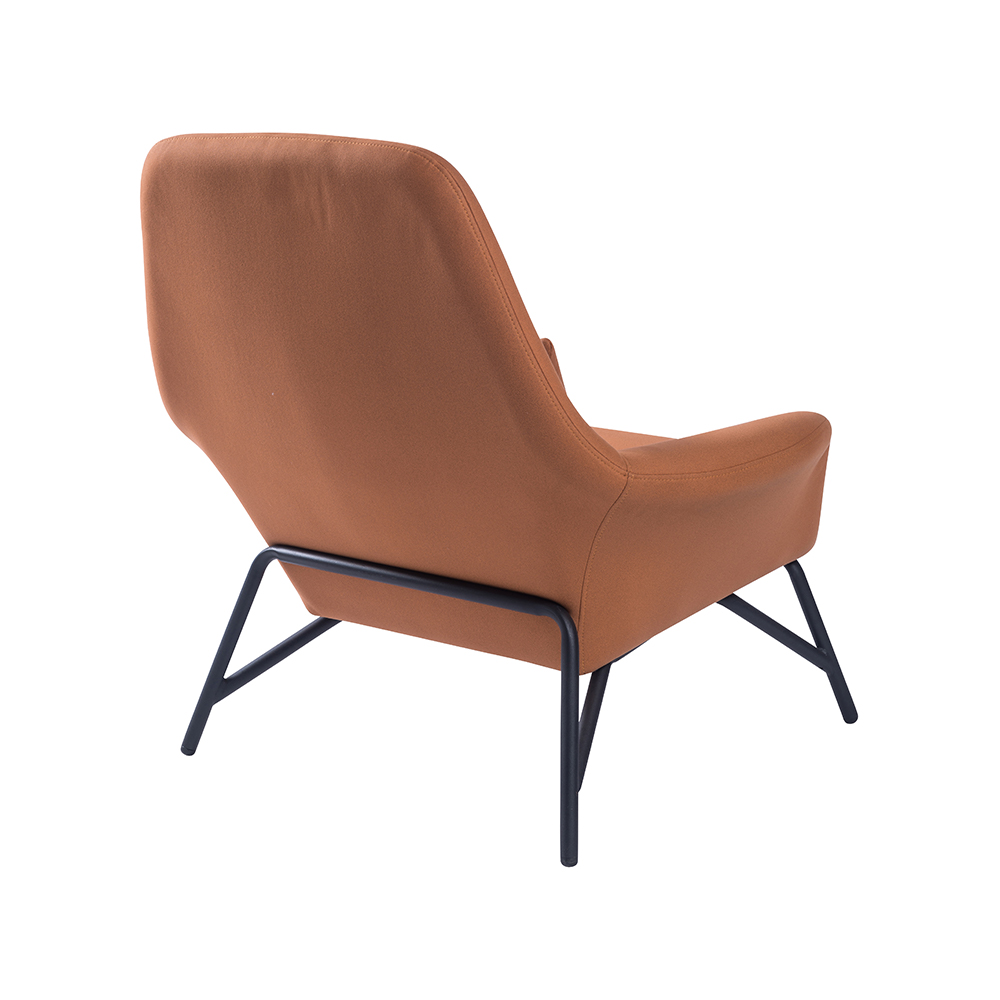 ZY-7081 Metal frame and plywood leisure chairProduct SpecificationView Product →
Repair or Replace: A Simple Decision Rule
Replace the chair when any one of these is true: the gas lift sinks under load, a welded or moulded base shows a crack, the foam has lost more than about 20 percent of its original thickness, or more than two adjustments have stopped working. Repair the chair when the problem is limited to castors, arm pads, lumbar pads, or loose fasteners, since those are user-replaceable parts.
A well-built office chair used daily lasts roughly five to seven years, or eight to ten with new castors and a replacement gas lift along the way. If a repair quotation passes about a third of the price of a comparable new chair, the money is generally better spent on a chair that matches your measurements from the start.
Comfort is a sequence, not a product feature. Measure your popliteal height once, write down the seat height it implies, and then check the travel range of any chair before you buy it. Adjust the four contact points before adding accessories, and add cushions only where the numbers say they help. That approach solves most discomfort without spending much, and it tells you quickly when a chair genuinely needs replacing.
From the manufacturing side, the chairs that hold their comfort longest are the ones built with enough adjustment travel, a lumbar pad that moves, and foam or mesh that still recovers after two years of daily use. Those three details matter more than any single feature on a specification sheet.
QUICK LINKS
PRODUCTS
CONTACT & INFORMATION
-
 PHONE NUMBER
 -
 EMAIL
EMAILstellazhang@yimiga.com
-
 ADDRESS
No 366, Jingtu Road, Dipu Street, Anji County, Huzhou City, Zhejiang province, China. PC 313300.
CONNECT WITH US
Be the first to know about our news and updates.


Copyright © Zhejiang Zhongyi Furniture Co., Ltd.
All Rights Reserved.
 浙公网安备33052302000377号
浙ICP备14003933号-2
浙公网安备33052302000377号
浙ICP备14003933号-2
 Wholesale Ergonomic Chair Manufacturers