 English
 عربى
 Español
 中文简体
+86-0572-5888031

0
ENG
Office Chair Category Guide: Types, Component Specs and B2B Sourcing Checks
 Home / Media / Industry News / Office Chair Category Guide: Types, Component Specs and B2B Sourcing Checks
Office Chair Category Guide: Types, Component Specs and B2B Sourcing Checks
 2026.11.25
 Industry News
Content
- 1 What an Office Chair Category Actually Describes
- 2 Four Categories That Drive Most B2B Volume
- 3 Materials Split Categories More Than Shapes Do
- 4 Component Specs That Separate Entry Level From Project Grade
- 5 Matching Categories to Rooms
- 6 A Sourcing Checklist Before Samples Are Approved
- 7 Frequently Asked Questions
A buyer comparing quotes for 800 workstations will often receive three lists that look unrelated: one supplier prices task chairs, another prices ergonomic mesh models, and a third prices executive seating. All three are describing the same product family from different angles, which is why the office chair category has to be fixed before a single unit price makes sense.
A category is not a marketing label. It is shorthand for what the chair does across a shift, how much adjustment it carries, and which component grade sits under the upholstery.
What an Office Chair Category Actually Describes
An office chair category is a grouping of seating models that share the same primary work function, the same adjustment architecture and the same component grade.
That definition matters at quotation stage. Two chairs can look identical in a catalogue photo and still land in different categories, because one runs a Class III gas spring with fixed arms while the other runs a Class IV spring, a synchronic mechanism and 2D arm pads. The first is volume task seating. The second is ergonomic seating, with a different price floor and a different warranty conversation.
- Work function: what the chair has to support, from eight hours of focused desk work to a twenty-minute meeting.
- Adjustment architecture: which parts move and how far, from height only to lumbar, back height, headrest and arm pads.
- Component grade: gas spring class, mechanism type, base material and seat construction, which together set the durability band.
Category is set by the mechanism and the test report, not by the silhouette.
| Category | Primary use | Typical adjustment | Component grade |
| Task chair | Open-plan workstation | Height and tilt | Class III spring, nylon base |
| Ergonomic mesh chair | All-day seated work | Height, tilt, lumbar, headrest, 2D arms | Class IV spring, heavy nylon or aluminium |
| Executive chair | Private office, reception | Height and tilt | Wider frame, dense foam, leather or PU |
| Conference and guest chair | Meeting rooms, waiting areas | Fixed or height only | Fixed base, flip or fixed arms |
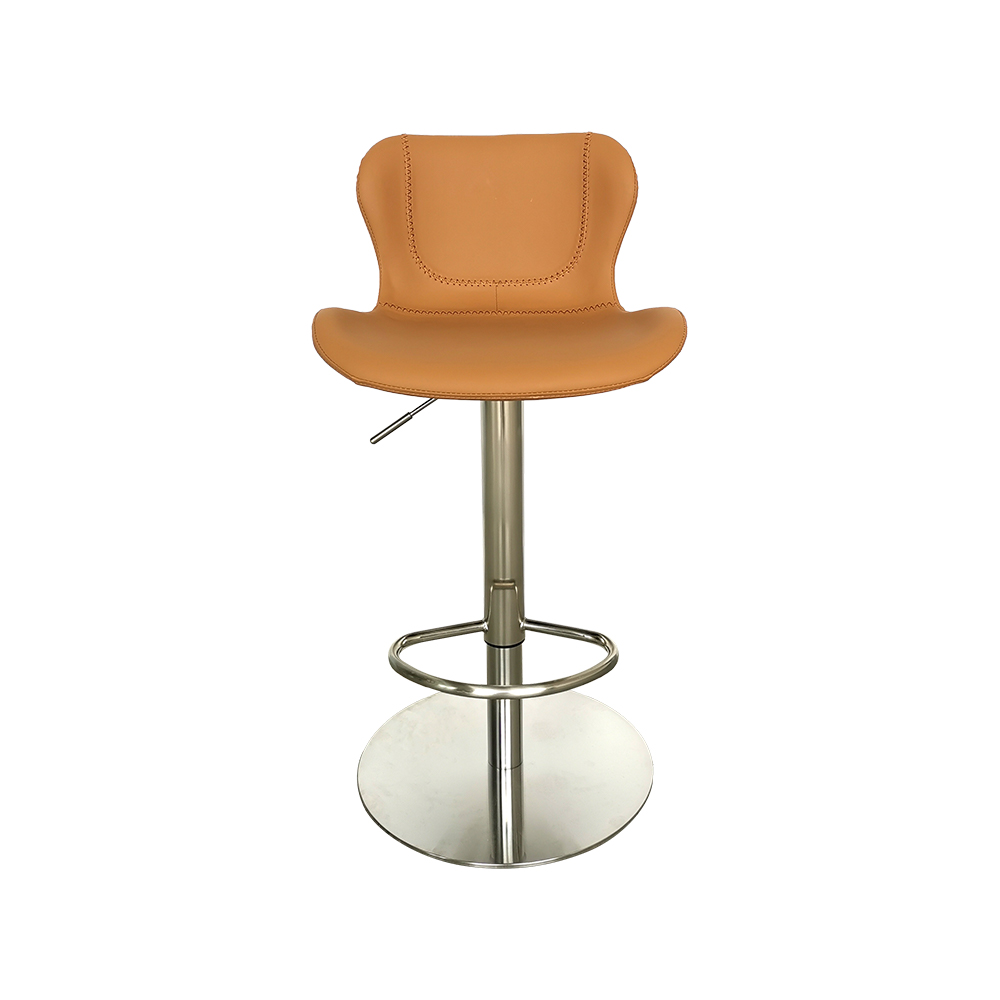
| Drafting chair | High desks, counters | Extended height with foot ring | Long-travel spring, reinforced base |
Four Categories That Drive Most B2B Volume
Task, ergonomic mesh, executive and conference seating account for most of the volume in B2B office seating orders.
Task chairs
Task seating is the default for open-plan workstations: swivel base, casters, height adjustment and tilt. The category is defined by consistency rather than by features. A 450 or 505mm seat height range, a Class III gas spring, a nylon star base and a simple tilt mechanism cover most specification sheets. Folded-back models with flip arms exist for one practical reason, which is that they pack tighter and stack lower inside a container.
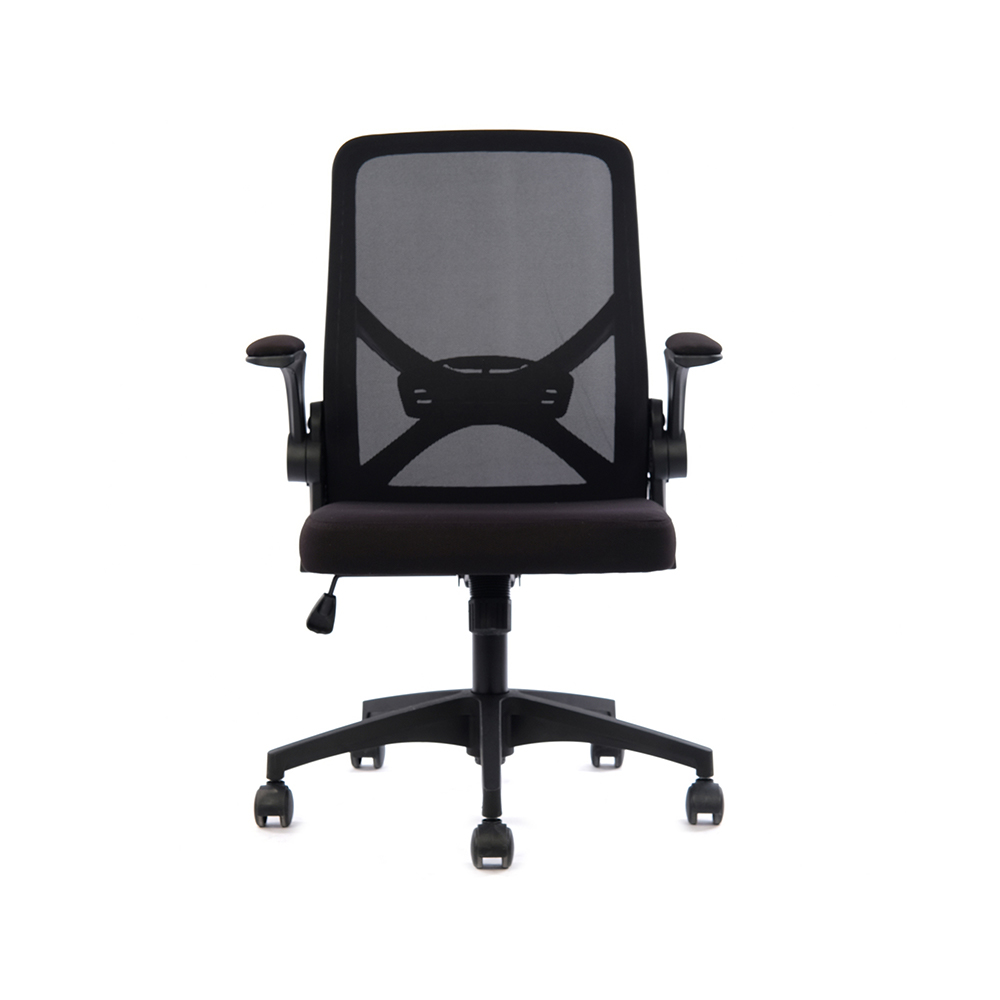
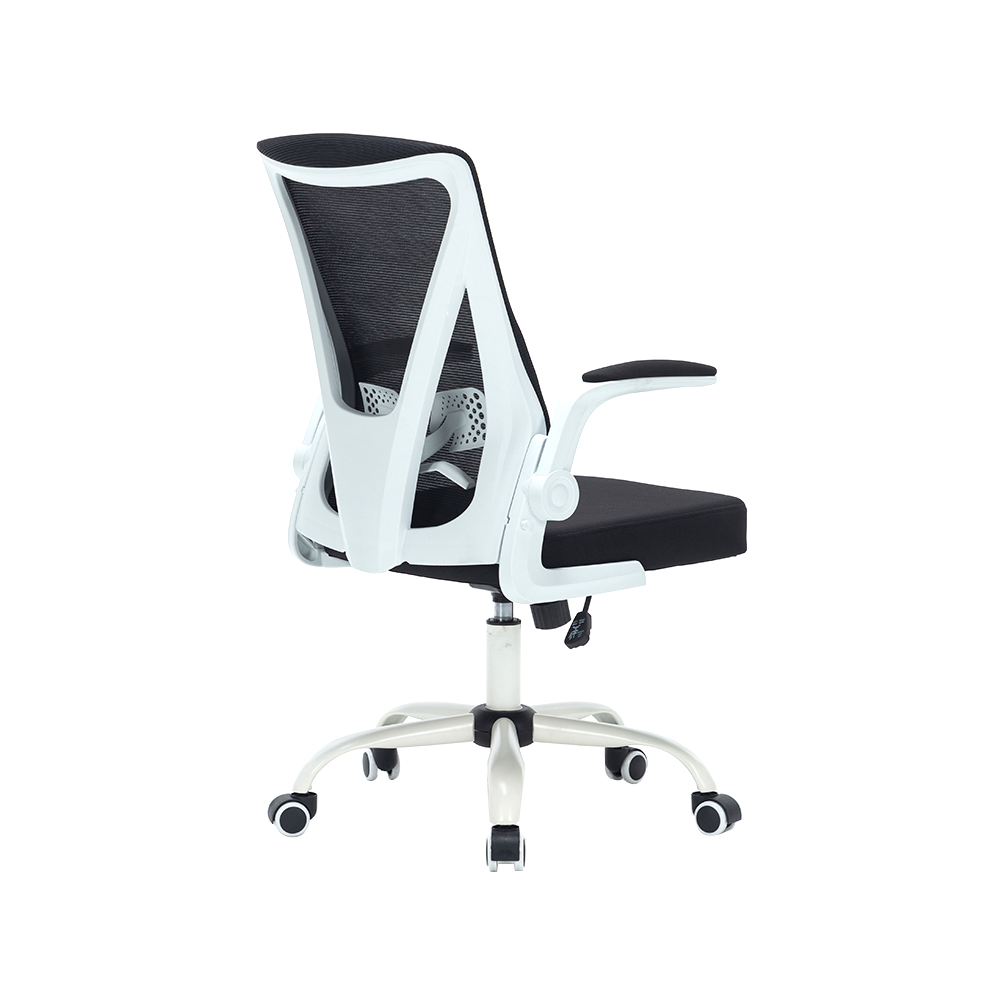 ZY-6808 Folded-Back Task Chair with Flip ArmsA volume task chair with flip arms and a folded-back design, suited to open-plan workstations where compact packing and straightforward height and tilt adjustment matter.View Product →
Ergonomic mesh chairs
This is where adjustment range becomes the category boundary. Lumbar support, back-height adjustment, 2D arm pads and a headrest move a chair out of volume task and into ergonomic. A wider seat shell, often around 520mm, also changes the mould and the sewing pattern, so tooling cost and minimum order quantity move with the category.
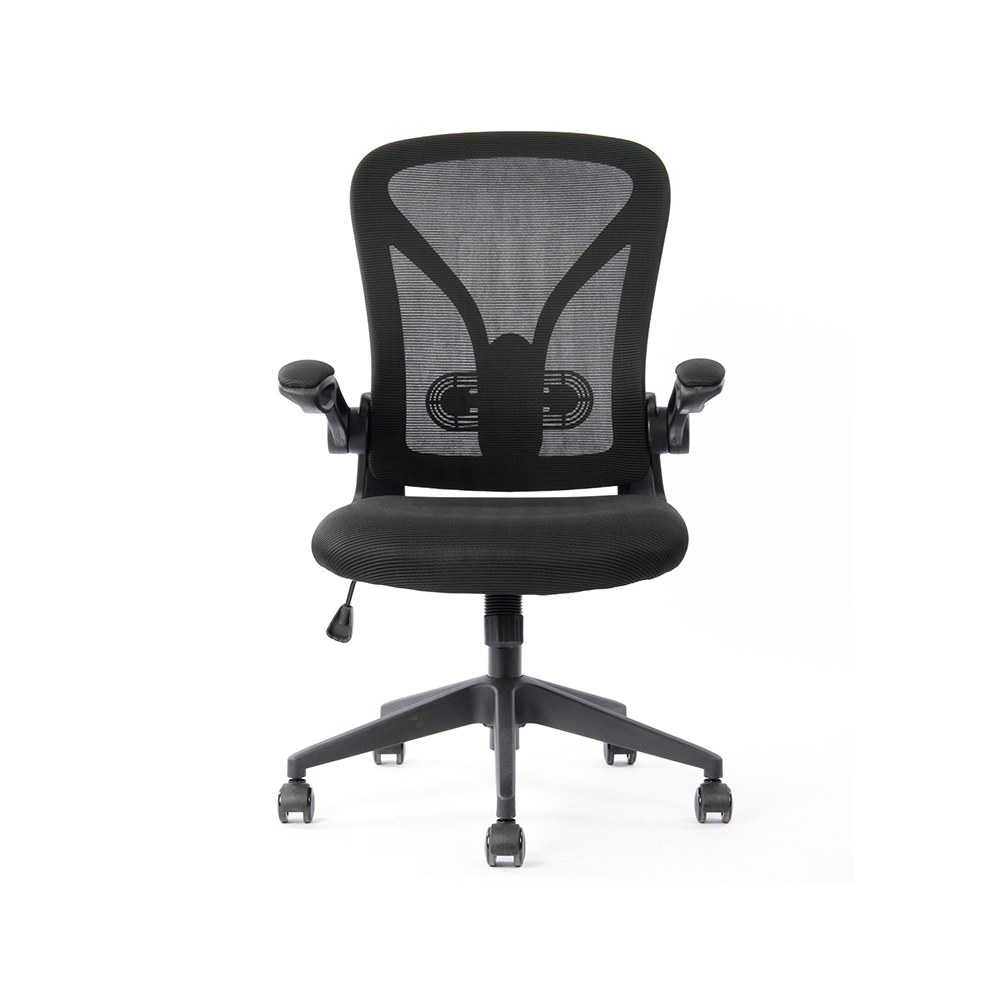
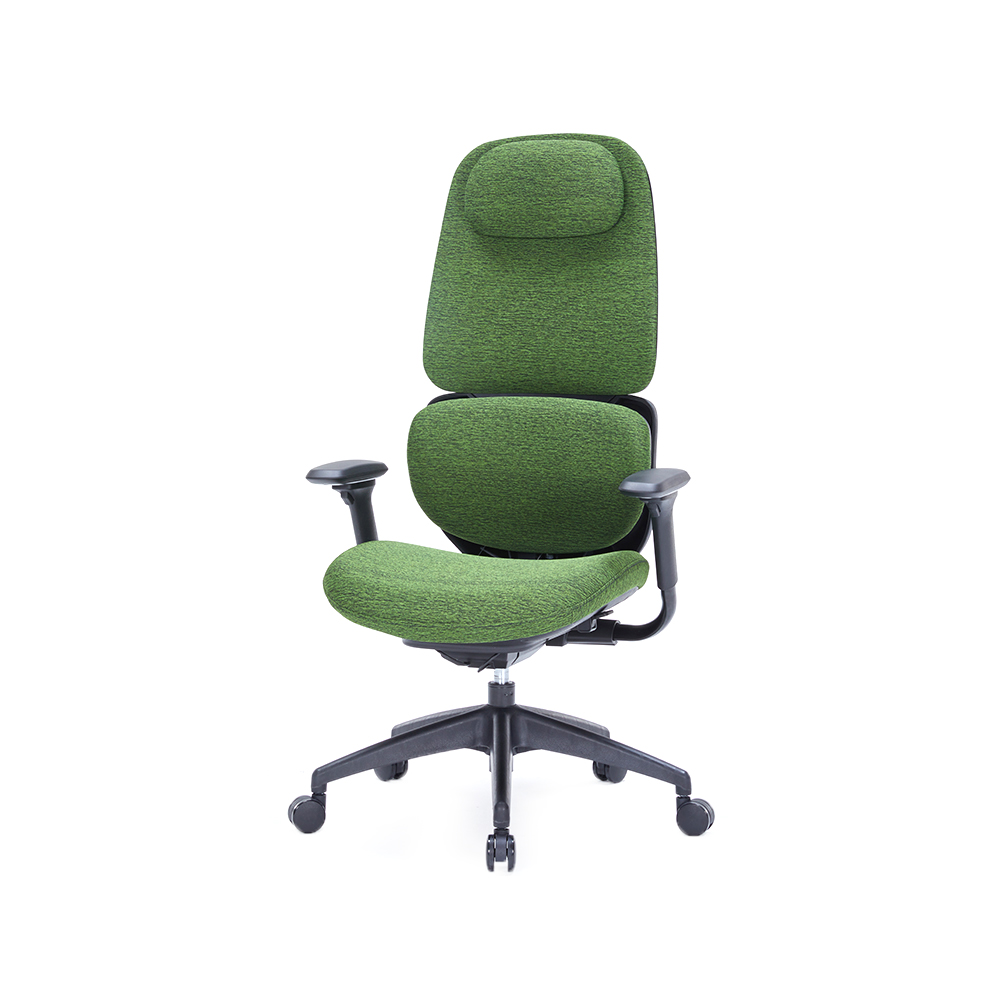 ZY-6813 Ergonomic Mesh Office Chair with HeadrestAn ergonomic mesh chair whose headrest, lumbar support, 3D arms and four-step tilt place it beyond standard task seating for longer work sessions.View Product →
Executive chairs
Executive seating trades adjustment range for presence: taller back, more foam, leather or PU, wider seat. Buyers usually specify it by upholstery, stitching and frame finish rather than by mechanism, and that changes the sample approval process as much as the bill of materials.
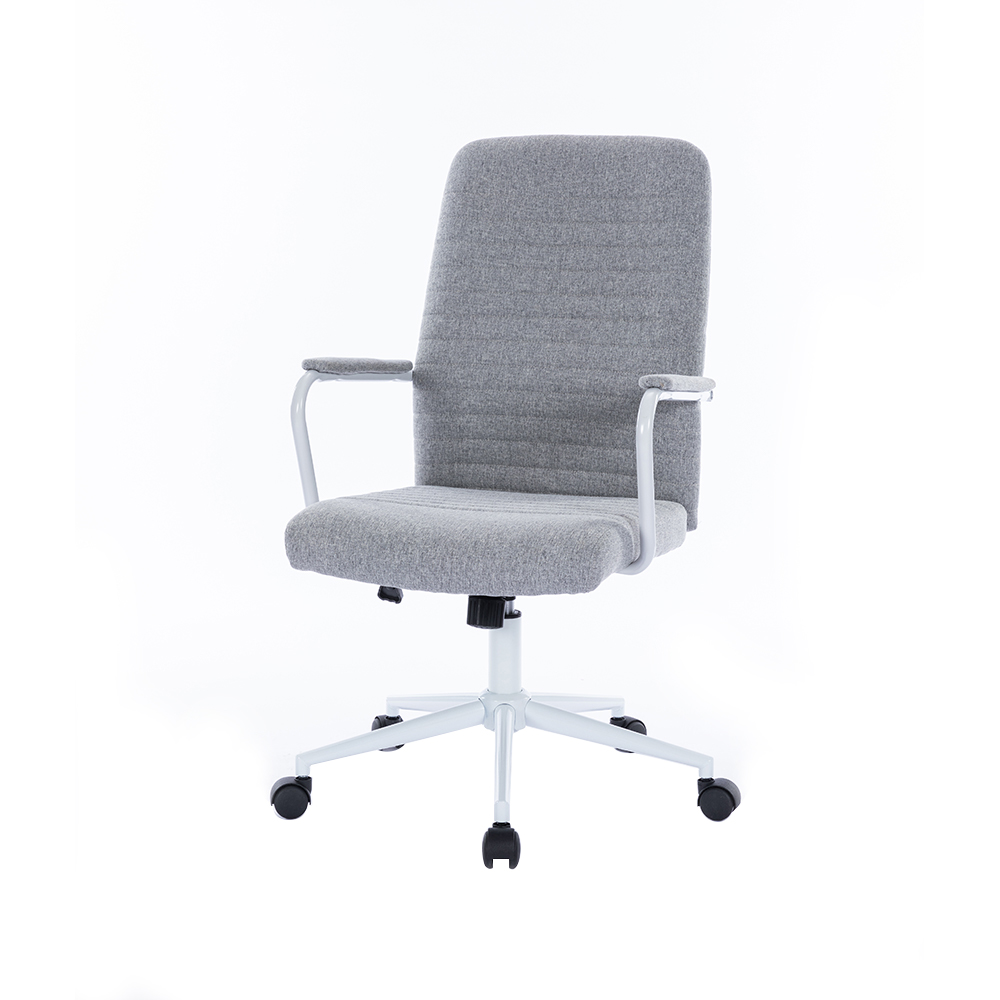 ZY-6519 High-Back PU Office ChairA high-back black PU chair with original foam and metal arms; its height-adjustable mechanism and rocking pallet make it a practical choice for office settings.View Product →
Conference and guest chairs
Fixed or height-only, often stackable or nesting, usually with flip arms so the chair slides under a table. These are ordered in matching batches with the same finish as the workstation chairs, not as single units, which makes colour consistency the main quality risk.
Category breadth is a more useful supplier question than a single unit price. When injection, sewing, metalwork and assembly sit inside one plant, a task chair, a mesh ergonomic model and a leather executive chair can share the same quality process and the same shipment.
Materials Split Categories More Than Shapes Do
Upholstery and shell material split office chair categories more sharply than shape does, because material decides cleaning routine, airflow and expected service life.
Mesh back and seat
- Air moves across the back through a full shift.
- Tension is maintained by the frame, so frame quality decides how long the chair holds its shape.
- Dust wipes off, but stained mesh cannot be refinished.
- Colour matching is limited compared with coated fabrics.
PU leather and fabric
- Uniform finish and reliable colour matching across large batches.
- Wipes clean quickly in reception and food-adjacent spaces.
- Warmer in unairconditioned rooms.
- Creases at flex points after several years of heavy use.
The choice is rarely about comfort alone. It changes the cleaning schedule for facility teams and the replacement cycle for procurement. A closer look at airflow, tension loss and cleaning routines is covered in this mesh versus fabric comparison.
Over a five-year service life, the material decision usually costs more than the mechanism decision.
Component Specs That Separate Entry Level From Project Grade
Gas spring class, mechanism type and base material decide which category a chair can be sold into, regardless of how it looks.
A chair with 2D arms and a synchronic mechanism but a low-grade gas spring will fail the specification on most tender work. In practice, suppliers quote three component levels, and the visible parts stay almost identical across all three.
450/505mm typical seat height range on task models
Class III to IV gas spring grades used across office seating
300 to 350mm common nylon star base radius
Ergonomic mesh 6
Executive 4
Task chair 3
Conference 1
Adjustment points typically specified per categoryReading a quotation means checking those three lines before the upholstery line. A quoted price that looks high on a task chair is often a Class IV spring and a heavier base, while a low price on an executive chair is often a thinner foam and a lighter frame.
Matching Categories to Rooms
Room type is the fastest way to shortlist a category, because the room sets the adjustment range and the durability expectation.
Open-plan workstations
Task chairs with consistent seat height and a repeatable tilt setting. Quantity is high, so packaging and stacking matter as much as the chair.
Private offices
Executive seating or a high-back mesh model. Upholstery and finish lead the decision, and sample approval usually happens in person.
Meeting rooms
Height-only or fixed models with flip arms so chairs tuck under the table and the cleaning crew can move through quickly.
Training and hot-desk zones
Light, stackable or nesting seating that survives being moved several times a day and matches the finish of the main order.
A Sourcing Checklist Before Samples Are Approved
A sourcing checklist should confirm category, adjustment spec and component grade before any sample is approved.
- Fix the function first. Decide whether the room needs all-day adjustment or quick meeting seating, then choose the category.
- Write the adjustment spec as numbers. Seat height range, back height travel and arm pad movement all need a value, not a description.
- Verify the component grade. Ask for the gas spring class, the mechanism type and the base material in writing alongside the price.
- Check packaging and freight. Folded-back and knock-down models reduce container cost, but assembly time moves to the destination.
- Test before bulk. A sample under load for a working week reveals more than a catalogue page. Production background and testing facilities can be reviewed on the company profile.
Frequently Asked Questions
What are the main office chair categories ordered in bulk?
Task, ergonomic mesh, executive and conference seating cover most bulk orders. Drafting chairs and stools sit in a smaller category defined by extended height travel and a foot ring.
Does the category change packaging and freight cost?
Yes. Folded-back and knock-down models with flip arms pack tighter, so more units fit per container. Fully assembled executive chairs take significantly more volume for the same quantity.
How do I confirm a supplier covers more than one category?
Ask which production stages happen in-house, then request samples from two different categories. A supplier that moulds, sews and assembles internally will usually produce both from the same quality process.
Is a mesh chair always more ergonomic than a fabric chair?
No. Ergonomics comes from the adjustment range, not the material. A fabric chair with lumbar support and back-height adjustment outperforms a fixed mesh chair for long seated work.
The category decision takes a few minutes and saves weeks. Once function, adjustment range and component grade are written down, quotations become comparable line by line instead of photo by photo.
QUICK LINKS
PRODUCTS
CONTACT & INFORMATION
-
 PHONE NUMBER
-
 EMAIL
stellazhang@yimiga.com
-
 ADDRESS
No 366, Jingtu Road, Dipu Street, Anji County, Huzhou City, Zhejiang province, China. PC 313300.
CONNECT WITH US
Be the first to know about our news and updates.


Copyright © Zhejiang Zhongyi Furniture Co., Ltd.
All Rights Reserved.
 浙公网安备33052302000377号
浙ICP备14003933号-2
 Wholesale Ergonomic Chair Manufacturers