 English
 عربى
عربى Español
 中文简体
中文简体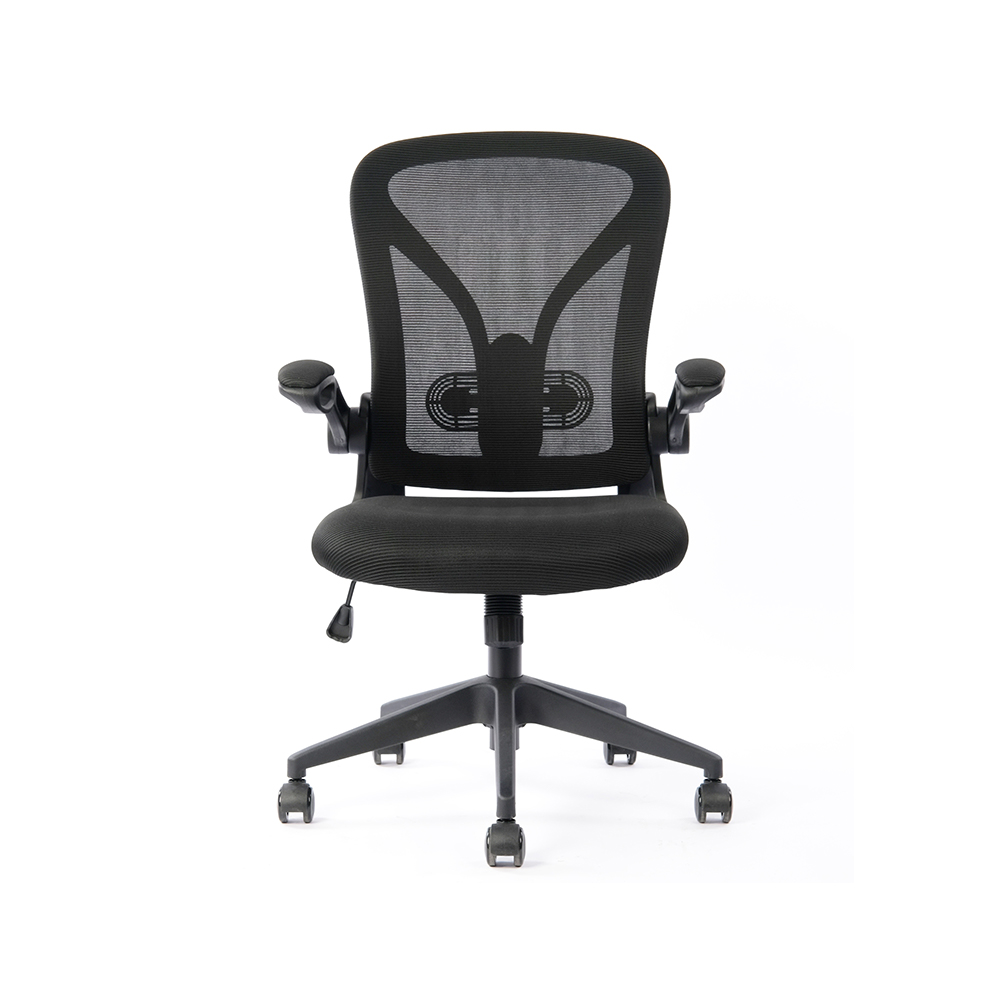
+86-0572-5888031

0
ENG
Mesh Chair vs. Fabric: How to Choose the Right Office Chair for Long Workdays
 Home / Media / Industry News / Mesh Chair vs. Fabric: How to Choose the Right Office Chair for Long Workdays
 Mesh Chair vs. Fabric: How to Choose the Right Office Chair for Long Workdays
 2026.06.24
 Industry News
Content
Most buyers spend under ten minutes choosing an office chair. They pick based on price or looks — then spend the next three years dealing with a stiff lower back. The chair you sit in for 6–8 hours a day is a health decision, not just a furniture decision. Here's what actually matters when you're choosing between a mesh office chair or fabric office chair for long workdays.
Mesh vs. Fabric: The Trade-Off Nobody Explains Clearly
Fabric chairs feel better in the first five minutes. The padded cushioning is soft and welcoming — especially in cooler environments. But past the four-hour mark, that same foam starts compressing, and the heat trapped between you and the seat becomes noticeable. Mesh eliminates that problem entirely.
A breathable mesh chair with an open-weave back and rocking mechanism allows constant airflow across your back, which regulates body temperature and reduces fatigue during extended sessions. The ZY-6809, for example, pairs a Mesh-W002 breathable backrest with original foam seating — you get the ventilation of mesh where your back needs it most, and the cushioning support where your body weight actually lands.
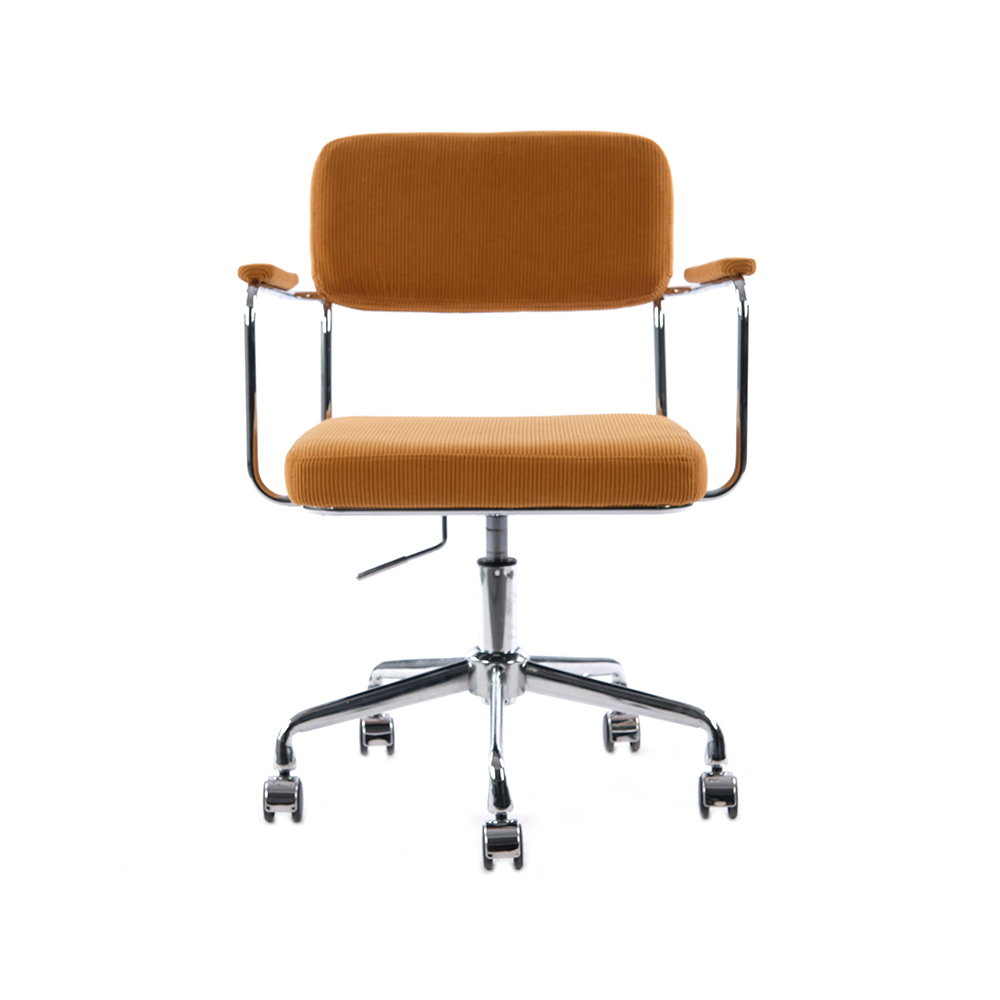
Fabric chairs make sense if you sit for shorter sessions (under 3 hours), prefer a warmer feel in a cold environment, or prioritize visual softness in a home office setting. For anything beyond that, mesh wins on long-term comfort.
The Adjustment Features That Actually Prevent Back Pain
A chair that doesn't fit your body is just an expensive stool. The difference between a basic computer chair and a genuinely ergonomic one comes down to what you can adjust — and how many layers deep that adjustment goes.
The minimum acceptable adjustability for a full-day work chair: seat height, tilt tension, and lumbar position. Everything else is a bonus. Here's what separates entry-level from serious ergonomic design:
- Seat height range — A standard range of 435–515mm covers most body types (ZY-6809). If you're taller or using a standing desk converter, look for 455–520mm (ZY-6815).
- Tilt lock steps — Basic chairs tilt freely or lock in one position. A 4-step tilt lock lets you set a specific recline angle and hold it — critical for reading or video calls where you want to lean back without sliding.
- Lumbar support type — Static foam lumbar supports are better than nothing. A lumbar that adjusts both height and angle as your body moves is meaningfully different — it tracks your posture instead of fighting it.
- Armrest dimensions — Fixed armrests cause shoulder tension in most people. 2D adjustable arms (height + width) let you position your elbows directly under your forearms, relieving neck and trapezius strain.
The fully adjustable office chair with 4-step tilt lock and dynamic 2D lumbar support (ZY-6815) is a practical illustration of this: the lumbar angle changes as your body moves, rather than forcing your spine to adapt to a fixed position. That's the ergonomic detail most budget chairs skip entirely.
How to Read Chair Specs Before You Buy
Product pages list specifications that most buyers ignore. These numbers directly predict how comfortable a chair will be for your body — they're worth 60 seconds of attention.
| Specification | ZY-6809 Mesh Chair | ZY-6815 Mesh Chair |
|---|---|---|
| Overall size (W×D×H) | 610×605×975–1055mm | 660×640×1040–1105mm |
| Seat height range | 435–515mm | 455–520mm |
| Seat width | 500mm | 520mm |
| Seat depth | 450mm | 440mm |
| Gas spring class | Class III (80/40mm) | Class IV (60mm journey) |
| Star base diameter | 320mm nylon | 350mm nylon |
| Casters | Ø50mm nylon | Ø60mm PU (floor-friendly) |
| Tilt mechanism | Rocking pallet (Y17) | 4-step self-weight adjust |
| Armrests | Flip arm | 2D with soft PU pad |
Seat width matters for anyone who shifts position frequently — too narrow and you'll feel constrained; 500–520mm is the practical sweet spot for most adults. Seat depth affects how much of your thigh is supported: 440–450mm allows you to sit with your back against the lumbar and still have 2–3 fingers of clearance behind your knees. Gas spring class determines height-adjustment smoothness and durability — Class IV handles heavier daily use and holds position more reliably over time.
The base diameter also matters more than people realize. A 350mm base gives a wider stability footprint than a 320mm one — relevant if you're working in a small space where you often pivot quickly or lean across a desk.
The One Question That Simplifies the Decision
Ask yourself: how many hours per day will you actually sit in this chair? Under three hours — fabric is fine, pick the one that fits your space and budget. Over four hours — the investment in a proper adjustable office chair with mesh back and ergonomic controls pays for itself in reduced fatigue and fewer physiotherapy visits within the first year.
The other variable is room temperature. If your workspace regularly exceeds 23°C (73°F), mesh isn't a preference — it's a practical necessity. Fabric chairs in warm offices create a microclimate of heat and moisture between your back and the seat that accumulates over hours. Mesh eliminates it passively, with no effort on your part.
Neither chair type is universally better. But for most people sitting at a desk for a standard workday, a well-specified mesh chair with adjustable lumbar support and 2D armrests delivers better long-term comfort than padded fabric — even fabric that feels more inviting at first sit.
QUICK LINKS
PRODUCTS
CONTACT & INFORMATION
-
 PHONE NUMBER
 -
 EMAIL
EMAILstellazhang@yimiga.com
-
 ADDRESS
No 366, Jingtu Road, Dipu Street, Anji County, Huzhou City, Zhejiang province, China. PC 313300.
CONNECT WITH US
Be the first to know about our news and updates.


Copyright © Zhejiang Zhongyi Furniture Co., Ltd.
All Rights Reserved.
 浙公网安备33052302000377号
浙ICP备14003933号-2
浙公网安备33052302000377号
浙ICP备14003933号-2
 Wholesale Ergonomic Chair Manufacturers