 English
 عربى
 Español
 中文简体
+86-0572-5888031

0
ENG
Best Ergonomic Office Chair 2025: Specs, Fit Numbers and Sourcing Checks
 Home / Media / Industry News / Best Ergonomic Office Chair 2025: Specs, Fit Numbers and Sourcing Checks
Best Ergonomic Office Chair 2025: Specs, Fit Numbers and Sourcing Checks
 2026.11.19
 Industry News
Content
- 1 What Makes an Office Chair Genuinely Ergonomic
- 2 The Specification Sheet Worth Checking in 2025
- 3 Fit Numbers: Seat Width, Depth and Lumbar Height
- 4 Mesh Back or Foam Back: Match the Chair to the Room
- 5 Where Budget Chairs Fail: Gas Springs, Bases and Casters
- 6 Headrests and Armrests: What Long Shifts Actually Need
- 7 Ten Minutes of Setup That Prevents Most Complaints
- 8 Sourcing Notes for Buyers and Facility Managers
- 9 Frequently Asked Questions
A chair either fits its user within the first ninety seconds of sitting, or it never will. Seat height, seat depth and lumbar height are numbers tied to body measurements rather than taste, and no amount of cushioning compensates for a seat pan that cuts into the back of the knee. The 2025 office chair market is full of models that look adjustable and are not, so the useful work is knowing which measurements to demand before comparing prices.
What Makes an Office Chair Genuinely Ergonomic
An ergonomic office chair is a chair whose seat height, seat depth, lumbar curve, armrest height and recline tension can each be adjusted to one specific body and then locked in place. That definition is narrower than the marketing language around it, and it explains why two people of different heights can share one well-built chair but never one fixed chair.
42-52 cmSeat height range that covers most adult body sizes
2-3 fingersClearance between the back of the knee and the seat edge
Class III / IVGas spring grades worth writing into a specification
110-150 kgRated load on chairs built for full working days
Working definition: fit is a range, not a single setting. A chair is ergonomic for a team only when it covers the smallest and the tallest user in every adjustable dimension.
Five adjustments do most of the work:
- Seat height that lets the feet rest flat with thighs roughly level to the floor.
- Seat depth that leaves two to three fingers of clearance behind the knee.
- Lumbar support sitting at the small of the back, close to belt height.
- Armrests that meet the desktop at elbow height with the shoulders relaxed.
- Recline tension light enough that the backrest follows the user instead of resisting them.
When a model cannot hold all five positions after adjustment, the missing one becomes the complaint the user reports six weeks later. A longer breakdown of adjustment types sits in our ergonomic chair buying guide, organised by price bracket.
The Specification Sheet Worth Checking in 2025
The specification sheet, not the product photograph, decides whether a chair works across a workforce; eight numbers cover nearly everything that affects fit and service life.
| Specification | Practical target | What it controls |
| Seat height | 42-52 cm from floor to seat top | Foot placement and knee angle |
| Seat depth | 40-48 cm, or 5-8 cm of slide | Thigh support without knee pressure |
| Seat width | 46-53 cm | Hip clearance and armrest reach |
| Backrest height | 50-62 cm measured from the seat | Contact across the upper back |
| Lumbar travel | At least 8 cm of vertical movement | Support at the small of the back |
| Armrest height | 18-27 cm above the seat | Shoulder relaxation while typing |
| Gas spring | Class III or Class IV | Height retention under load |
| Warranty | 3-5 years on mechanism and spring | Expected service life |
A chair that meets every number here but carries a 90-day warranty is a rental with extra steps. Mechanism coverage is the honest indicator of how long the supplier expects the product to last.
Fit Numbers: Seat Width, Depth and Lumbar Height
Seat width and seat depth drive more returns than any other specification, because they are the two dimensions a user cannot adjust around. A 46 cm seat pinches broader users at the hips, while anything past 53 cm pushes the armrests out of reach for smaller frames.
Depth is the harder number. A 48 cm seat pan that suits a 185 cm user will cut circulation behind the knee of someone at 160 cm unless the pan slides forward by at least 5 cm and can be locked there.
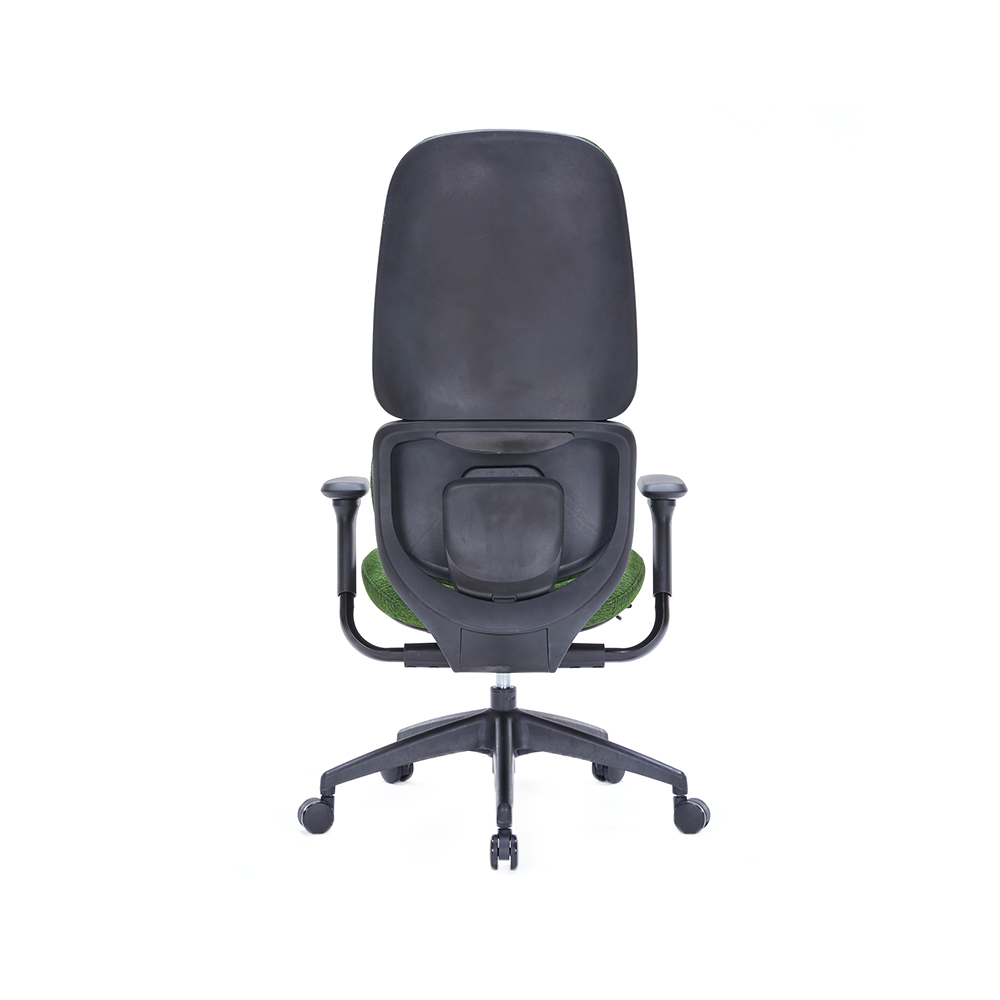 ZY6813 Mesh Office Chair with 520 mm SeatA 520 mm seat width and 410–465 mm depth range make this mesh task chair relevant for hip clearance and armrest reach checks.View Product →
- Measure the widest and the narrowest user first, then pick a seat width that leaves roughly 2 to 3 cm of clearance on each side of the hips.
- Confirm lumbar travel of 8 cm or more, since the distance between waist and lower ribs changes with torso length, not with overall height alone.
- Test the sliding seat pan with weight on it, because a pan that moves when empty can bind under a 100 kg load.
520 mm is the seat width on the ZY6813 task chair: wide enough for full hip clearance, still narrow enough that a 2D armrest stays within reach of a smaller frame.
Mesh Back or Foam Back: Match the Chair to the Room
Mesh backrests and foam backrests solve different problems: mesh manages airflow and long static shifts, foam manages pressure spread and perceived warmth.
Mesh back
- Air moves across the back through an eight-hour shift
- Flex follows the spine without a moulded shape
- Easier to clean on shared desks and hot-desk floors
- Needs a tensioned frame, because cheap mesh sags within a year
Foam back
- Spreads pressure across a larger contact area
- Feels warmer in air-conditioned rooms and cold seasons
- Holds a fixed lumbar curve that suits some users and not others
- Foam density matters more than thickness, and low-density foam collapses
The backrest material matters less than the frame behind it. A mesh back with no lumbar tension is a hammock, not support.
Where Budget Chairs Fail: Gas Springs, Bases and Casters
Most chair failures in the first three years happen in three parts that buyers rarely read about: the gas spring, the star base and the casters.
A Class III or Class IV gas spring is a declared grade tied to tube wall thickness and cycle testing, and it belongs on the quotation as a line item rather than a footnote. Nylon bases are lighter and adequate for carpeted offices; steel or reinforced nylon suits heavy users and hard flooring. Casters are the cheapest place to cut and the fastest to fail, so specify the wheel material against the floor type.
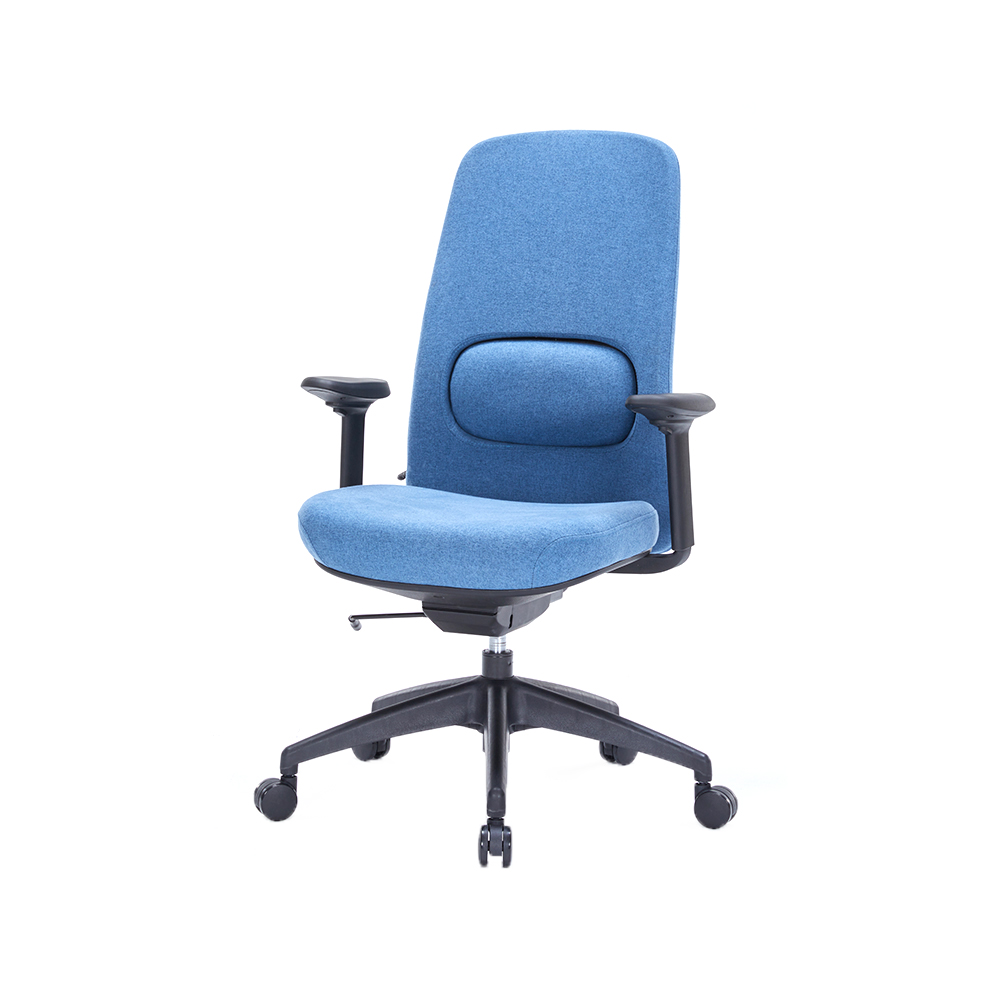 ZY6815 Swivel Mesh Chair with 4-Step TiltLists a Class IV gas spring, nylon star base and PU casters, useful when comparing declared hardware details with adjustable lumbar and arm support.View Product →
Ask for the gas spring class, base material and caster type separately. When a supplier cannot name them, the chair is being sold on upholstery alone.
Headrests and Armrests: What Long Shifts Actually Need
A headrest earns its cost only when the chair reclines far enough for the head to rest back; on an upright task chair it usually pushes the chin forward instead.
Armrests deserve more scrutiny than headrests. A 2D armrest adjusts height and angle, while a 3D version adds width and pad rotation, which matters when the same chair is shared across shifts. Soft PU pads also age better than hard plastic over five years of daily contact.
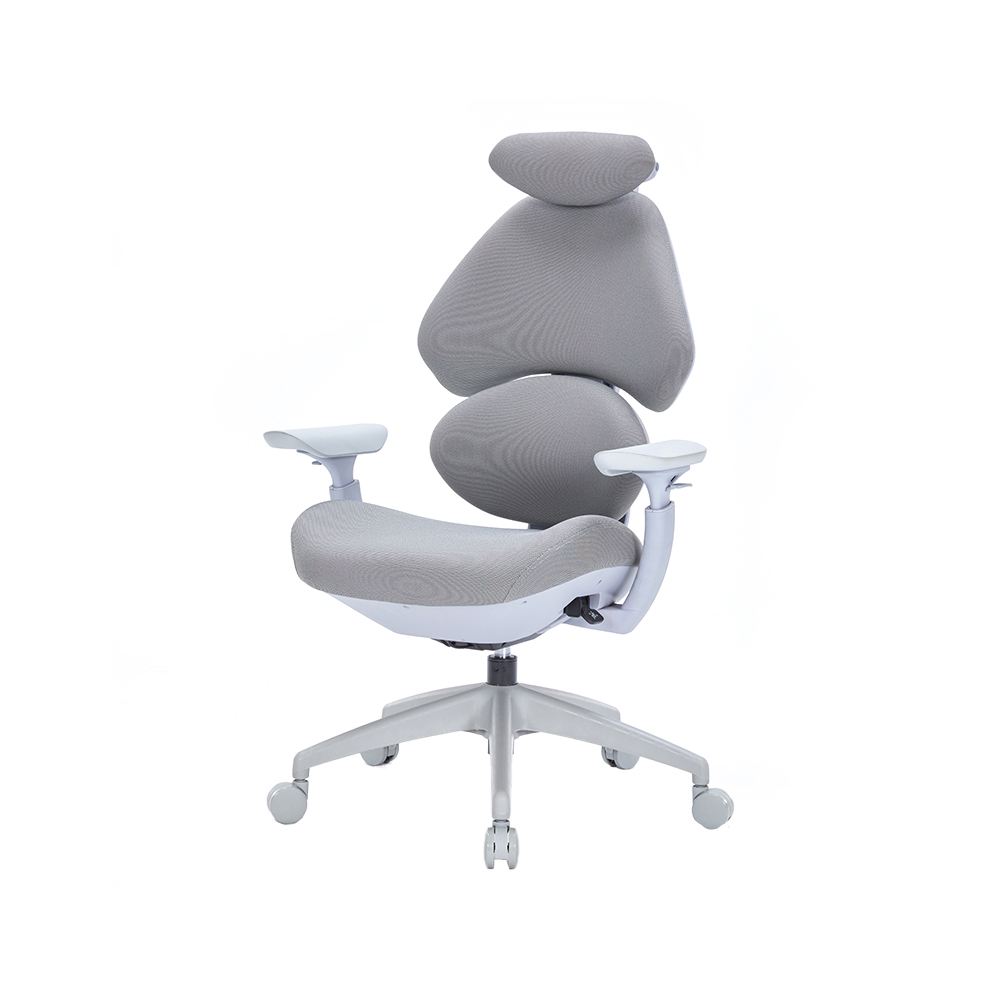 ZY6812G Mesh Chair with 3D Headrest and ArmrestsA 3D headrest and 3D armrests with soft PU pads make this mesh chair relevant for testing neck support at recline and shared-shift armrest adjustment.View Product →
Test any headrest model at full recline before ordering: the pad should meet the base of the skull without lifting the chin or forcing the neck forward.
Ten Minutes of Setup That Prevents Most Complaints
Most uncomfortable-chair complaints are setup errors, and five adjustments in the right order resolve the majority before anyone asks for a replacement.
- Set seat height so the feet sit flat and the thighs are level, then lock the gas spring and check that it does not creep under weight.
- Set seat depth so there is a small gap behind the knee, and note the setting so it can be restored after cleaning.
- Raise or lower the lumbar pad until it sits at the small of the back, then check the position again after the first recline.
- Bring the armrests to elbow height with the shoulders dropped, and confirm the chair rolls under the desk without the pads catching.
- Dial recline tension until the backrest moves with a light lean and holds the user's weight without a fight.
Adjust in this order: height, depth, lumbar, armrests, recline
Sourcing Notes for Buyers and Facility Managers
For a floor of forty chairs, the model specification matters less than the supplier's ability to repeat it, so consistency and documentation carry more weight than any single feature.
Our own plant in Anji, Zhejiang runs injection moulding, metal frame production, sewing and three assembly lines under one roof, with capacity near 30,000 chairs a month and an in-house test room before shipment. The company profile covers the facilities and the ISO 9001 and ISO 14001 certification behind them. Repeated orders matter most here: the second container should match the first in gas spring class, foam density and mesh tension, not only in colour.
Request three items with any sample order: the gas spring class in writing, the foam density or mesh tension specification, and the mechanism warranty expressed in years rather than months.
Frequently Asked Questions
Is an expensive ergonomic chair always better?
No. Price tracks brand, warranty length and finish more than fit. A mid-priced chair with independent seat depth, lumbar height and armrest adjustment will outperform a premium model whose dimensions miss the user.
Should I choose mesh or foam for a warm office?
Choose a mesh back and a foam seat for most warm or shared environments. The mesh handles airflow and cleaning, while the foam seat keeps pressure off the sit bones during long static sessions.
How long should an office chair last?
Expect five to eight years of daily use from a chair with a Class III or IV gas spring, a reinforced base and replaceable casters. The gas spring is usually the first part to fail, which is why its grade belongs in the purchase contract.
Does a headrest improve posture?
Only when the chair reclines. A headrest supports the neck in a leaned-back position and does little during upright typing, so fit the seat and lumbar support first and treat the headrest as an optional addition.
The best ergonomic office chair in 2025 is the one whose numbers match the people who will sit in it, backed by a supplier who can repeat those numbers on the next order. Start with seat height and depth, confirm the gas spring grade in writing, then judge fabric, colour and brand.
QUICK LINKS
PRODUCTS
CONTACT & INFORMATION
-
 PHONE NUMBER
-
 EMAIL
stellazhang@yimiga.com
-
 ADDRESS
No 366, Jingtu Road, Dipu Street, Anji County, Huzhou City, Zhejiang province, China. PC 313300.
CONNECT WITH US
Be the first to know about our news and updates.


Copyright © Zhejiang Zhongyi Furniture Co., Ltd.
All Rights Reserved.
 浙公网安备33052302000377号
浙ICP备14003933号-2
 Wholesale Ergonomic Chair Manufacturers