 English
 عربى
عربى Español
 中文简体
中文简体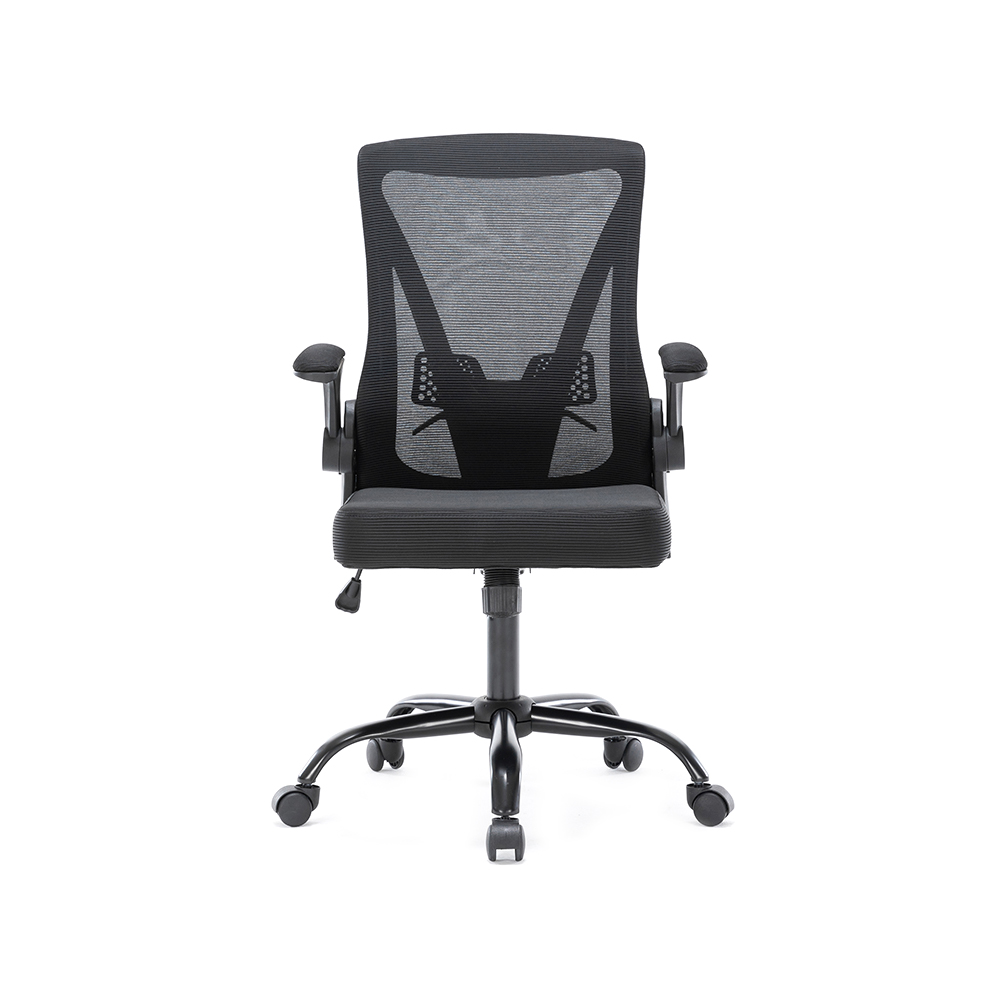
+86-0572-5888031

0
ENG
How to Choose the Right Office Chair: Mesh, Comfort & Adjustability Explained
 Home / Media / Industry News / How to Choose the Right Office Chair: Mesh, Comfort & Adjustability Explained
 How to Choose the Right Office Chair: Mesh, Comfort & Adjustability Explained
 2026.06.12
 Industry News
Content
- 1 The Office Chair Mistake Most People Make
- 2 Mesh vs. Foam: Which Back Material Actually Works?
- 3 The 4 Adjustments That Actually Matter
- 4 Understanding Gas Springs and Base Quality
- 5 Seat Dimensions: The Spec Nobody Checks
- 6 What Certifications Tell You (and What They Don't)
- 7 Choosing by Use Case
- 8 The Short Version
The Office Chair Mistake Most People Make
Most buyers spend under ten minutes selecting an office chair — then spend the next five years dealing with a stiff back, sore neck, and a seat that sags by month six. The problem isn't budget. It's knowing what to look for. A good ergonomic office chair with adjustable height and lumbar support doesn't have to cost a fortune, but it does need to hit a few non-negotiable specs.
This guide covers exactly that: what separates a chair worth sitting in from one that costs you more in chiropractor bills.
Mesh vs. Foam: Which Back Material Actually Works?
The mesh vs. foam debate has a clear answer for most office workers: mesh wins for all-day sitting. Here's why. Foam compresses over time — low-density foam can lose its shape within months. A breathable mesh back, by contrast, conforms to your spine dynamically and allows continuous airflow, which matters when you're at a desk for six-plus hours.
The catch is mesh quality varies enormously. A properly constructed breathable mesh computer chair with PP back frame and original foam seat like the ZY-6809 uses a Mesh-W002 black fabric with a PP back structure — the mesh handles ventilation while the foam seat (450mm depth, 500mm width) handles support. Cheap mesh chairs skip the structural back frame and the seat goes soft within a year.
One practical test: press your palm against the back mesh and feel for resistance. It should push back firmly, not give way under light pressure.
The 4 Adjustments That Actually Matter
Marketing copy loves to count adjustment features. Most of them are meaningless. These four are the ones that actually determine whether a chair fits your body:
- Seat height: Your feet should rest flat on the floor with thighs parallel to the ground. Look for a range that covers at least 435–515mm — the ZY-6809 hits this exactly. Too narrow a range and the chair simply won't fit your frame.
- Lumbar support depth and height: A fixed lumbar bump fits one body type. Adjustable lumbar — ideally both vertically and in depth — means the support actually reaches your lower spine, not just sits behind it.
- Armrest position: Arms that can't move force your shoulders up or drop your elbows at odd angles, causing tension across the upper back. The ZY-6812 uses 3D adjustable armrests with soft PU pads, allowing positioning in three planes. That's the standard worth demanding.
- Tilt tension and recline lock: A chair that reclines without resistance gives no support. Look for a tilt mechanism with adjustable tension — the ZY-6812's wire-control, four-step self-weight mechanism lets you set recline resistance to your body weight, which prevents the chair from throwing you back unexpectedly.
Understanding Gas Springs and Base Quality
Two components buyers consistently underestimate: the gas spring and the base. The gas spring controls how smoothly and safely the seat height adjusts. Class III springs (used on the ZY-6809, 80/40mm travel) are the industry-standard for mid-range office chairs. Class IV — as found on the ZY-6812 with 60mm journey — handles higher cycle loads, making it better suited for shared workspaces or heavier daily use.
The base should be 320mm nylon minimum for a personal chair; anything smaller risks tipping under lateral movement. The ZY-6812 steps up to a 350mm nylon star base with Ø60mm PU casters — larger casters roll more smoothly on hard floors and distribute weight better than the standard 50mm nylon wheels. If your workspace has carpet, nylon casters grip fine. Hard floors benefit from PU.
Seat Dimensions: The Spec Nobody Checks
Seat width and depth determine whether you can actually sit comfortably, and most buyers never look at these numbers. A seat that's too narrow compresses the hips; too shallow and your thighs lose support, cutting off circulation.
| Model | Seat Width | Seat Depth | Seat Height Range | Armrest Type | Gas Spring |
|---|---|---|---|---|---|
| ZY-6809 | 500mm | 450mm | 435–515mm | Flip arm | Class III, 80/40mm |
| ZY-6812 | 530mm | 410–465mm (adjustable) | 450–505mm | 3D arm, soft PU pad | Class IV, 60mm |
The ZY-6812's seat depth adjustment (410–465mm) is particularly useful for users of different heights — taller people need more seat depth, shorter users less. A fixed-depth seat of 450mm works for many, but if you're ordering for multiple users or a shared office, adjustable depth is worth specifying.
What Certifications Tell You (and What They Don't)
BIFMA certification is the most meaningful quality marker for office chairs in the North American market. It confirms the chair passed commercial-grade testing for frame strength, stability, and repeated-cycle durability. For export products, look for ISO 9001 quality management certification — it doesn't test the chair directly, but confirms the manufacturer has consistent production controls.
Our adjustable office chair collection is manufactured under ISO 9001 and ISO 14001 certification, with BSCI social compliance audits — relevant if you're sourcing for a business and need verifiable supply chain standards.
What certifications don't tell you: comfort. That's still determined by the specs above. A certified chair with a poorly placed lumbar support is still a poor chair for your back.
Choosing by Use Case
Three scenarios, three different priorities:
- Individual home office (4–6 hrs/day): A mid-back mesh chair with rocking mechanism and nylon star base covers the fundamentals without overspending. The ZY-6809 format — compact at W610×D605mm, Class III spring — is practical for smaller spaces and lighter use.
- Professional office (8+ hrs/day): Move up to a Class IV gas spring and 3D adjustable arms. The ZY-6812 at W710×D710mm offers the seat width, arm control, and four-step recline mechanism that sustained daily use demands.
- Bulk procurement (10+ chairs): Prioritize model consistency, base warranty, and the ability to specify seat depth and color. OEM customization on mesh fabric and arm type is standard for orders at scale — our wholesale office chair range with OEM options supports both.
The Short Version
A good office chair isn't complex — but it requires checking the right specs. Seat height range, lumbar adjustability, armrest axes, gas spring class, and caster diameter are the numbers that determine whether the chair supports your body or fights it. Mesh backs outperform foam for ventilation across long sessions, and quality construction shows up in frame materials and mechanism type, not just surface finish.
Check the specs. Match the use case. The chair that fits your measurements and your daily hours is always the right chair — regardless of how it looks in a product photo.
QUICK LINKS
PRODUCTS
CONTACT & INFORMATION
-
 PHONE NUMBER
 -
 EMAIL
EMAILstellazhang@yimiga.com
-
 ADDRESS
No 366, Jingtu Road, Dipu Street, Anji County, Huzhou City, Zhejiang province, China. PC 313300.
CONNECT WITH US
Be the first to know about our news and updates.


Copyright © Zhejiang Zhongyi Furniture Co., Ltd.
All Rights Reserved.
 浙公网安备33052302000377号
浙ICP备14003933号-2
浙公网安备33052302000377号
浙ICP备14003933号-2
 Wholesale Ergonomic Chair Manufacturers