 English
 عربى
عربى Español
 中文简体
中文简体
+86-0572-5888031

0
ENG
How to Choose a Leisure Chair That Survives 7+ Years
How to Choose a Leisure Chair That Survives 7+ Years
 2026.06.18
 Industry News
Content
The Four Numbers Most Buyers Skip
Most leisure chairs that get returned within the first year don't fail because of bad taste — they fail because nobody checked four basic numbers before buying. Seat height, backrest angle, armrest position, and seat depth determine whether a chair actually relaxes your body or just looks like it should.
The ergonomic sweet spot for genuine leisure seating sits in a fairly narrow band: a seat height between 42 and 48 cm, a backrest reclined to 100–115 degrees, and armrests positioned 20–25 cm above the seat so your elbows rest at roughly a 90-degree angle. A 2022 biomechanical study found that reclining to 110 degrees with a 5 cm seat pan depth cuts spinal disc pressure by 45 percent compared with sitting upright in a standard dining chair. That's the difference between a chair you tolerate and one you actually look forward to sitting in.
What an Indoor Leisure Chair's Specs Actually Look Like
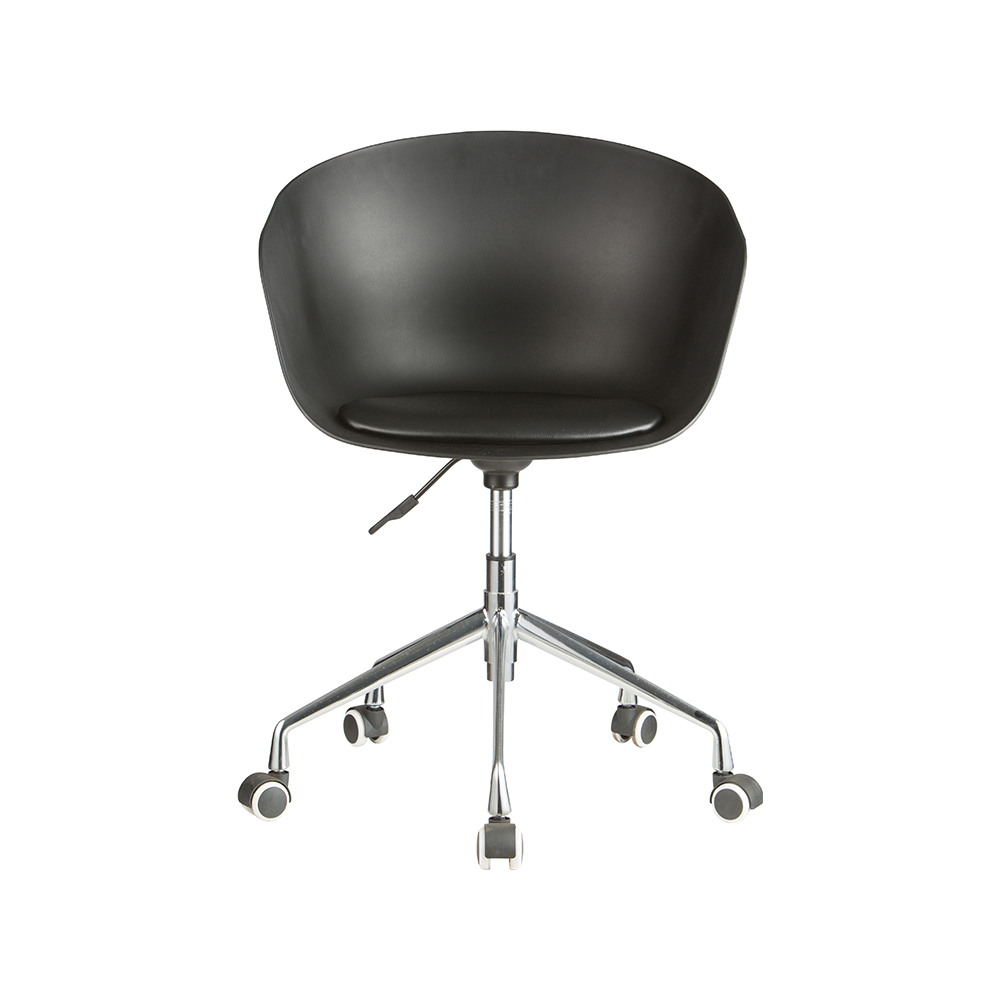
So what does that look like in a real product? Take the ZY-7081, a steel-framed Indoor Leisure Chair built with a plastic shell wrapped in foam and PU leather, mounted on chromed steel KD legs. Its seat sits at 440 mm — right inside the 42–48 cm comfort window — with an overall footprint of 765 x 730 x 795 mm and a manageable 11.25 kg weight, light enough to move between a reading corner and a bedroom window seat.
The plywood-and-foam seat structure matters more than it sounds: plywood resists the sagging that pure foam-over-frame designs develop after a year or two of daily sitting, while technical PU leather upholstery resists stains and moisture without the upkeep a fabric cover demands. For a chair that's going to sit in one spot for years, that combination is worth checking before the seat height.
Why Most Outdoor Chairs Fail After One Summer
Outdoor seating plays by different rules, because UV exposure and humidity attack materials that indoor furniture never has to survive. Accelerated weather testing (ASTM G154 cycle) shows how far apart common materials are: polyester fabric starts fading after 400–600 hours of UV exposure and typically lasts 2–4 years outdoors, while Textilene mesh holds up for 1,500+ hours and 5–8 years, and HDPE goes further still — 2,000+ hours and a 7–10 year service life with almost no upkeep.
Weight capacity tells a similar story. General outdoor seating standards (EN 581-1) call for a 110 kg static load rating, but a genuine Outdoor Leisure Chair built for rocking or reclining needs a 136 kg dynamic rating. In one independent test of 15 outdoor models, 40 percent of chairs rated only for 100 kg developed hinge deformation after 5,000 rocking cycles at a 90 kg load — a failure that's invisible in the showroom and obvious within a year of real use. Nylon hinges with metal pins outperform all-plastic hinges by roughly 400 percent in fatigue testing, a cheap detail worth checking before paying for style.
Maintenance That Doubles the Lifespan
Material choice only buys half the lifespan; the rest comes from upkeep. A survey of 500 outdoor chair owners found that rinsing fabric with fresh water every 30 days cuts fiber abrasion by 55 percent in dusty or coastal areas, and that applying silicone lubricant to folding joints twice a year reduces friction wear by 80 percent. The biggest single factor was storage: owners who moved their chairs indoors during winter reported an average usable life of 8.2 years, against just 3.1 years for chairs left outside year-round. None of this needs special tools — a soft brush, mild pH-neutral soap, and a dry spot for three or four months a year does most of the work.
Matching the Chair to How You'll Actually Use It
Match the chair to how you'll actually use it, not how you imagine using it. Light, occasional use on a covered patio is fine with polyester fabric and a 100 kg rating. Daily use in partial sun calls for Textilene or HDPE, a 136 kg rating, and that 110-degree recline. Full-sun, coastal, or commercial settings justify a powder-coated aluminum frame with an HDPE sling and replaceable parts — the cost-per-use drops below $0.10 after the fourth season, making it the cheaper option over time, not the pricier one.
Browse Zhongyi's full range of Leisure Chair models to compare seat dimensions, frame materials, and load ratings side by side before you order.
QUICK LINKS
PRODUCTS
CONTACT & INFORMATION
-
 PHONE NUMBER
 -
 EMAIL
EMAILstellazhang@yimiga.com
-
 ADDRESS
No 366, Jingtu Road, Dipu Street, Anji County, Huzhou City, Zhejiang province, China. PC 313300.
CONNECT WITH US
Be the first to know about our news and updates.


Copyright © Zhejiang Zhongyi Furniture Co., Ltd.
All Rights Reserved.
 浙公网安备33052302000377号
浙ICP备14003933号-2
浙公网安备33052302000377号
浙ICP备14003933号-2
 Wholesale Ergonomic Chair Manufacturers