 English
 عربى
عربى Español
 中文简体
中文简体
+86-0572-5888031

0
ENG
Dining Chair Buying Guide: Plastic vs PU Leather — Which Is Right for You?
 Home / Media / Industry News / Dining Chair Buying Guide: Plastic vs PU Leather — Which Is Right for You?
 Dining Chair Buying Guide: Plastic vs PU Leather — Which Is Right for You?
 2026.05.26
 Industry News
Content
Most people spend more time choosing a dining table than the chairs that go with it. That's a mistake — you sit on the chairs every day, but you barely touch the table. The material you pick determines how the chairs hold up in 3 years, how easy they are to clean after dinner, and whether they still look good after a hundred meals. Two materials dominate the modern dining chair market: polypropylene (PP) plastic and PU leather. They serve different households. Here's how to tell which one is yours.
Plastic Dining Chairs: Built for Real Life
The all-plastic dining chair has evolved far beyond the basic stackable chair you'd find in a school cafeteria. Modern polypropylene (PP) chairs use unibody construction — the seat and back are formed from a single molded piece — which eliminates stress points and makes them genuinely durable. The ZY-9000 all-plastic dining chair, for example, pairs a PP seat with chromed metal tube legs (Ø19mm, 1.5mm wall thickness) and sits at a standard 455mm seat height — solid enough for daily commercial use, light enough to rearrange without effort.
The practical advantages are hard to argue with. Plastic doesn't rust, rot, warp, or absorb spills. Tomato sauce, wine, juice — a damp cloth handles all of it. Plastic chairs are also stackable, which matters enormously in smaller dining rooms or spaces that double as entertaining areas. And the color range has expanded significantly: modern PP chairs come in white, gray, soft yellow, green, and more, making it easy to coordinate with different table finishes.
The trade-off is comfort for extended sitting. Without padding, a hard plastic seat becomes noticeable after 45–60 minutes. This makes plastic chairs best suited for households where meals are brisk, or for cafes and restaurants where turnover is a priority. Add a seat cushion and the comfort equation changes substantially.
PU Leather Dining Chairs: Comfort Meets Easy Maintenance
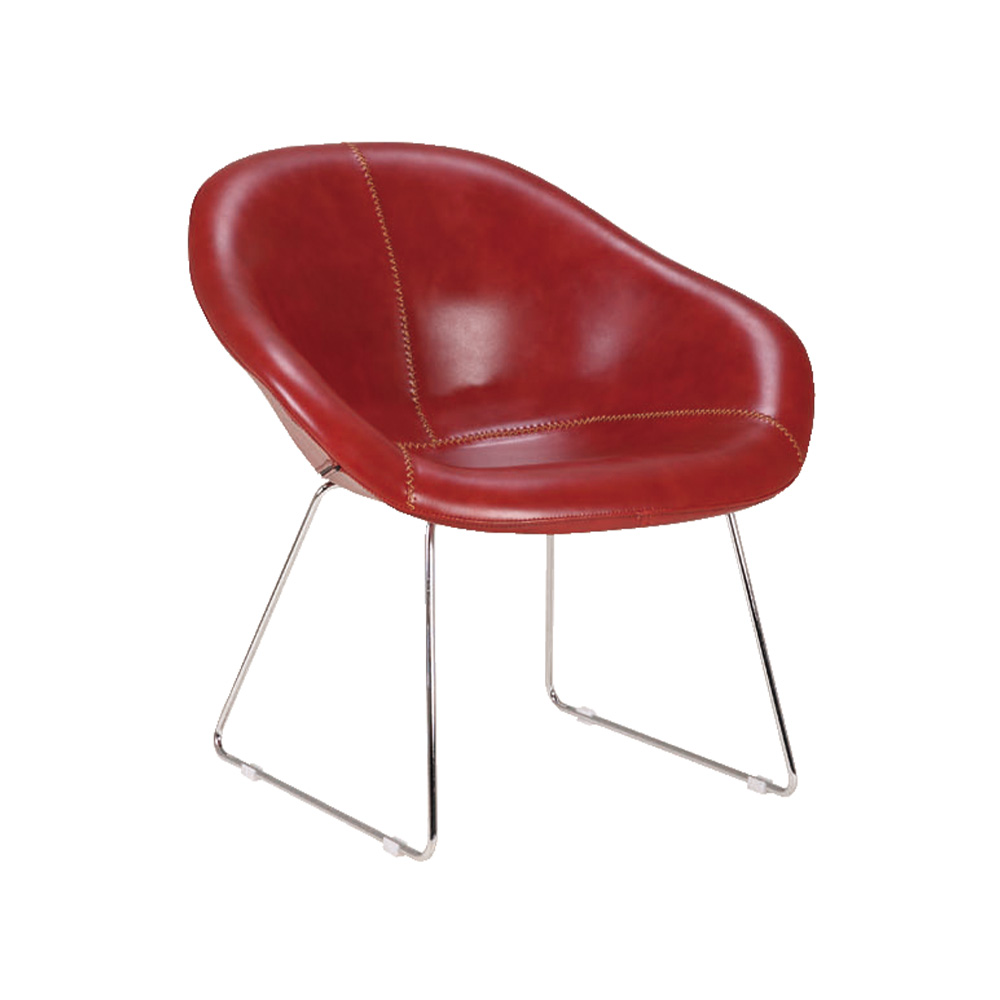
PU leather (polyurethane leather) is a synthetic material applied over a fabric backing. It's waterproof, stain-resistant, and significantly more comfortable than bare plastic — all qualities that make it the go-to choice for households that spend real time at the dinner table. The ZY-9028, a popular model with a plastic shell base, original foam cushioning, and PU vintage leather upholstery, measures W600×D520×H780mm with a 450mm seat height and Ø32mm welded metal legs. The foam layer underneath the PU surface is what separates a PU leather chair from a hard seat — it provides genuine cushioning without requiring thick upholstery that's harder to maintain.
| Feature | Plastic (PP) | PU Leather |
|---|---|---|
| Comfort (extended sitting) | Low (without cushion) | High |
| Spill resistance | Excellent | Excellent |
| Cleaning effort | Wipe clean | Wipe clean |
| Stackability | Yes (most models) | No |
| Color / style options | Wide range | Wide range |
| Long-term durability | Very high | High (quality-dependent) |
| Best for | Cafes, high-traffic, compact spaces | Homes, restaurants, formal dining |
One important note on PU leather quality: not all PU is equal. Multi-layer PU with a dense backing wears significantly better than single-layer PU, which can crack or peel within 2–3 years of daily use. When evaluating a PU leather chair, look for chairs that specify original foam (not recycled or rebonded foam) and reinforced stitching at the seat edges — these are the first areas to show wear.
The Comfort Question: Seat Height and Back Angle Matter More Than Material
Buyers often focus exclusively on upholstery when comfort depends just as much on geometry. A standard dining chair seat height sits between 440–460mm — designed to pair with tables at 720–760mm. Go outside that range and you'll notice it after every meal. The back angle matters too: a slight recline (100–105°) takes load off the lower spine during longer meals. A perfectly flat backrest, however well-padded, causes fatigue. Before committing to any dining chair, verify the seat height against your table. Most manufacturers list this spec; chairs without it are worth skipping.
For households with young children or elderly members, a chair with armrests adds meaningful support when sitting down and standing up. The full dining chair range includes both armrest and armless versions across plastic and upholstered options — choosing the right configuration for your household is as important as the material decision.
Matching Chairs to Your Dining Room Setting
The most overlooked factor in dining chair selection is how the chair interacts with the rest of the room. In open-plan homes where the dining area is visible from the living room, the visual weight of the chairs matters. Solid plastic chairs in a neutral color (white, gray) tend to read as lighter and less visually dominant. PU leather chairs in darker tones (black, brown, deep blue) add visual anchoring — useful in rooms that lack other bold elements.
For commercial settings like cafes and restaurants, the calculation shifts to durability and density. Plastic chairs stack 6–8 high and clean in seconds, which directly affects labor costs over time. A restaurant running 50 covers that switches from fabric to plastic or PU leather typically sees cleaning time cut by more than half. PU leather is a strong middle ground for restaurants wanting a premium look without the maintenance commitment of genuine leather.
The guide to choosing dining room chairs for style and function covers additional considerations for specific room sizes and table shapes if you want to go deeper on the design side.
What to Check Before You Buy
A short checklist that applies to both material types:
- Seat height: Confirm it matches your table (ideally 280–300mm clearance between seat and tabletop underside).
- Frame material and joint construction: Welded metal joints outlast bolted connections. Look for tube diameter specs — Ø25mm and above is the threshold for commercial durability.
- Weight capacity: Reputable manufacturers list static load ratings. 120kg minimum for home use; 150kg+ for commercial.
- Certifications: ISO 9001 manufacturing certification and BSCI audit compliance indicate consistent quality control — relevant when ordering in volume or from overseas suppliers.
- Foam density (for upholstered chairs): Original high-density foam holds its shape; low-density foam compresses and flattens within months of daily use.
The Bottom Line
Plastic dining chairs win on practicality — they're lightweight, virtually indestructible, stackable, and effortless to clean. PU leather chairs win on comfort and visual presence — they make a dining room feel designed, and the foam cushioning makes longer meals genuinely comfortable. Neither choice is wrong. The right one depends on how you use the space. A family kitchen table that sees breakfast, homework, and dinner every day is a different environment from a formal dining room that hosts guests twice a month.
Get the geometry right first (seat height, back angle, frame strength), then choose the surface material based on your real daily use — and you'll end up with chairs that work for years rather than just look good in the store.
QUICK LINKS
PRODUCTS
CONTACT & INFORMATION
-
 PHONE NUMBER
 -
 EMAIL
EMAILstellazhang@yimiga.com
-
 ADDRESS
No 366, Jingtu Road, Dipu Street, Anji County, Huzhou City, Zhejiang province, China. PC 313300.
CONNECT WITH US
Be the first to know about our news and updates.


Copyright © Zhejiang Zhongyi Furniture Co., Ltd.
All Rights Reserved.
 浙公网安备33052302000377号
浙ICP备14003933号-2
浙公网安备33052302000377号
浙ICP备14003933号-2
 Wholesale Ergonomic Chair Manufacturers