 English
 عربى
عربى Español
 中文简体
中文简体
+86-0572-5888031

0
ENG
Best Standing Desk 2025 Buying Guide: Frame Specs That Still Hold Up in 2026
 Home / Media / Industry News / Best Standing Desk 2025 Buying Guide: Frame Specs That Still Hold Up in 2026
 Best Standing Desk 2025 Buying Guide: Frame Specs That Still Hold Up in 2026
 2026.10.09
 Industry News
Content
A dual-motor frame that held 120 kg steady in a 2025 test rig has not become weaker since. What changed by late 2026 is the price, the warranty wording, and how much of the frame specification a listing still shows. Buying a 2025 model-year standing desk today is mostly a paperwork exercise: if the seller still publishes column stages, load rating and motor count, the desk is comparable with anything launched since. If those numbers have quietly disappeared, the discount is the only thing left on the table.
Three published numbers decide most of what a standing desk feels like in daily use: the height range, the rated load, and the column and motor configuration. Everything else, from memory presets to cable trays, is a convenience you can add later.
What Actually Defines the Best Standing Desk in 2025
The best standing desk in 2025, judged in 2026, is the one whose published specifications still match your body, your floor and your load, not the one with the longest feature list. A frame that fits your height range and load rating beats a frame with two extra USB ports every time.
A standing desk is a height-adjustable work surface whose frame carries a stated load across its entire travel range, not only at its lowest position. That rating belongs to the frame. The desktop, the monitor arm, the PC holder and the drawer all eat into it.
Four numbers carry most of the decision:
- Height range in centimetres, measured at the top surface, including desktop thickness.
- Rated load in kilograms across the full travel, not just at the bottom stop.
- Column stages, usually two or three; three stages buy range but reduce tube overlap.
- Motor count, one or two, which sets lift speed, noise and how the frame handles an uneven load.
62-128Height range, cm
80-120Rated load, kg
3-4Memory presets
Speed sits between 25 and 38 mm per second on current frames, and noise under 50 dB is normal for dual-motor units. Both matter less than people expect, because a well-set desk moves twice a day. Read the warranty split instead: frames are commonly covered for 5 to 15 years while the control box and handset are covered for 2 to 5. On a clearance 2025 model, the electronics warranty may expire before your first year ends.
Stability Is a Frame Problem, Not a Desktop Problem
Lateral wobble at standing height comes from four places, in this order: the joint between frame and desktop, the overlap between column stages, the foot design, and the floor under it. The desktop is almost never the cause.
Indicative stability by frame type, higher is better
Two-leg, two-stage
Two-leg with crossbar
Three-stage, wide feet
Four-leg frame
Based on frame geometry and column overlap, not on laboratory measurement. Use it to compare categories, not brands.
Check first
Wobble is rarely the desktop's fault. Tighten the fasteners between frame and top, then check how much column tube remains inside its sleeve at your standing height, then look at the feet.
A crossbar adds real rigidity, but it removes legroom and blocks a chair from tucking fully under the desk. Three-stage columns reach higher while overlapping less when extended, which is why wide, heavier feet usually ship with them. Four-leg frames score highest on sway and lowest on portability. One practical point is easy to miss: stability is height-dependent. A desk that feels solid at 105 cm may feel loose at 125 cm, so buyers above 185 cm should weight the top of the range far more heavily than the bottom.
Single Motor, Dual Motor and Four-Leg Frames Compared
Dual-motor two-leg frames are the default choice for most buyers working through 2025 stock; single-motor frames survive on price, and four-leg frames exist for heavy loads and shared surfaces.
| Configuration | Rated load | Lift speed | Typical use |
| Single motor, two-leg | 50-70 kg | 20-25 mm/s | Laptop home desks |
| Dual motor, two-leg | 80-120 kg | 30-38 mm/s | Default office and home office |
| Dual motor, three-stage | 100-120 kg | 30-38 mm/s | Tall users, wide height range |
| Four-leg frame | 120-200 kg | 25-35 mm/s | Multi-monitor and shared desks |
Single motor wins on
- Lower purchase price
- Fewer electronic parts to fail
- Lighter shipping weight
Dual motor wins on
- Quieter, faster lifting
- Better behaviour with uneven loads
- More stability at standing height
Rule of thumb
If the surface will carry two monitors, a docking station and a laptop, the 50-70 kg single-motor band is too close to the limit. Add desktop, arm and drawer weight before comparing frames.
Matching the Chair to a Height-Adjustable Desk
The chair carries half the ergonomic result. A sit-stand desk only delivers when the chair's seat height range and arm configuration let you sit at the same posture you stand in, and when the chair can tuck under the desk when you stand up.
Desk range without a matching seat range just moves the problem from your back to your shoulders.
Three chair specifications do the work here:
- Seat height adjustment, commonly 450 to 505 mm on a gas-lift office chair. Below 450 mm suits shorter users; above 505 mm is rare outside drafting stools.
- Gas spring class, Class III or Class IV. A Class IV cylinder with a thicker wall holds height better over years of daily cycling.
- Arm configuration. Flip arms or 2D arms with soft pads let the chair sit closer to the desk edge, which is what makes the seated half of the cycle comfortable.
Then set the pairing in five moves:
Raise the desk until your elbows sit near 90 degrees with the keyboard at hand height.
Sit down, set the seat so your thighs are roughly parallel to the floor and your feet rest flat.
Set lumbar support so it fills the lower back curve rather than pushing the spine forward.
Drop the armrests until your shoulders relax, then check the chair still slides under the desk.
Alternate sitting and standing roughly every 30 minutes; a three-preset memory pad makes this a one-touch habit.
Buyers specifying a whole floor should treat the chair and the desk as one bill of materials. Seat width from 480 to 520 mm, a 350 mm star base on nylon or metal, a Class III or Class IV cylinder and a mesh back for airflow are the variables that decide whether a setup survives eight hours a day. The same matching logic from the seating side is set out in this adjustable office chair setup guide.
Models built for sit-stand use
The three models below are the ones most often specified alongside height-adjustable desks, because their seat heights and arm types cover the seated half of the cycle.
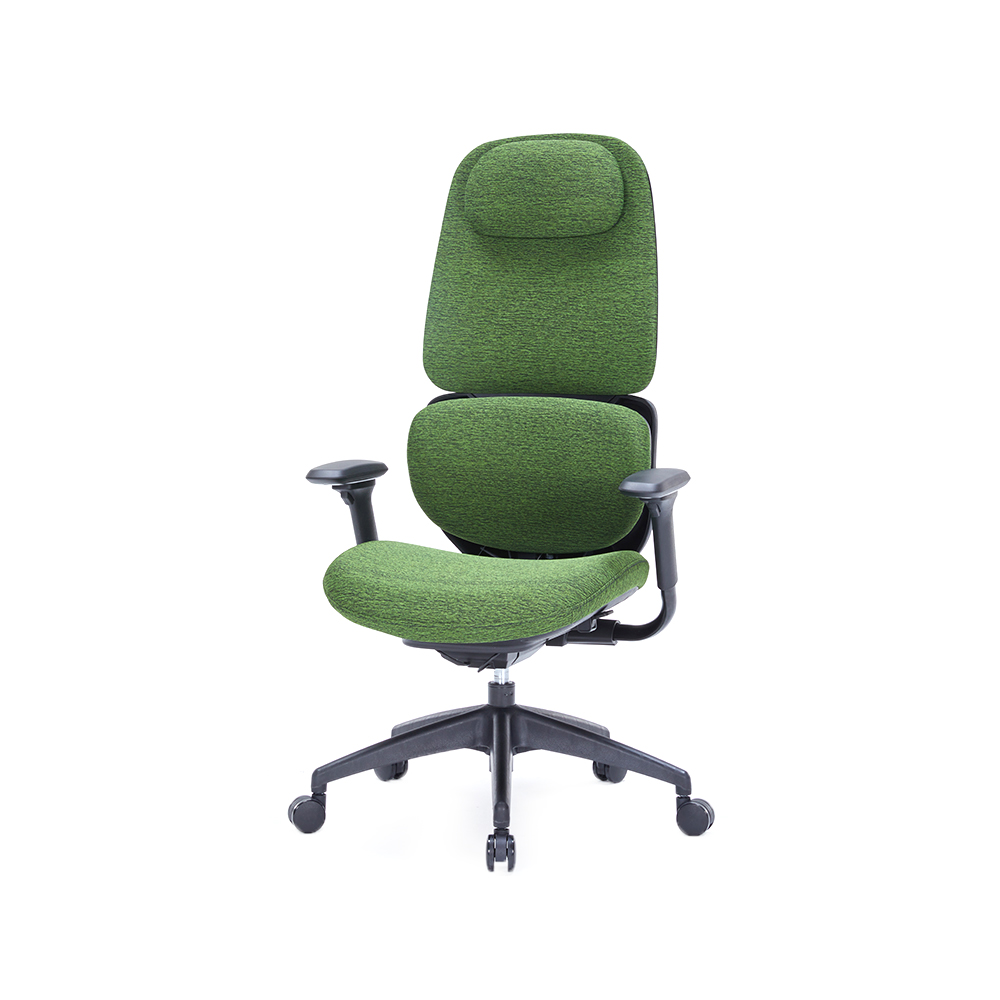 ZY-6813 Black Mesh Office Chair with 3D ArmrestDouble-mesh office chair with headrest, lumbar support, 3D armrests and four-step tilt lock for long work sessions.View Product →
 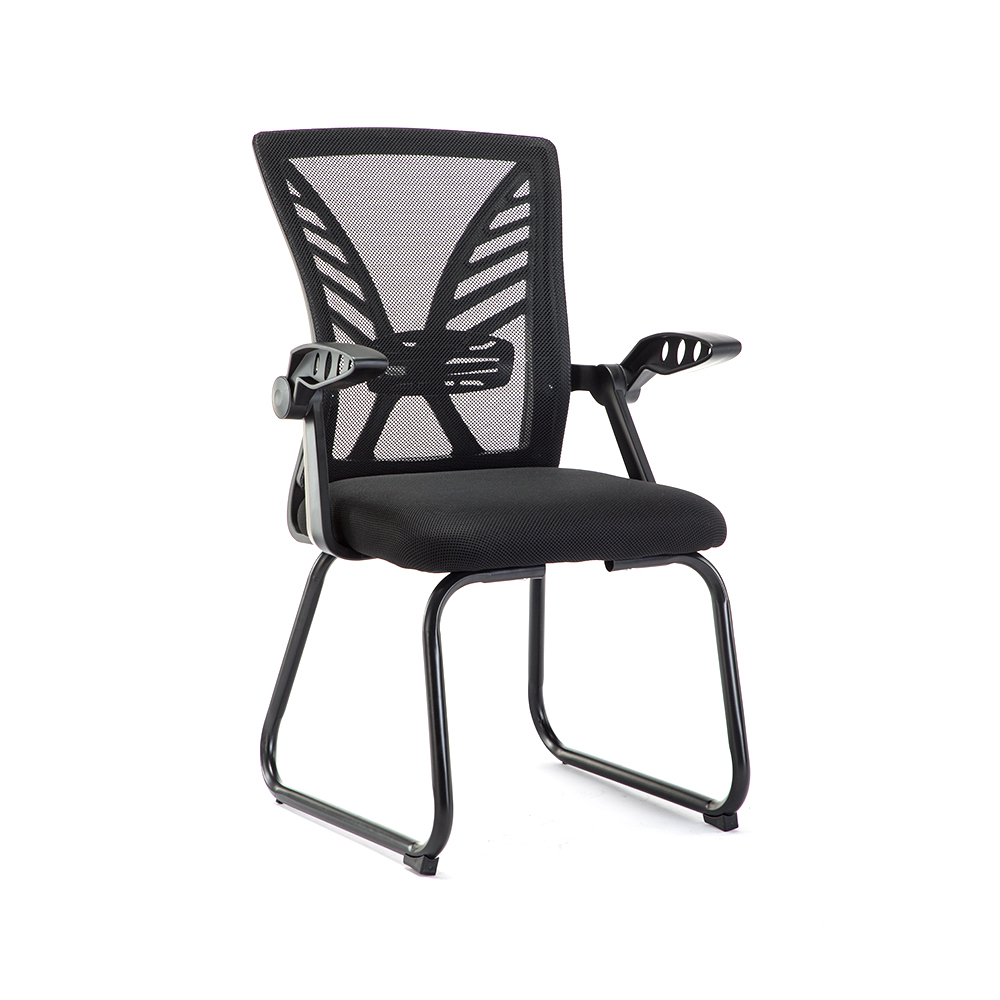 ZY-6801-2 Mesh Office Chair with Flip ArmrestsMesh-back office chair with fabric seat, flip armrests, lumbar support and height adjustment for meeting rooms, waiting areas, or office use.View Product →
 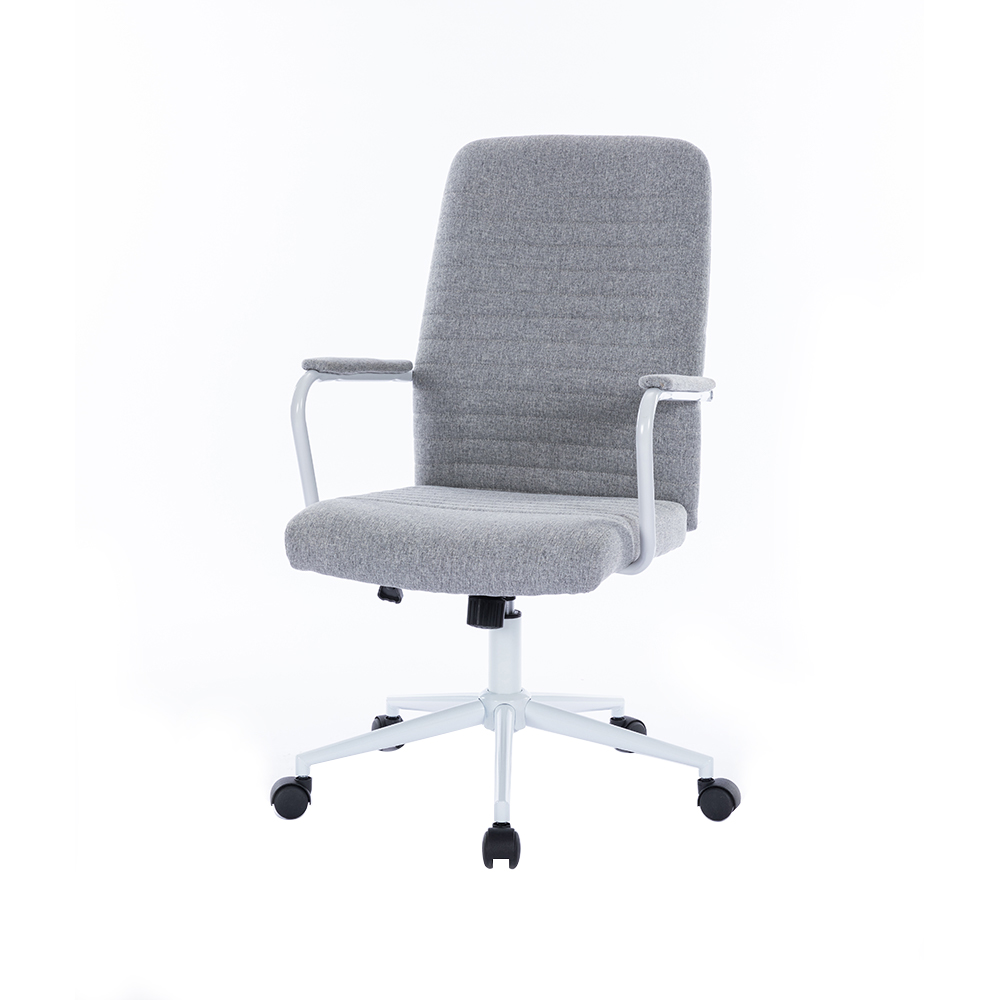 ZY-6519 High-Back Leather or Fabric Office ChairHigh-back office chair in black PU fabric with padded metal arms, rocking mechanism, and gas height adjustment for varied workspaces.View Product →
For users who need a taller back and independent back-height adjustment, the back height adjustable mesh chair covers a wider range of seated postures than a fixed-back model.
Frequently Asked Questions
Is a 2025 standing desk still worth buying in 2026?
Yes, if the seller still publishes height range, load rating, column stages and motor count. A 2025 frame with a documented 120 kg rating and a 10-year frame warranty is a better buy than a newer frame with an unlisted load rating.
What is the right standing height for a desk?
Set the desk so your elbows rest near 90 degrees with your forearms level and wrists straight. For most adults that falls between 100 and 115 cm. Users above 190 cm often need 120 cm or more, which is where three-stage columns and a load rating measured across the full travel range matter.
How long should you stand at a standing desk?
Roughly 30 minutes at a time, alternating with sitting, is the pattern most people keep. Standing all day loads the lower back and feet without adding focus, so treat the height change as a posture reset rather than an all-day position.
Do you need a special chair for a standing desk?
No special chair, but a matching one. Look for 450 to 505 mm seat height adjustment, a Class III or Class IV gas spring, a back with real lumbar contact, and flip or 2D arms that let the seat slide close to the desk edge.
The 2025 standing desk market is now largely a clearance market, and clearance rewards buyers who read specifications rather than badges. Confirm four numbers, check where the top of the height range leaves you, then spend the rest of the budget on the chair that has to match it.
Two numbers settle most of the risk: the load rating measured across the full travel range, and the seat height range of the chair that will sit under it. If either one is missing from the listing, the discount is not a discount.
QUICK LINKS
PRODUCTS
CONTACT & INFORMATION
-
 PHONE NUMBER
 -
 EMAIL
EMAILstellazhang@yimiga.com
-
 ADDRESS
No 366, Jingtu Road, Dipu Street, Anji County, Huzhou City, Zhejiang province, China. PC 313300.
CONNECT WITH US
Be the first to know about our news and updates.


Copyright © Zhejiang Zhongyi Furniture Co., Ltd.
All Rights Reserved.
 浙公网安备33052302000377号
浙ICP备14003933号-2
浙公网安备33052302000377号
浙ICP备14003933号-2
 Wholesale Ergonomic Chair Manufacturers