 English
 عربى
عربى Español
 中文简体
中文简体
+86-0572-5888031

0
ENG
Classroom Flexible Seating: A Spec and Sourcing Guide for School Buyers
 Home / Media / Industry News / Classroom Flexible Seating: A Spec and Sourcing Guide for School Buyers
 Classroom Flexible Seating: A Spec and Sourcing Guide for School Buyers
 2026.10.15
 Industry News
Content
Classroom Furniture Procurement
Flexible seating is a procurement problem before it is a teaching problem. A primary-level chair sits at roughly 260 to 305 mm, an intermediate chair at 355 to 380 mm, and a secondary or adult chair at 420 to 460 mm. Put a floor cushion, a wobble stool and a stackable chair into one room, and that room only works if every seat height still lines up with the tables around it.
That is the part most catalogues skip. They show a bright reading corner and an active stool, but not the caster diameter, the gas spring class or the stack height, which are the details that decide whether the furniture is still in service in year four. The notes below come from the manufacturing side of the industry, where one chair model has to survive thirty students a day, a district replacement plan and a container crossing an ocean before it is ever unboxed.
What Flexible Seating Actually Means in a Working Classroom
Flexible seating is any seating that lets a student choose a working posture, on the floor, kneeling, perching, standing or sitting conventionally, without leaving the learning zone or blocking sight lines to the board.
Definition
Flexible seating: a mix of floor-level, stool-level and table-level seats inside one classroom, each one matched to a table height and a task, with no seat so low or so soft that a student cannot write, read or turn to face the teacher.
The useful distinction is between seats that change posture and seats that only change the view. A pouf changes the view: it gives the spine no support and cannot carry forty minutes of writing. A wobble stool or a height-adjustable chair changes posture, which is why those two survive the novelty phase in rooms that teachers keep using into the second and third year.
So compare every option on four numbers: seat height, footprint per student, seat weight, and the part that fails first.
| Seat type | Seat height | Where it earns its place | First wear point |
| Floor cushion or pouf | 100-200 mm | Reading corner, calm-down space | Cover seam and filling compression |
| Active or wobble stool | 330-460 mm | Standing-height group work, quick turn-and-talk | Rubber base and tilt spring |
| Stackable polypropylene chair | 300-450 mm | Whole-class seating, fast reconfiguration | Back-to-seat joint and leg rib |
| Height-adjustable task chair | 420-520 mm | Intervention tables, older students, staff | Gas spring, caster and arm pad |
| Cafe or counter stool | 600-750 mm | Standing counters, secondary study bars | Footrest weld and seat bracket |
Four Zones That Keep a Flexible Room Manageable
Rooms that stay flexible divide into four zones: a low reading zone, a collaborative table zone, a perch or standing zone, and a teacher or intervention zone. Each zone needs a different seat, and no zone needs more than two seat types.
Low reading zone
Floor cushions and low lounge seats sit between 100 mm and 200 mm. Two or three positions are enough. Anything below 100 mm becomes a trip hazard once twenty-five students are moving between tables.
Collaborative table zone
Tables from 640 mm to 760 mm work with chairs from 380 mm to 460 mm. This is where most of the budget belongs, because these seats carry roughly seventy percent of the school day. Stacking matters here, and so does weight: a chair a nine-year-old can lift gets returned to the right place, while a chair that is dragged gets broken inside a term.
Perch and standing zone
Counters from 850 mm to 1050 mm pair with stools from 600 mm to 750 mm. Keep the zone to two or three positions and inspect the footrest weld, because a stool in a classroom is loaded far more often than a stool in a restaurant.
Teacher and intervention zone
A small group table plus height-adjustable chairs. Adults use this zone as much as students do, so a 420 mm to 520 mm adjustment range covers the widest spread of body sizes in the building. A back-height adjustable chair keeps posture support consistent with the rest of the room without looking like office furniture.
A rule that survives contact with a real timetable: keep at least two thirds of the seats at standard table height. A room where most seats are floor-level or stool-level photographs well and becomes a traffic problem by October.
Specifications That Predict Whether the Seating Lasts
Three specifications decide whether flexible seating survives a school year: the seat structure, the base and caster assembly, and the mechanism class.
15-25 mm
Plywood seat board, the line between a firm seat and a sagging one
Class III-IV
Gas spring rating for height-adjustable chairs
420-520 mm
Adjustment range covering secondary students and adults
4-6 high
Stack height for classroom chairs, checked against storage clearance
Seat structure comes first. A plywood seat board of 15 to 25 mm keeps its shape under repeated loading, while a thin board or an unribbed plastic shell flexes and eventually cracks at the screw points. Foam density matters too, normally 25 to 35 kg per cubic metre for a cushion that still looks new after two years of daily use.
Mesh backs suit classrooms because they breathe and resist pen damage, but cheap mesh sags. Look for a back that is tensioned across a frame rather than simply wrapped around it, and check how the mesh is anchored at the lumbar area. The relationship between mesh back support and sitting posture is well documented, and it explains why mesh has replaced padded backs in most multi-use learning spaces.
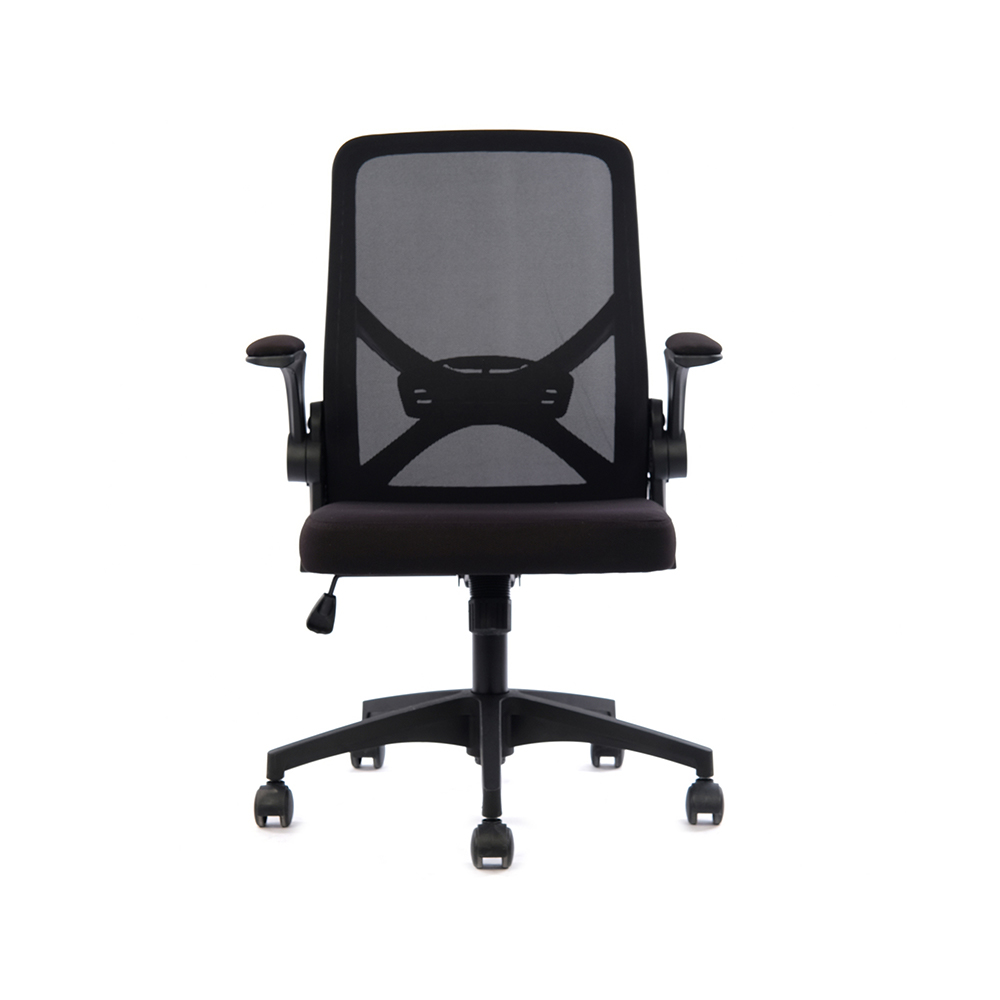
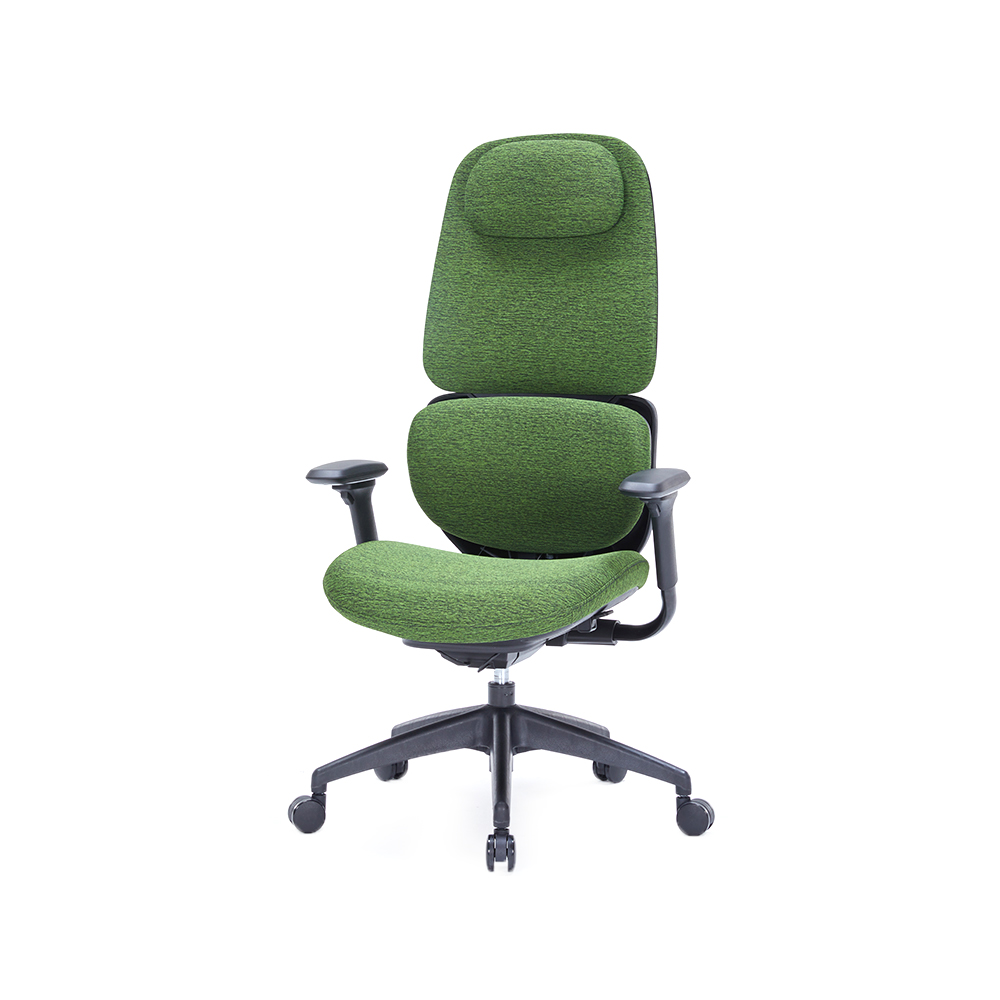 ZY-6813 Black Mesh Office Chair with Class IV Gas SpringZY-6813 has double mesh, 2D lumbar support and a Class IV gas spring, relevant where mesh posture and height durability matter.View Product →
Where height adjustment is part of the specification, the gas spring class is the item that quietly gets downgraded to hit a price. A rated Class III or Class IV spring holds up under constant re-adjustment, an unrated one does not, and replacing a cylinder often costs more in labour than the chair is worth.
Then match the base to the floor. Nylon bases on dual-wheel casters glide across tile and low-pile carpet but mark soft vinyl, while metal bases with universal foot nails run quieter when twenty-five chairs move ten times a day.
Storage, Stacking and Daily Movement
Flexible seating stays flexible only if a class can rearrange the room in about ninety seconds, so stack height, chair weight and folding geometry matter more than the shape of the back.
Stackable seating
- Four to six chairs per stack, counted and returned by students
- Lowest cost per seat and the easiest inventory to audit each term
- Check leg splay for stability and never stack above the height marked on the frame
Foldable and flip-arm seating
- Back folds or arms flip so the chair parks under a table
- Clears floor area for group work, assemblies and movement breaks
- Hinge and arm pivot are the wear points, so ask for the test cycle count
Check the storage wall before the catalogue. A four-high stack of classroom chairs needs roughly 1.8 m of clear height on a level floor, and a flip-arm chair parked under a 720 mm table needs at least 150 mm of leg inset, or the arms will not clear the table frame.
In shared rooms that geometry pays for itself. A chair that folds its back or flips its arms into a compact footprint earns its cost back in floor area alone, which is why these models appear in learning commons and multi-purpose rooms as often as in classrooms.
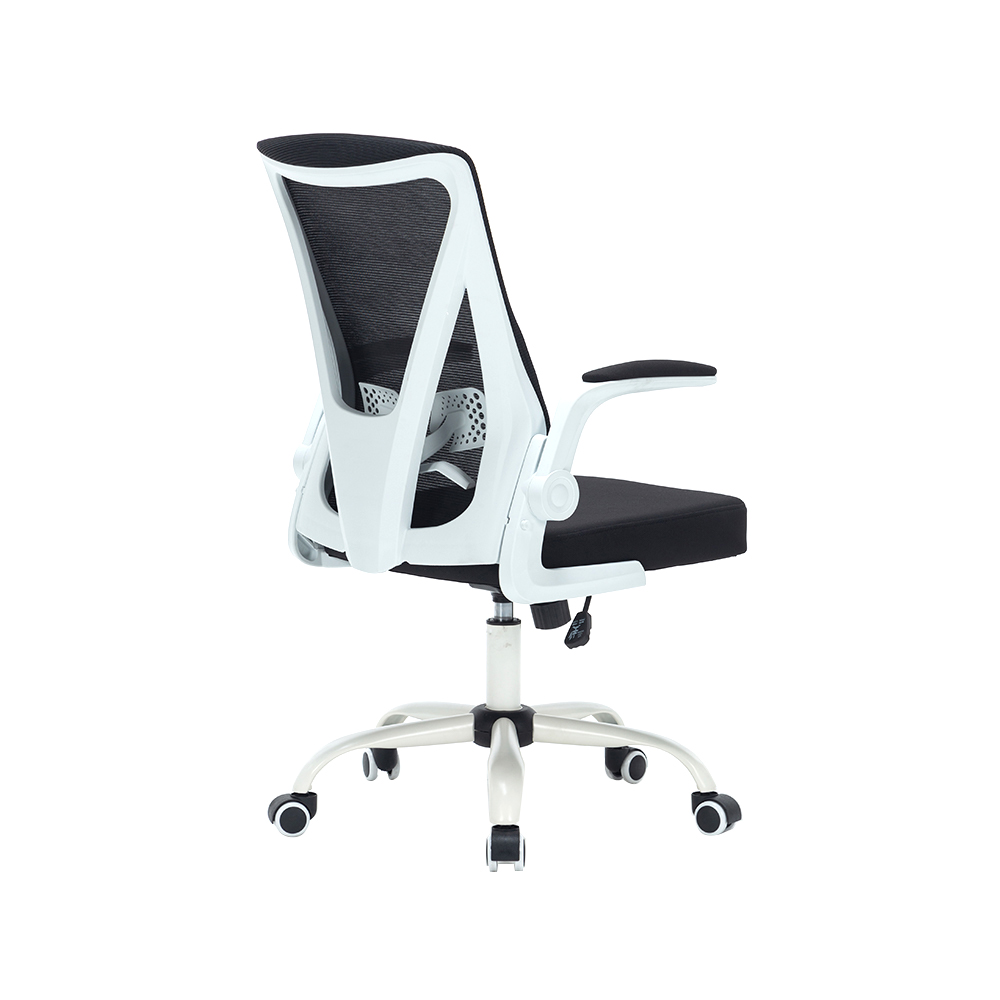 ZY-6808 Folded Back Office Chair with Flip ArmsIts folded back and height-adjustable flip arms create a compact footprint for shared rooms, with mesh grey fabric and a Class III gas spring.View Product →
Sourcing, Sampling and Lead Times for School Orders
School seating orders are usually decided on three things before price: a physical sample, verifiable certification, and a written spare-parts commitment.
- A sealed sample of the exact chair at the specified seat height, not a catalogue render
- Test reports for the mechanism, the base and the caster, including the load rating used in each test
- Certificates covering quality and social compliance, such as ISO 9001, ISO 14001 and BSCI, with additional documentation supplied where a district requires it
- A replacement-parts list with part numbers and unit prices for casters, gas springs, arm pads and seat boards
- A delivery window that includes tooling or colour matching rather than production time alone
For learning commons, canteens and shared breakout areas, a one-piece polypropylene chair is often the practical answer: no upholstery to replace, wiped clean in seconds, and stacked by students rather than staff.
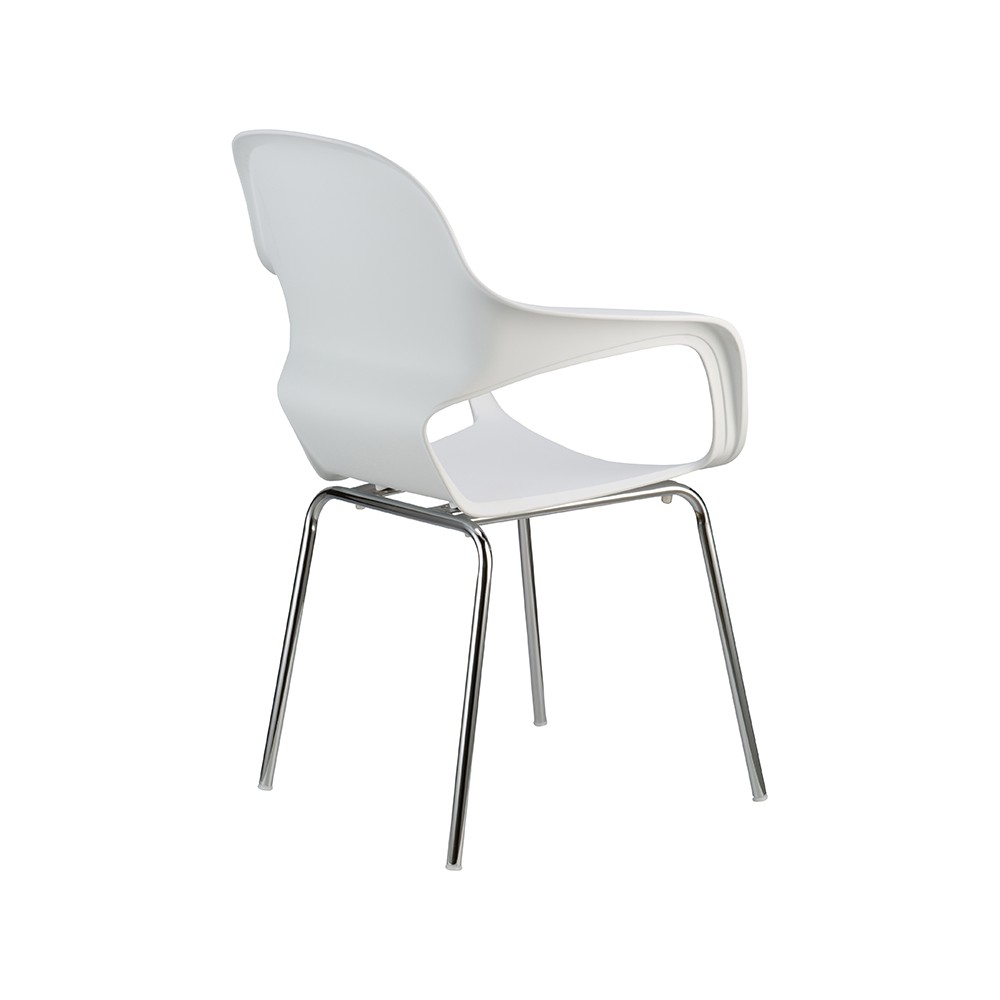 ZY-9000 All-Plastic Stackable Dining Chair with Chromed LegsA one-piece PP seat with chromed metal tube legs, easy to wipe clean and stack for canteens, learning commons and shared breakout areas.View Product →
Whatever model ends up in the room, the sample, the test report and the spare-parts list will tell you more about year three than any showroom photograph.
Frequently Asked Questions
What is the right seat height for flexible classroom seating?
Match the seat to the table rather than to an age label. A 640-710 mm table pairs with a 350-400 mm seat, and a 710-760 mm table pairs with a 420-460 mm seat. If the room has mixed table heights, buy two seat heights instead of one adjustable chair for every position.
How much flexible seating should a classroom actually have?
Keep conventional table-height seating as the majority, roughly two thirds of the positions, and use the remaining third for perching, standing or floor-level seats. That mix gives students a real choice without creating a traffic problem at the start and end of a lesson.
Are wobble stools and balance balls suitable for full-day use?
No. Active stools work well for short, focused periods of about 10 to 20 minutes. For a full lesson a student still needs a seat with a back and a stable base, especially for extended writing.
What should a school check in a supplier sample before ordering?
Test the seat at the specified height, load the base and casters on the actual floor surface, measure the stack height, and confirm that casters, gas springs and seat boards are available as separate spare parts with quoted prices.
Flexible seating works when it is specified like furniture and not like decoration: seat heights that match the tables, frames and mechanisms that survive daily re-adjustment, and a storage plan a nine-year-old can execute in ninety seconds. Get those three right and the room stays flexible for years instead of for a term.
QUICK LINKS
PRODUCTS
CONTACT & INFORMATION
-
 PHONE NUMBER
 -
 EMAIL
EMAILstellazhang@yimiga.com
-
 ADDRESS
No 366, Jingtu Road, Dipu Street, Anji County, Huzhou City, Zhejiang province, China. PC 313300.
CONNECT WITH US
Be the first to know about our news and updates.


Copyright © Zhejiang Zhongyi Furniture Co., Ltd.
All Rights Reserved.
 浙公网安备33052302000377号
浙ICP备14003933号-2
浙公网安备33052302000377号
浙ICP备14003933号-2
 Wholesale Ergonomic Chair Manufacturers