 English
 عربى
عربى Español
 中文简体
中文简体
+86-0572-5888031

0
ENG
Plastic Dining Chair Buying Guide: Materials, Comfort, and Quality Checks
 Home / Media / Industry News / Plastic Dining Chair Buying Guide: Materials, Comfort, and Quality Checks
 Plastic Dining Chair Buying Guide: Materials, Comfort, and Quality Checks
 2026.08.27
 Industry News
Content
A café owner in a humid coastal city once told us she replaced her wooden dining chairs twice in three years — once after a deep-cleaning crew left the seats swollen and sticky, and again when the joints loosened from being stacked and moved every night. Both failures trace back to the same root: wood handles constant moisture and rough daily handling poorly.
The short version for anyone in a similar position: a well-made plastic dining chair absorbs none of that punishment. It shrugs off spills, stacks between services, and costs less per seat over its working life than most alternatives. What separates a chair that lasts five years from one that cracks in eight months comes down to three things — the plastic grade, the mold quality, and a handful of comfort measurements.
Why Plastic Dining Chairs Earn Their Place
Cleaning is the first reason buyers switch. A one-piece molded seat has no seams, no fabric, and no crevices where sauce, juice, or crayon marks can hide — a damp cloth and mild soap restore the surface in seconds. That single trait explains why families with young children and restaurant operators keep coming back to plastic.
Moisture resistance comes next. Polypropylene does not absorb water, so it will not swell, warp, or grow musty in humid kitchens, coastal air, or steamy dishwashing areas. The chair that sits flat on day one still sits flat in year five, and the same property makes plastic a sensible choice for covered patios and balconies as long as the grade includes UV stabilization.
Weight and storage close the case. Most plastic dining chairs weigh between 3 and 5 kilograms, light enough for one person to rearrange a sixty-seat floor in minutes, and many all-plastic designs stack four to ten high on a single trolley. For banquet halls, event venues, and cafés that clear the room between services, that stacking ratio saves real money in labor and storage.
Cost is the quiet advantage. Plastic undercuts upholstered and solid-wood chairs per unit, and because it resists the usual failure modes — stains, moisture, and loosened joints — the lifetime cost per seat often ends up lower even after the occasional replacement. The exception is the bargain bin: chairs molded with thin walls or mixed recycled plastic tend to crack at the seat-to-leg junction. That risk is manageable once you know what to inspect.
ZY9000 all-plastic dining chair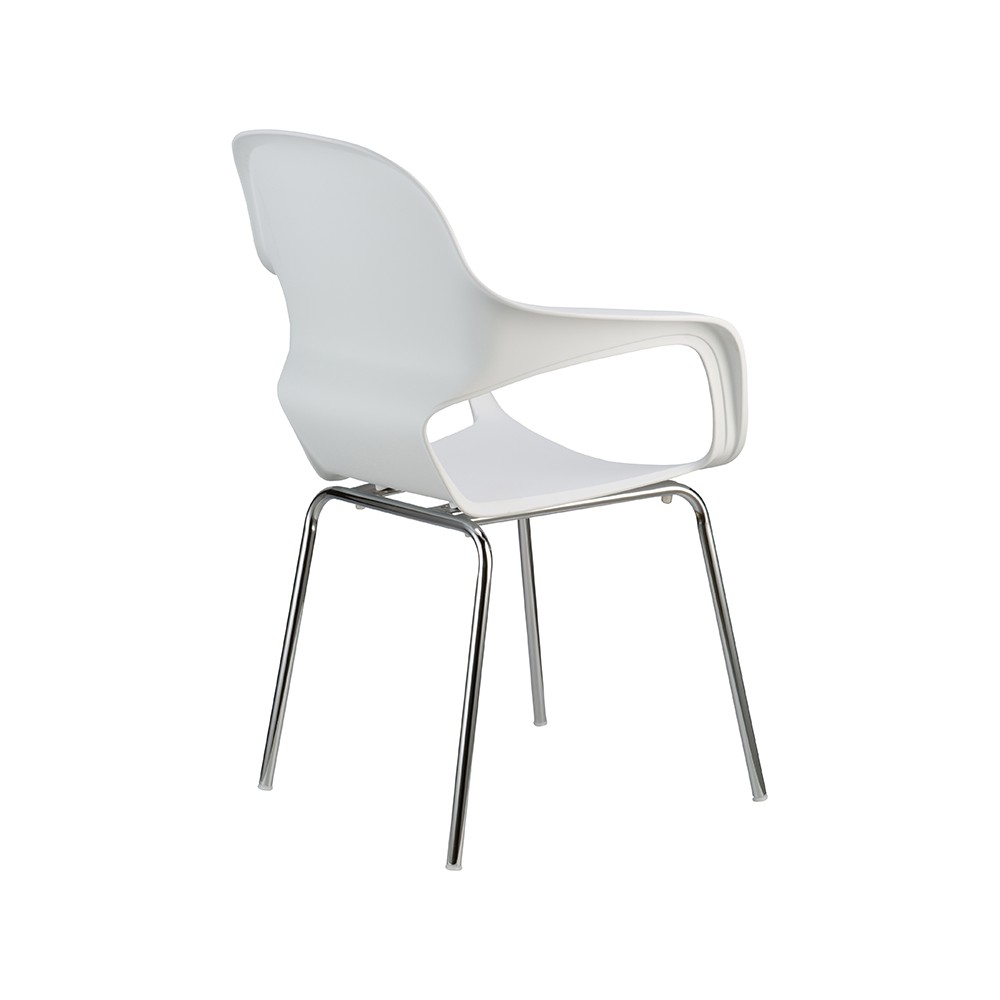 ZY-9000 All-Plastic Dining Chair with Metal LegsA polypropylene dining chair with chromed steel tube legs, stackable and available in many colors. It fits the article's point about PP balancing strength, weight, and easy cleaning at a lower unit cost than wood or upholstered seating.View Product →
Choosing the Right Plastic: PP, Reinforced PP, and PC
Polypropylene (PP) is the workhorse of the category. It balances strength, weight, and price better than any other seating plastic, tolerates common cleaning chemicals, and accepts pigment easily, which is why the color range runs so wide. Glass-fiber reinforced PP starts from the same resin and adds stiffness, letting manufacturers mold thinner shells that still carry a full adult load with minimal flex.
Polycarbonate (PC) is the premium tier. It is the transparent, glass-like plastic behind glossy designer shells, and its impact strength is exceptional. The trade-offs are a higher price, a greater tendency to scratch than PP, and a hard requirement for UV stabilizers if the chair will live near a window or outdoors.
Construction matters as much as resin. All-plastic chairs mold the seat, back, and legs as a single piece, which removes joints from the failure equation entirely. Shell designs mold the seat and back together, then fasten them to metal or wooden legs for a lighter visual profile and easier leg replacement. Both are legitimate choices; the second simply turns a few bolts into a maintenance point.
| Material / Construction | Typical Look and Feel | Key Strengths | Points to Verify |
|---|---|---|---|
| Polypropylene (PP) | Matte or lightly textured, wide color range | Balanced strength and cost, resists moisture and most chemicals | Wall thickness and UV package for sunny spaces |
| Glass-fiber reinforced PP | Stiffer shell, often a slimmer profile | Higher load capacity, less flex over time | Slightly higher unit cost; finish consistency |
| Polycarbonate (PC) | Transparent or translucent, glossy | High impact strength, premium appearance | Scratch sensitivity and UV stabilization |
| Plastic shell with metal or wood legs | Two-part build, lighter visual weight | Design flexibility, replaceable legs | Fastener quality and joint tightness |
Whichever route you take, ask the supplier to confirm the resin grade in writing — it is the cheapest insurance available in this category.
Comfort Details That Separate Good Molds from Cheap Ones
Start with the seat. Pair a 45 to 48 centimeter seat height with a standard 75-centimeter dining table, look for a seat depth of roughly 40 to 44 centimeters, and check that the front edge rolls down slightly — that waterfall curve keeps pressure off the thighs through long dinners.
Back shape is the next checkpoint. Molded plastic chairs often carry a lower backrest, and that is a deliberate choice rather than a flaw: meals rarely run past an hour, so a curved shell that supports the lower back delivers comfort without the bulk of a high back. If the chair will double as a work or lounge seat, step up to a taller back. Either way, run a hand along every rim — quality molds round each edge so nothing bites into shoulders, knees, or the backs of the arms.
Flex, done right, is a feature. A properly engineered PP shell gives slightly under body weight, spreads pressure across the seat, and springs back — a feel that cheap, over-thick shells cannot imitate. Check the stated static load (a credible figure starts around 120 kilograms) and ask whether the model passed repeated-load fatigue testing, not just a single pull.
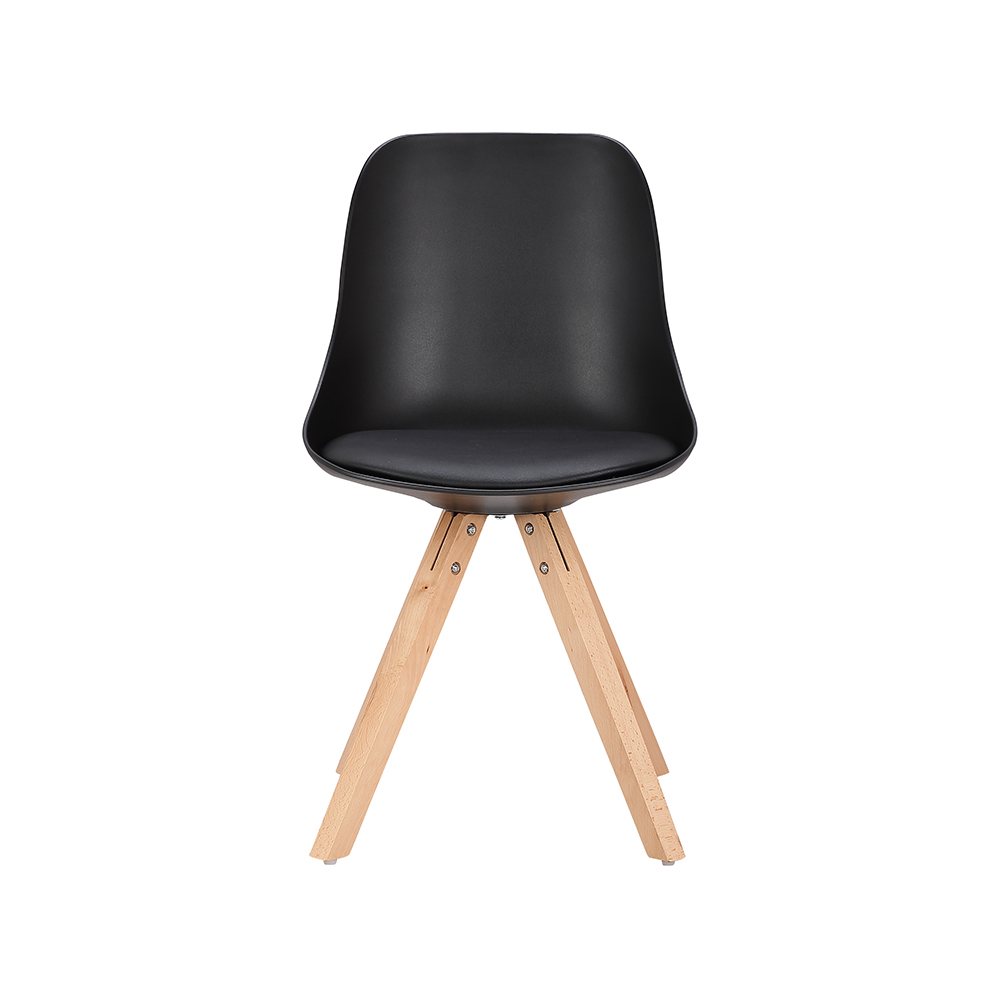
On style, the mid-century molded shell remains the dominant silhouette, and color is what currently moves product: sage green, terracotta, and warm neutrals outsell basic black and white in most of the markets we ship to. If you are refreshing a whole space rather than one room, browsing a latest modern chair styles collection side by side makes it much easier to judge how new finishes will sit together.
ZY9010 mid-century molded shell dining chair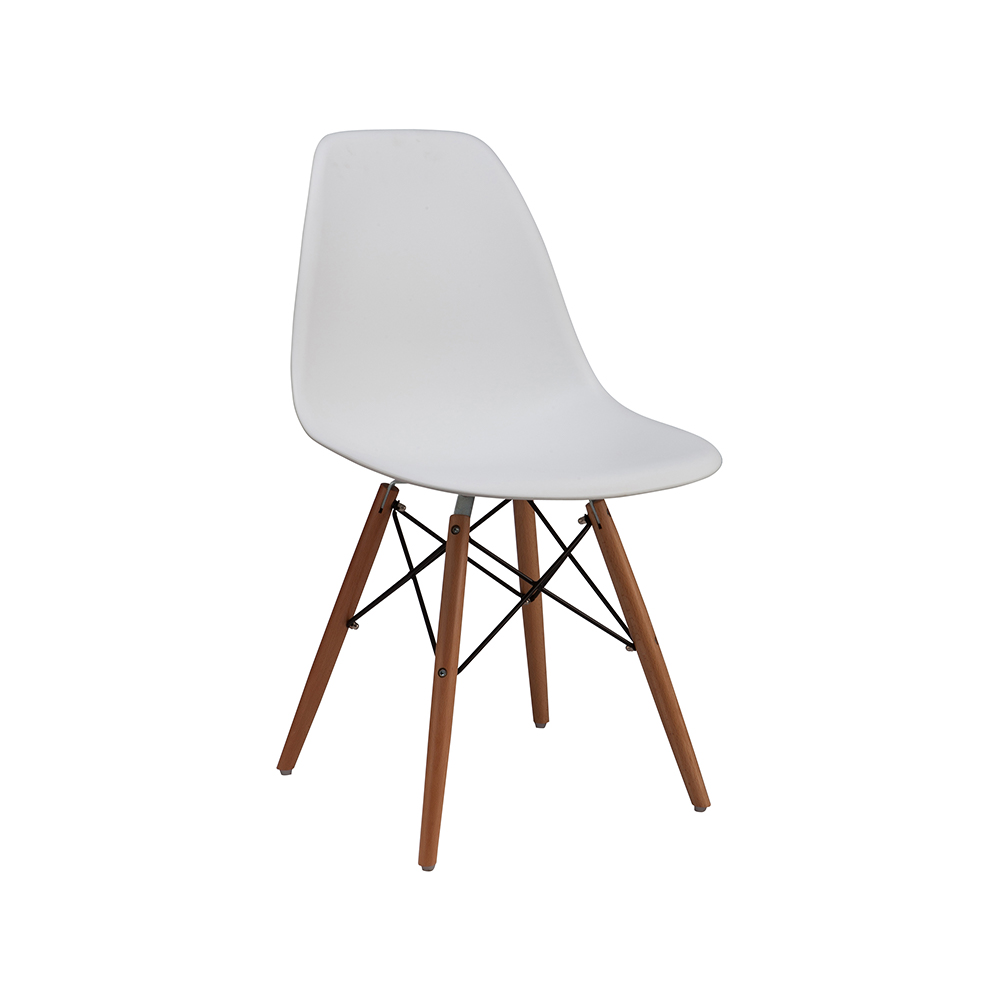 ZY-9010 Eames-Style Dining Chair with Beech Wood LegsA molded plastic Eames-style shell with black steel brackets and beech wood legs. It matches the trend discussion of the mid-century silhouette, letting buyers compare how different finishes work together when refreshing a space.View Product →
Quality Checks Wholesale Buyers Should Run Before Ordering
Container-scale orders deserve a stricter eye than a single showroom purchase. Put these five checks in front of any supplier before you confirm an order.
- Inspect the parting lines. A fine, even seam is normal; flash (excess plastic squeezed out along the seam) or rough edges point to a worn mold or rushed cycle times.
- Flip the chair and study the underside. Sink marks and uneven wall thickness concentrate stress, and they are the most common origin of cracked seats.
- Ask for the UV stabilizer package and color masterbatch specification for any chair destined for sun-exposed areas, plus colorfastness data.
- Request static load and fatigue test reports, and confirm who ran them. An in-house test room with a documented QC process is a meaningfully good sign.
- Verify the factory, not just the sample: certifications such as ISO 9001, ISO 14001, and BSCI, plus an on-site injection workshop, show the supplier controls the process end to end.
That last point deserves the emphasis. A factory that molds its own parts can adjust wall thickness, cycle time, and material batches within days, and it answers for defects directly instead of pointing at a subcontractor. Our own plant in Anji, Zhejiang works this way — a large injection workshop and mold area feed three assembly lines, monthly capacity reaches 30,000 chairs, and the ISO 9001, ISO 14001, and BSCI systems are backed by a dedicated QC team and test room. Plastic dining chairs sit among our patented product lines, and each year the R&D team adds two to three new office chairs and more than ten other new models to the catalog.
For the paperwork stage — samples, golden samples, inspection standards, and container loading — our plastic dining chair buying guide for wholesale buyers walks through the sequence in more detail.
ZY90002 one-piece all-plastic dining chair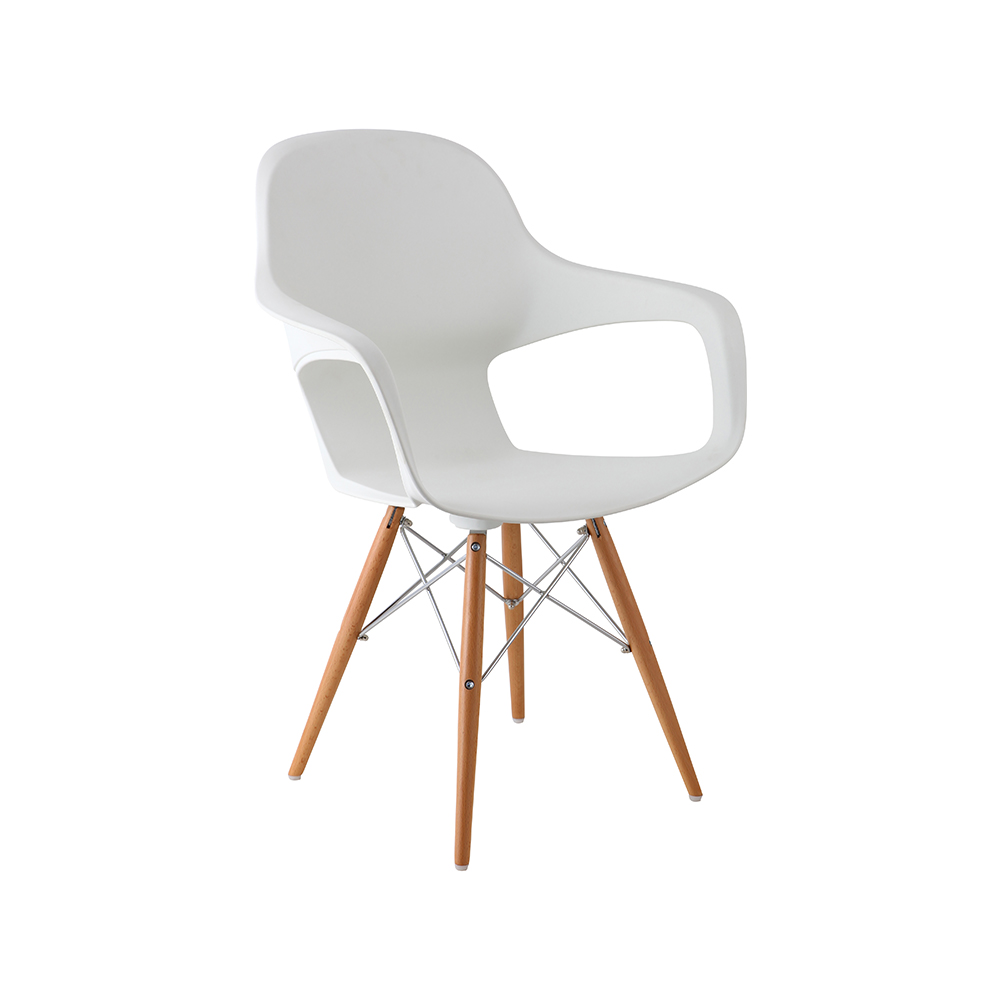 ZY-9000-2 All-Plastic Dining Chair with Mixed-Material LegsA stackable plastic dining chair combining a polypropylene seat with steel and wood legs. Placed near the maintenance and wholesale buying guidance, it suits buyers checking sample, inspection, and container-loading details before ordering.View Product →
Simple Care Habits That Extend Service Life
None of the following takes more than a few minutes a month, yet it is the difference between a chair that looks new in year three and one that looks tired in year one.
- Wipe with mild soap and water; skip abrasive pads and solvent cleaners, which dull or haze the surface.
- Keep polycarbonate shells away from rough stone or concrete tabletop edges that can scratch the gloss.
- Lift plastic chairs instead of dragging them across hard floors — the legs and the floor both last longer.
- On shell-and-leg designs, re-tighten the mounting bolts once or twice a year.
- Store stacked chairs out of direct sun between uses, even when the grade is UV-stabilized.
The practical summary: choose polypropylene for family and food-service use, reinforced PP where loads run heavy, and polycarbonate where the look justifies the premium. Then judge every candidate by its mold finish, wall consistency, and seat geometry before you look at the price. Run that sequence, and a plastic dining chair stops being the budget fallback — it becomes the straightforward, sensible choice its reputation promises.
QUICK LINKS
PRODUCTS
CONTACT & INFORMATION
-
 PHONE NUMBER
 -
 EMAIL
EMAILstellazhang@yimiga.com
-
 ADDRESS
No 366, Jingtu Road, Dipu Street, Anji County, Huzhou City, Zhejiang province, China. PC 313300.
CONNECT WITH US
Be the first to know about our news and updates.


Copyright © Zhejiang Zhongyi Furniture Co., Ltd.
All Rights Reserved.
 浙公网安备33052302000377号
浙ICP备14003933号-2
浙公网安备33052302000377号
浙ICP备14003933号-2
 Wholesale Ergonomic Chair Manufacturers