 English
 عربى
عربى Español
 中文简体
中文简体
+86-0572-5888031

0
ENG
Indoor Leisure Chair Guide: How to Judge Frames, Foam and Fabrics Before You Buy
 Home / Media / Industry News / Indoor Leisure Chair Guide: How to Judge Frames, Foam and Fabrics Before You Buy
 Indoor Leisure Chair Guide: How to Judge Frames, Foam and Fabrics Before You Buy
 2026.09.04
 Industry News
Content
- 1 What Separates a Leisure Chair From a Dining or Office Chair
- 2 Start With the Frame, Because Everything Else Attaches to It
- 3 Foam Density and Upholstery Decide How the Chair Ages
- 4 Common Constructions, Compared
- 5 Getting Size and Placement Right
- 6 What Wholesale and Project Buyers Should Verify Before Ordering
Six months after a leisure chair reaches a living room, complaints tend to follow the same pattern: the seat cushion flattens where people sit most, one joint starts to creak, and the fabric pills along the armrests. None of these faults appear in product photos, and all of them trace back to decisions made before the cover was ever sewn on. Three decades of chair manufacturing have taught us a direct lesson: judge an indoor leisure chair by its frame, its foam and its cover first, and by its styling second. A chair that clears those three checks will still look composed after years of daily use; one that fails them will disappoint no matter how well it photographs.
What Separates a Leisure Chair From a Dining or Office Chair
The difference between chair types is geometry, not upholstery. A dining chair is built for upright, short sessions, usually with a seat height around 450 mm and a back that holds the spine vertical over a table. An office chair is built for task work and movement. An indoor leisure chair is built for the opposite: lower seating at roughly 380-450 mm, a deeper seat of 500 mm or more, and a back reclined anywhere from a gentle 10 degrees to a full lounge angle, so the body settles instead of perching.
That geometry explains why a chair that photographs well can still fail in daily use. If the seat is too shallow, users slide forward and lose support; if it is too high, feet dangle and thighs carry pressure the cushion should absorb. Before comparing colors, confirm the chair matches its job: a reading-corner chair needs a mid-height back and a firmer seat for upright posture, while a media-room or hotel chair can go deeper and softer. Our guide to indoor leisure chair buying covers the style, comfort and durability decisions in more depth.
Start With the Frame, Because Everything Else Attaches to It
Frame quality decides whether a chair is still silent and stable in year five. Most indoor leisure chairs use one of three structures: a welded steel-tube frame, a bent plywood shell, or a molded plastic shell. Each can be excellent or poor, and the warning signs are specific.
On a metal frame, inspect the weld points first; they should be ground smooth and evenly coated, because bare welds are where rust starts. Powder coating outlasts ordinary spray paint on arms and legs, the two areas that take the most knocks. On plywood shells, look at the edge: several dense, visible layers indicate a load-bearing panel, while a light, flaky edge suggests a shell that will delaminate under stress. Molded plastic shells should be a single injection-molded piece with consistent wall thickness; hollow sounds and rough parting lines point to shortcut molding.
A quick physical test beats any specification sheet: press the backrest firmly sideways and listen. Any creak, flex or movement at a joint is disqualifying, because joints only loosen with use. On load ratings, everyday household chairs are commonly rated around 100-120 kg, while contract-grade models for hotels and lounges are usually tested to 135 kg or more. If a supplier cannot state a figure, treat the silence as the answer.
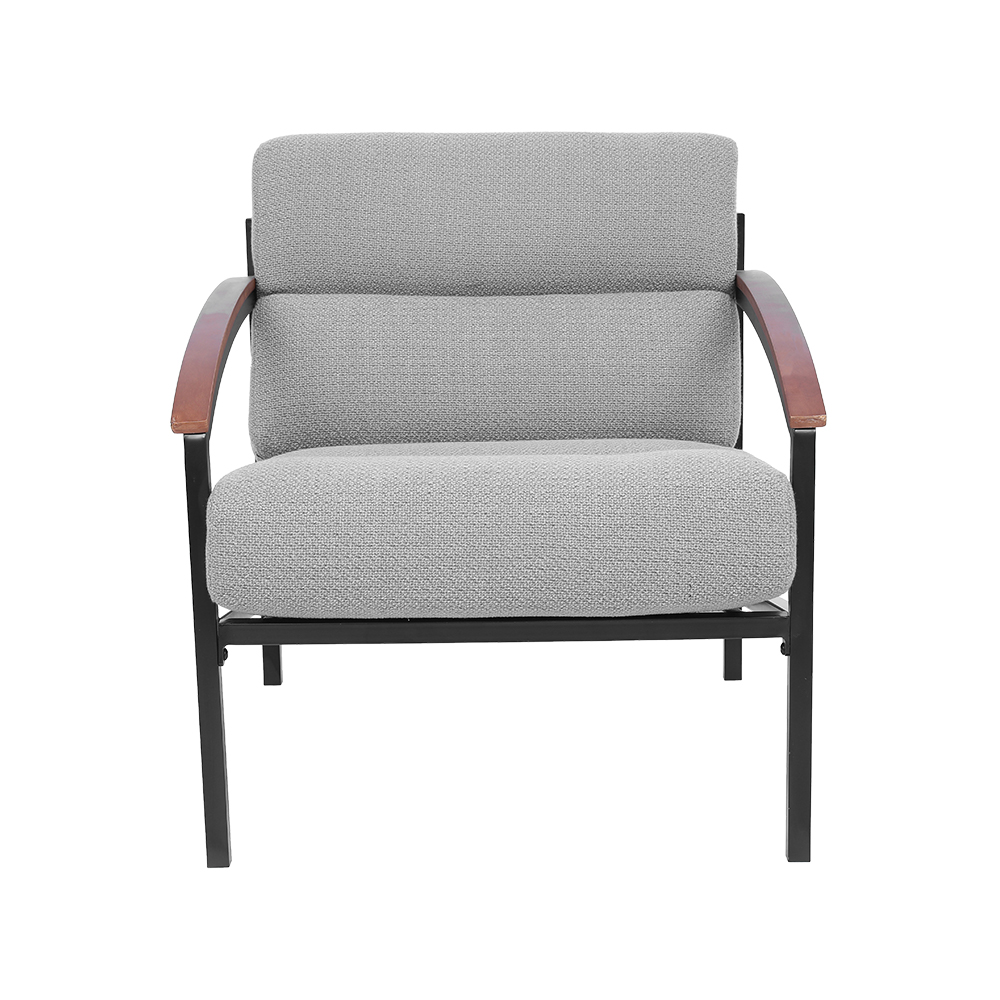
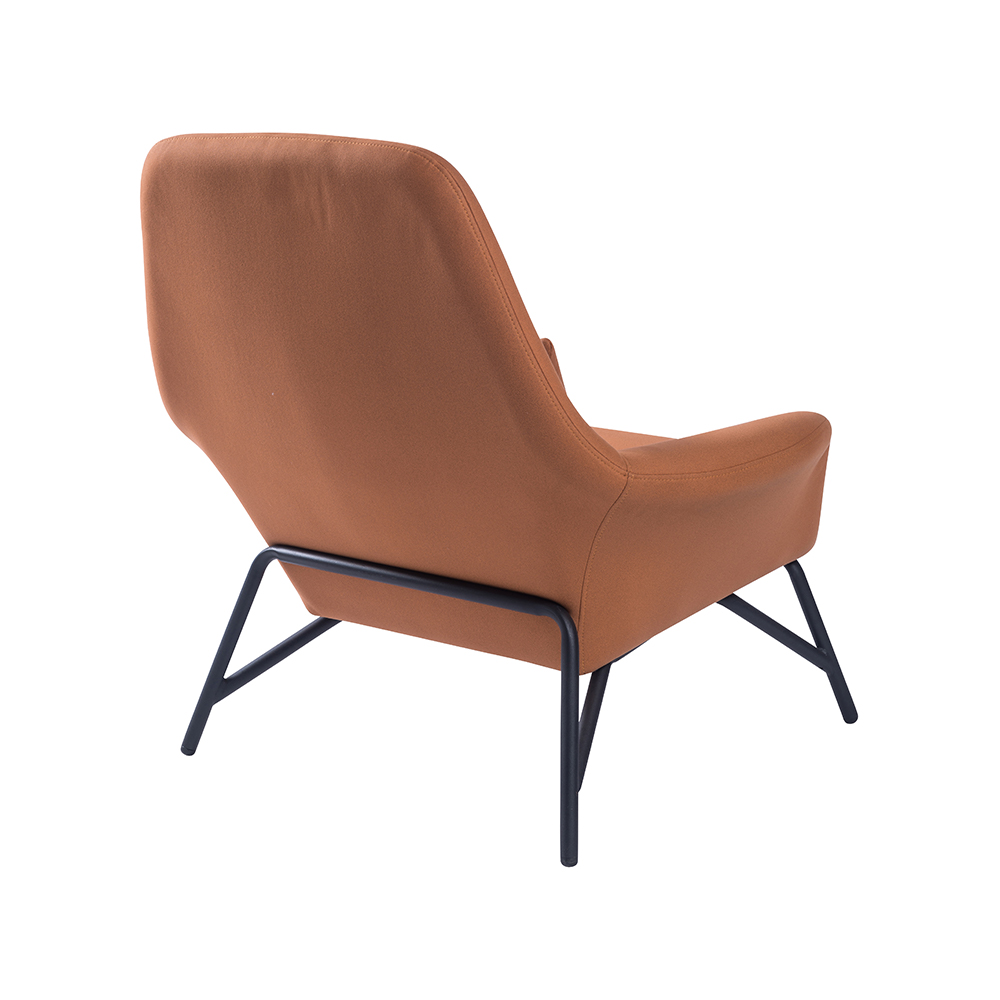 ZY-7081 Metal Frame and Plywood Leisure ChairWith steel chromed legs, a plywood and foam seat, and a 250-pound rated carton, this chair suits buyers weighing frame strength and load ratings alongside foam density for long-term durability.View Product →
Foam Density and Upholstery Decide How the Chair Ages
Foam density is the single best predictor of whether a seat cushion flattens. Seat foam in the range of 30-35 kilograms per cubic meter holds its shape under daily family use; foam below about 25 kilograms per cubic meter is cheaper to make and typically flattens within the first two years. Molded foam, poured into a shaped mold rather than cut from a block, keeps its profile far longer, and the small price difference is easy to justify.
The cover is the other half of the equation, and the right choice depends on the household more than on fashion. PU leather wipes clean in seconds, which is why it dominates in hotel rooms, waiting areas and homes with children; its trade-off is that thin coatings can crack at flex points after years of use, so material thickness and seam quality matter. Fabric, whether corduroy, linen blend or chenille, feels warmer and offers richer texture, but check that seams are double-stitched and that the weave is rated for abrasion, because armrests and front edges wear first. Removable, zipped covers are worth prioritizing wherever a chair will see heavy use.
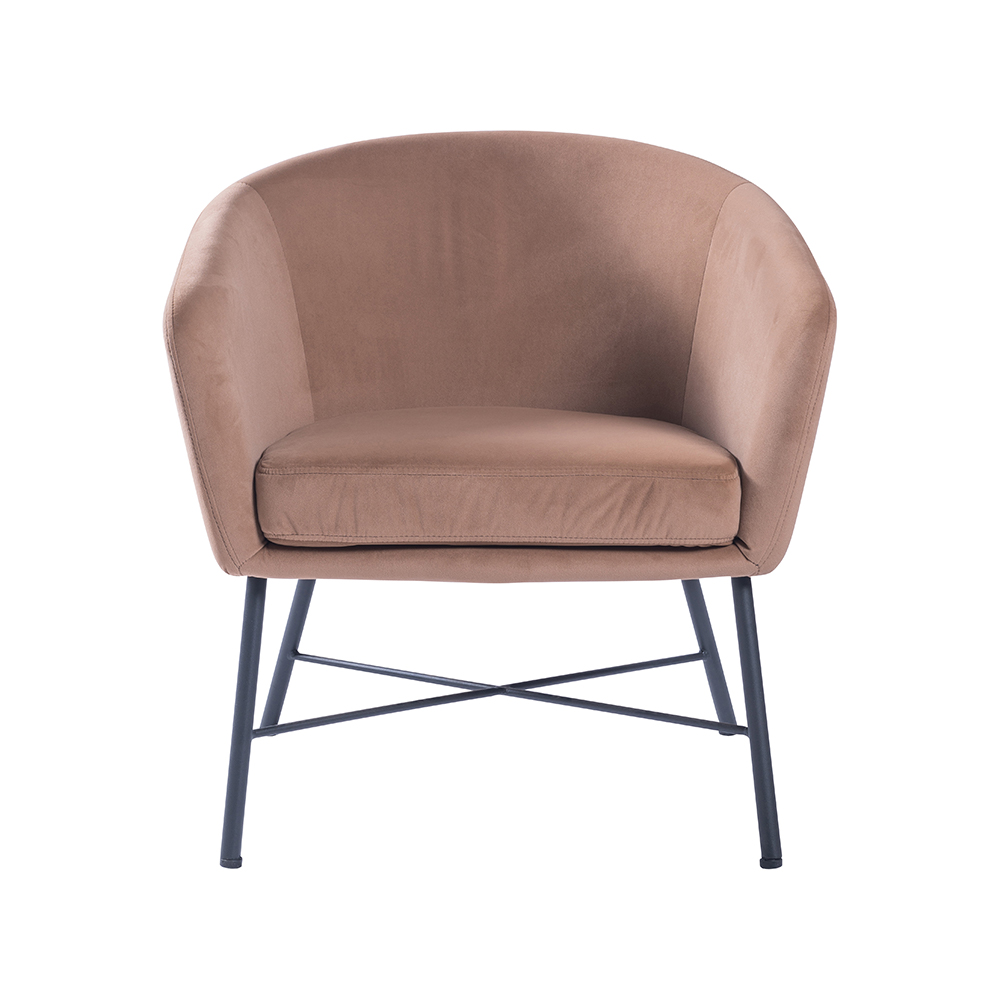
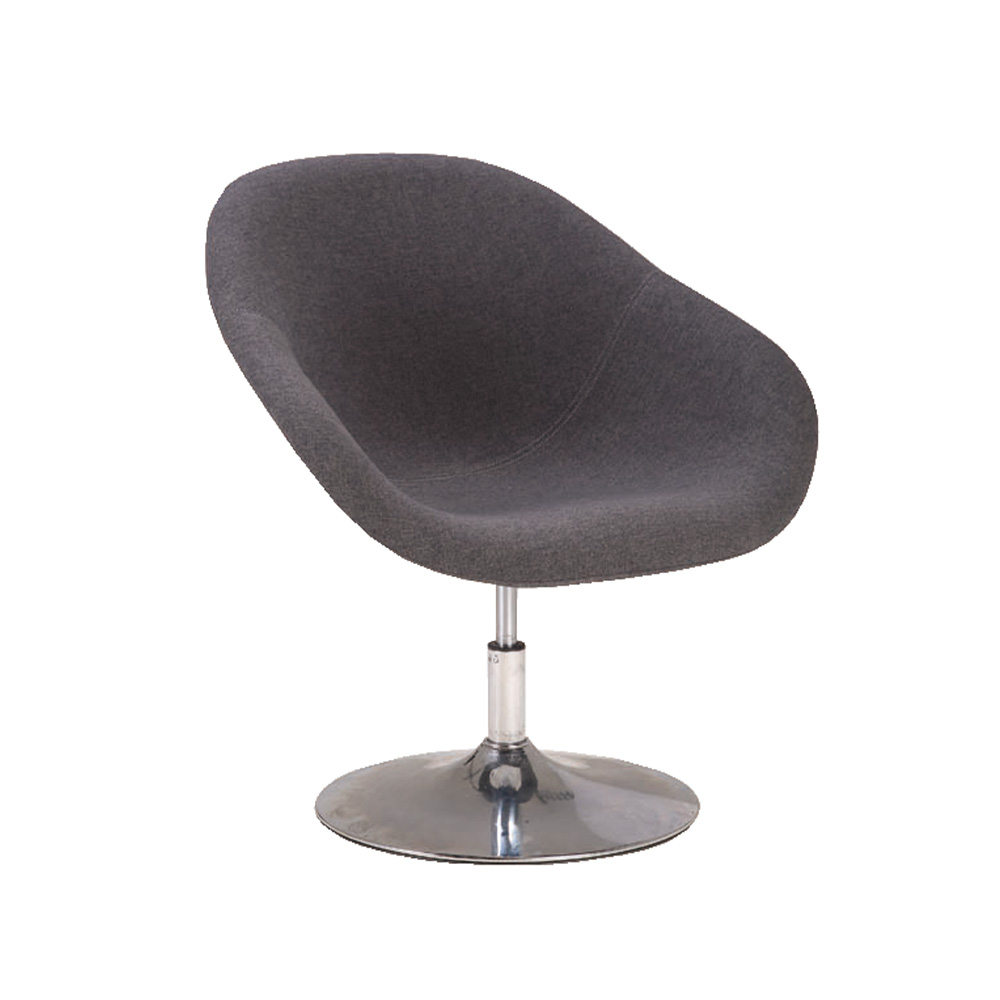 ZY-7068 Fully Fabric-Covered Leisure ChairFeaturing a thick foam plastic shell fully covered in fabric with PU leather trim, this chair illustrates the cover-choice trade-offs, backed by a Class III chromed gas spring and sturdy 550 bar base.View Product →
Common Constructions, Compared
The table below condenses the trade-offs we walk through with wholesale buyers when they shortlist models for a container order.
| Construction | Feel and Look | Maintenance | Best Suited For |
|---|---|---|---|
| Metal frame with PU leather | Sleek lines, firm support | Wipes clean; inspect coating on arms and legs | Living rooms, hotel rooms, waiting areas |
| Metal frame with fabric | Warm, textured, relaxed | Vacuum and spot clean; watch pilling at armrests | Reading corners, bedrooms, lounge suites |
| Bent plywood shell with cushion | Mid-century profile, light footprint | Wipe the shell; rotate the cushion to even out wear | Apartments, studio corners, casual nooks |
| All-plastic molded shell | Casual, colorful, easy to move | Very low; the surface washes down quickly | Sunrooms, children's rooms, informal spaces |
No construction is universally better. The mistake to avoid is paying a premium price for a chair whose foam and seams were specified for occasional use.
Getting Size and Placement Right
Two measurements decide whether a leisure chair actually gets used. The first is seat depth: seated with the back against the cushion, there should be roughly 40-60 mm of clearance between the knee crease and the seat edge. Deeper than that and shorter users lose back support; shallower and taller users perch. The second is armrest height, ideally around 200-250 mm above the compressed seat, so forearms rest without the shoulders shrugging.
Placement matters just as much. A mid-back fabric chair angled toward a window or a floor lamp turns a spare corner into a reading spot; the same chair pushed flat against a wall rarely gets touched. Allow about 300 mm behind the chair if the back tilts, and keep walkways 750 mm or wider. For hotel rooms and office breakout zones, check door widths and elevator depths before ordering assembled units, because a chair that cannot reach the room becomes a freight problem rather than a furniture choice.
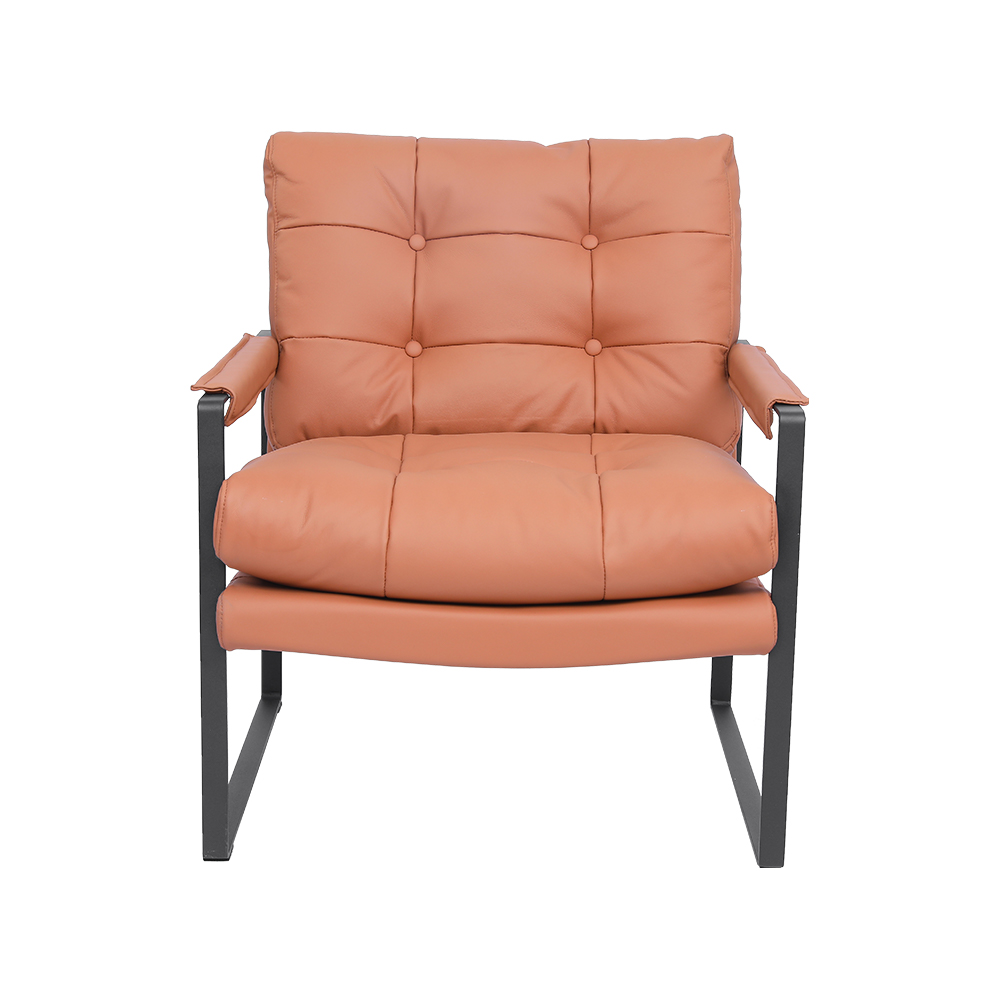
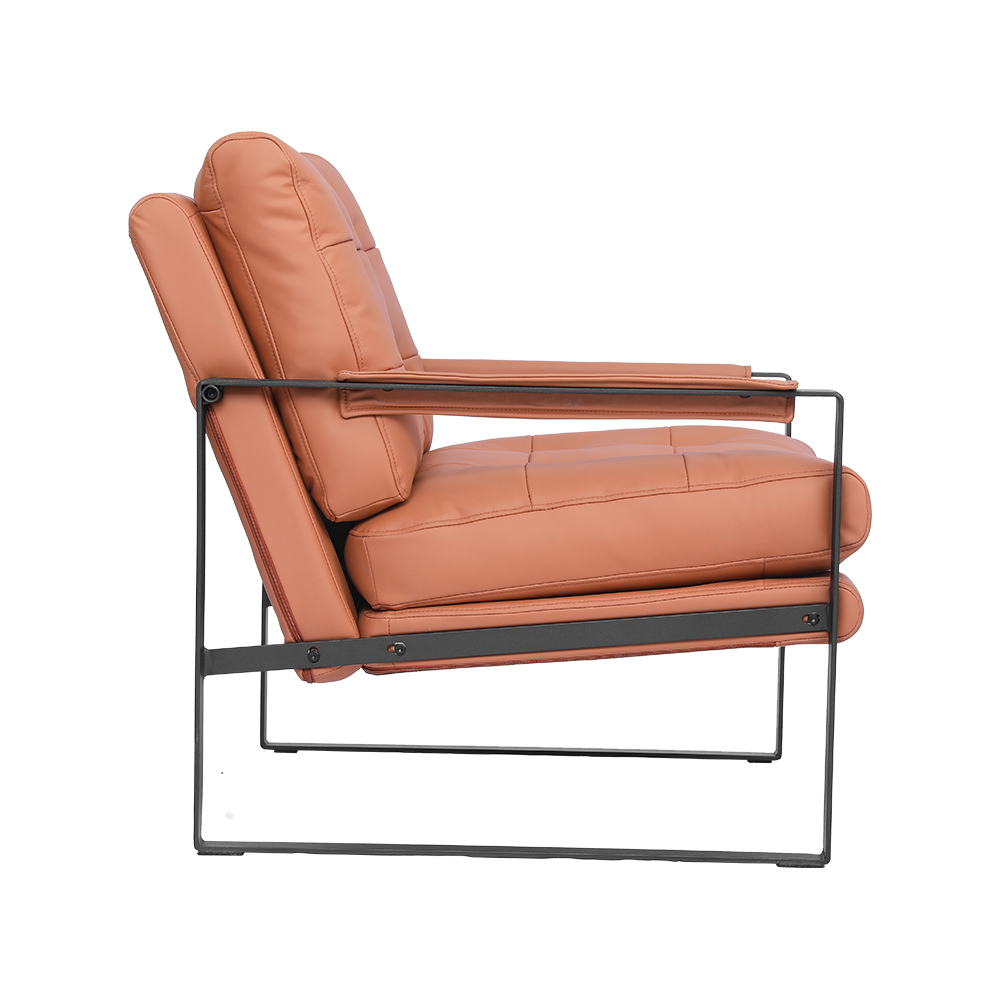 ZY-7145-1 PU Leather Leisure Chair in 250-Pound CartonA plywood and foam frame chair with PU leather upholstery and fabric-covered metal arms, shipped in a 250-pound cardboard carton—relevant where shipping practicality and consistency matter.View Product →
What Wholesale and Project Buyers Should Verify Before Ordering
For importers, retailers and project purchasers, the risk shifts from comfort to consistency: will the five-hundredth chair match the sample that won the order? The checks that matter most are process checks.
- Order a production sample, not just a showroom sample. Approve a unit pulled from the line, with the actual foam, fabric batch and packaging.
- Ask which processes are in-house. A factory that molds its own plastic parts, welds and coats its own frames and sews its own covers holds tolerances and adjusts details faster than one assembling bought-in parts.
- Request certificates and test records. ISO 9001 and ISO 14001 signal audited management systems, BSCI covers social compliance, and a factory with its own test room can back up load and durability claims.
- Match capacity to your schedule. A line producing on the order of 30,000 chairs a month absorbs repeat orders without pushing your delivery date.
- Specify the packaging. Knock-down designs cut container costs, but bolts, fixings and assembly instructions need checking as carefully as the chair itself.
Our own production follows this checklist: a 25,000-square-meter factory in Anji with injection molding, an automatic painting line, three assembly lines, a dedicated QC team and an in-house test room, supplying more than 100 customers worldwide. The scale exists for one reason, so that the approved sample and the delivered shipment are the same chair.
To recap the order of decisions: confirm the frame is rigid and well coated, confirm the seat foam is dense enough for daily use, choose a cover that fits the household's maintenance habits, check seat depth and height against the people who will sit, and only then choose the style. Followed in that sequence, an indoor leisure chair becomes one of the most dependable pieces in a room instead of the first to look tired. If you would like to see these principles applied to current designs, take a look at our latest arrivals.
QUICK LINKS
PRODUCTS
CONTACT & INFORMATION
-
 PHONE NUMBER
 -
 EMAIL
EMAILstellazhang@yimiga.com
-
 ADDRESS
No 366, Jingtu Road, Dipu Street, Anji County, Huzhou City, Zhejiang province, China. PC 313300.
CONNECT WITH US
Be the first to know about our news and updates.


Copyright © Zhejiang Zhongyi Furniture Co., Ltd.
All Rights Reserved.
 浙公网安备33052302000377号
浙ICP备14003933号-2
浙公网安备33052302000377号
浙ICP备14003933号-2
 Wholesale Ergonomic Chair Manufacturers