 English
 عربى
 Español
 中文简体
+86-0572-5888031

0
ENG
Best Chairs for Long Hours of Sitting: A Spec-First Buyer Guide for 8-Hour Comfort
 Home / Media / Industry News / Best Chairs for Long Hours of Sitting: A Spec-First Buyer Guide for 8-Hour Comfort
Best Chairs for Long Hours of Sitting: A Spec-First Buyer Guide for 8-Hour Comfort
 2026.11.06
 Industry News
Content
- 1 What Makes the Best Chairs for Long Hours of Sitting
- 2 Adjustability That Matters After Hour Four
- 3 Materials and Components That Hold Up in Year Two
- 4 Fit by Body Type and Task, Not by Category
- 5 How to Test a Chair Before You Commit to Eight Hours
- 6 Procurement Checklist for Offices and Bulk Buyers
- 7 FAQ: Long-Hour Seating Decisions
By hour six, most office chairs have already told you what they are. The seat foam has compressed, the front edge is pressing into your thighs, and the lumbar curve no longer matches your back. That is the point where a chair either supports another two hours of focused work or turns every small movement into a negotiation.
The best chairs for long hours of sitting are not the softest at first touch. They are the ones that keep the pelvis level, leave room for the thighs, and let the lumbar support follow the spine after posture shifts. A chair that feels plush for 20 minutes can bottom out before lunch.
Definition: A long-hour chair is a seating system with stable pressure distribution, adjustable support at the seat, back and arms, and durable parts that hold their settings through repeated daily use.
This guide uses measurable fit checks rather than showroom impressions. It covers the seat, the back, the components and the test routine that separates a chair built for eight hours from one that only looks the part.
What Makes the Best Chairs for Long Hours of Sitting
The best chairs for long hours of sitting combine pressure relief with changeability: the seat, back and arms can be reset as posture shifts.
Seat foam is the first failure point. Low-density foam may feel soft for 20 minutes, then compress under the sit bones and create a hard spot by hour three. A denser foam or a suspension seat spreads load across a wider area, and a waterfall front edge keeps the underside of the thighs from taking pressure.
- Seat depth leaves 5 to 8 cm between the back of the knee and the seat edge.
- Seat height lets the feet rest flat without raising the knees above the hips.
- Lumbar support adjusts in height, not just in curve depth.
- Backrest recline changes the hip angle without forcing the shoulders forward.
The four-hour check: if you can feel the seat frame through the cushion, or your feet go numb, the chair is not built for full-day sitting.
Adjustability That Matters After Hour Four
Adjustability matters only when each control changes a specific pressure point; a chair with ten knobs but no seat-depth slide is less useful than one with four well-chosen adjustments.
Prioritize controls that change the relationship between the body and the desk. Seat height sets the base. Seat depth decides whether the backrest can support the spine. Lumbar height changes where the support lands, and armrest height changes how much load the shoulders carry.
| Control | Useful range | Fit check |
| Seat height | 40 to 52 cm | Feet flat, thighs level, no front-edge pressure |
| Seat depth | 5 to 8 cm knee clearance | Back against the backrest without compressing the calves |
| Lumbar height | 60 to 75 mm of movement | Support sits in the lower-back curve, not the ribs |
| Armrest height | Elbows near desk height | Shoulders stay relaxed while typing |
| Tilt tension | Enough to hold a reclined position | You can lean back without bracing with your feet |
| Back height | Shoulder support without head pressure | The top edge does not push the head forward |
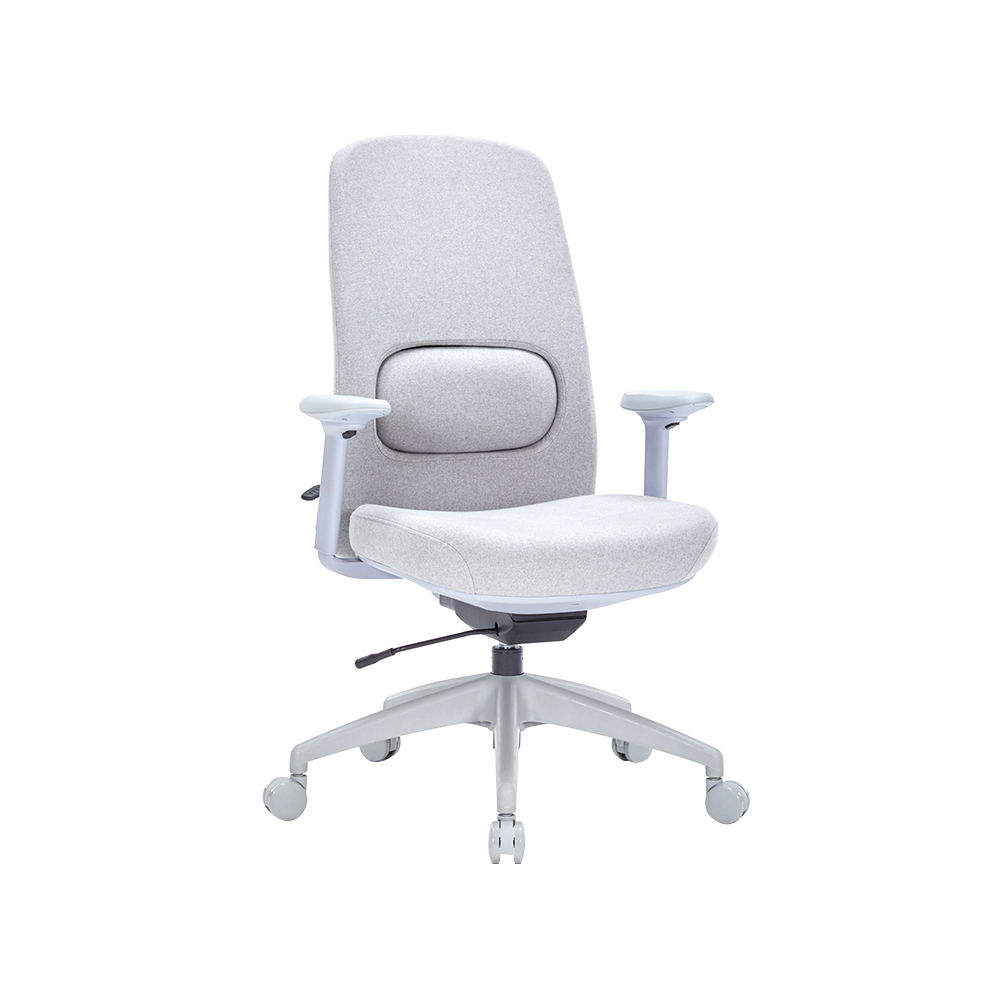 ZY-6815 Adjustable Swivel Mesh Office ChairDesigned for personalized comfort, it combines seat-height adjustment, 2D lumbar and armrest support, and a four-step tilt lock for focused work and reclining breaks.View Product →
A back-height range of 60 to 75 mm is often more valuable than a deeper headrest. If the lumbar support slides down after a few hours, the mechanism, not the cushion, is the problem.
For a deeper feature checklist, review these must-have adjustment features before comparing quotes.
Materials and Components That Hold Up in Year Two
Mesh, foam and fabric are not status labels; the right choice depends on humidity, cleaning routines, body weight and how many hours the chair is occupied each day.
A mesh back improves airflow and can reduce heat build-up in shared offices. An upholstered back can distribute pressure more evenly for users who prefer a softer surface, but low-grade foam and thin fabric will show wear sooner. The frame, mechanism and gas spring matter as much as the cover.
Mesh back
- Better airflow during long shifts
- Easy to wipe clean in shared use
- Needs a frame that keeps tension over time
Upholstered back
- Softer contact surface
- More color and fabric options
- Foam density decides long-term support
Check the gas spring class, the base material and the casters as a system. A Class IV spring is not automatically better than a good Class III spring if the mechanism and base are mismatched. Nylon bases flex more; metal bases add weight and stability. Casters should match the floor, especially on tile, carpet and hard laminate.
Durability test: lean back to maximum recline and listen for creaks at the mechanism, rock side to side, then press the seat foam for 30 seconds. If the foam stays compressed, it will not recover between meetings.
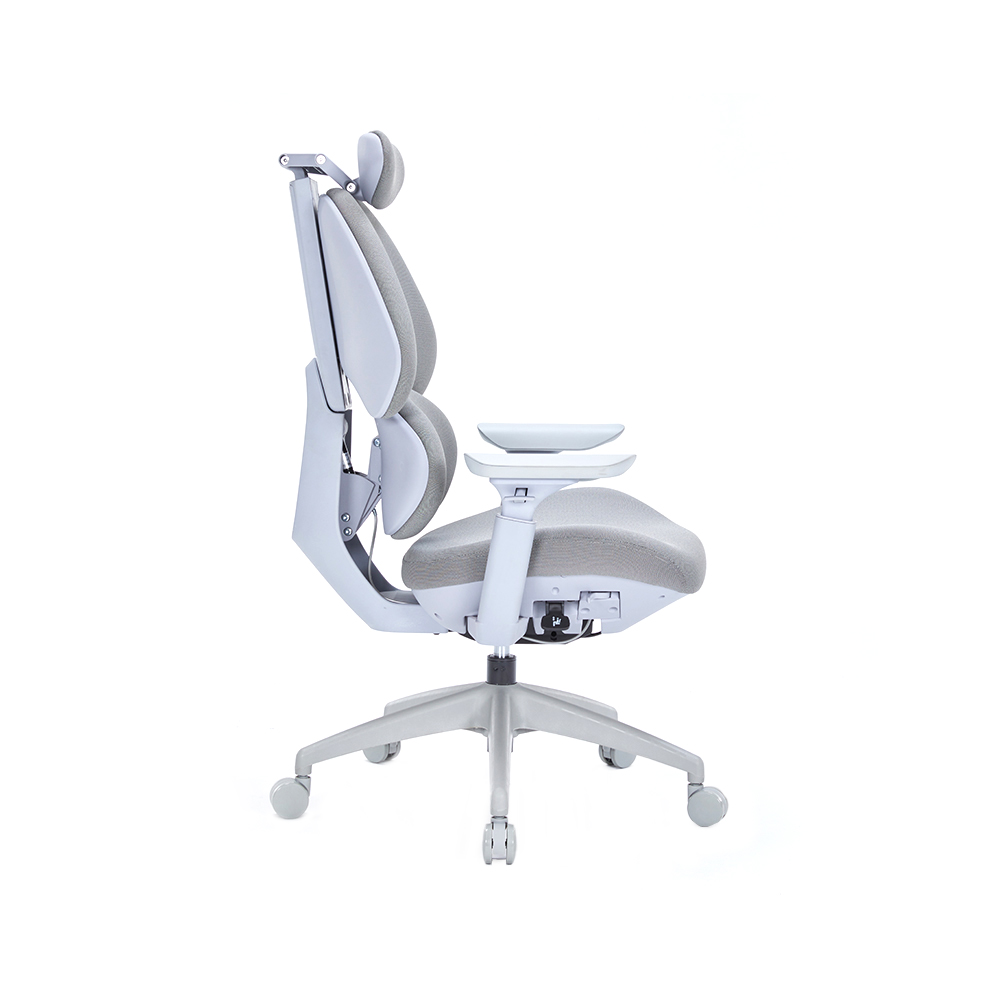 ZY-6812G Mesh Office Chair with 3D HeadrestOffers adjustable neck and lumbar support with 3D armrests, Class IV gas spring, and grey nylon base for long desk sessions and custom comfort.View Product →
Fit by Body Type and Task, Not by Category
A chair that fits a 170 cm user at a dining table may fail a 185 cm user at a standing desk; fit is a set of measurements, not a product category.
Start with seat height and seat width. A seat that is too narrow creates pressure at the hips, while a seat that is too wide can reduce support at the sides. For users above average height, check the backrest height and the headrest position. For users with shorter legs, check whether the lowest seat height keeps the feet flat.
40 to 52 cm
seat height range
5 to 8 cm
knee clearance
60 to 75 mm
lumbar travel
Weight capacity and seat width deserve more attention than color. A 520 mm seat width, as used on the ZY6813, gives larger users more room at the hips, but the seat depth and back height still need to match the torso. A deep seat on a short user pushes the back away from the lumbar support.
If your feet do not rest flat with the seat at its lowest setting, the chair is too tall for you, regardless of how much lumbar padding it has.
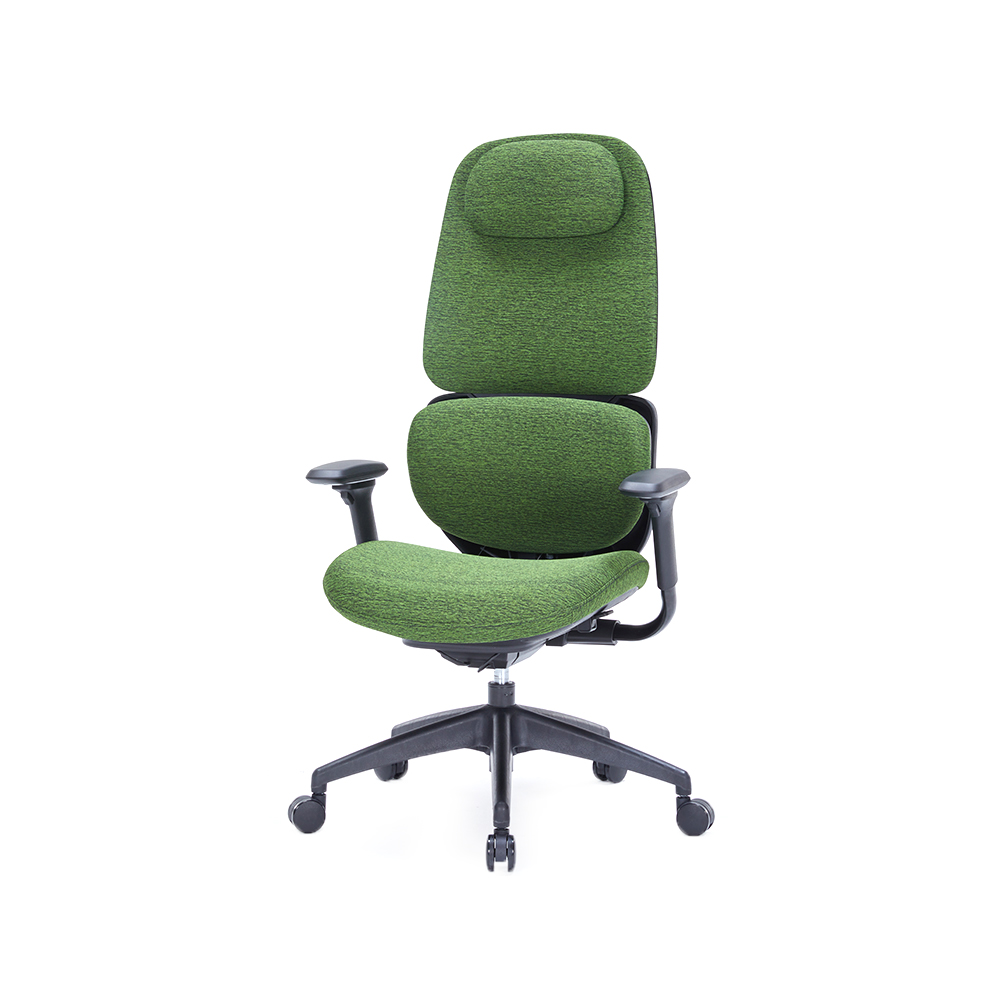 ZY-6813 Black Mesh Office Chair with 520 mm SeatA wide-seat mesh chair with 3D arms, 2D headrest and lumbar support, built for long work or study sessions in varied settings.View Product →
How to Test a Chair Before You Commit to Eight Hours
Test a chair for at least 20 minutes in your own setup, not 40 seconds in a showroom; the best signal is whether you can reset your posture without thinking about it.
Bring your desk height, shoe height and a laptop to the test. Set the chair in this order, then sit through a real task rather than bouncing on the cushion.
Set seat height
Place both feet flat and stop when the thighs are level. If the desk is then too low, adjust the desk, not the chair.
Set seat depth
Slide the seat until there is 5 to 8 cm behind the knee. The back should meet the backrest without a gap.
Place lumbar support
Move it into the lower-back curve. It should feel firm, not like a fist pressing into the spine.
Set armrests
Rest the elbows at desk height. The shoulders should drop, and the wrists should stay neutral.
Test recline and return
Lean back, then return upright without using the arms. The tilt tension should hold you in both positions.
Measure the chair, not the showroom. A 20-minute trial with your own desk and screen height reveals more than a 2-minute demo with a sales script.
If possible, repeat the test after 30 minutes. Heat, clothing and footwear change the fit, and a chair that feels right at minute five may feel narrow at minute forty.
Procurement Checklist for Offices and Bulk Buyers
For bulk orders, the best chair is the one that survives daily shared use, fits the majority of users and can be serviced without replacing the whole unit.
Ask for measured specifications, not adjectives. A tender that lists seat height range, tested load, foam density, gas spring class and spare-part lead time will produce comparable offers.
- Seat height range that covers the shortest and tallest users in the room.
- Replaceable casters, arm pads and gas springs.
- Fabric or mesh that can be cleaned with standard commercial products.
- Consistent tilt tension and lumbar settings after repeated adjustment.
- Packaging and assembly instructions that survive international shipping.
Factory quality systems matter as much as the catalogue photo. Look for documented checks on the mechanism, base, foam and finish, and ask how warranty claims are handled. Our manufacturing and QC process is one example of the checks a bulk buyer should review before placing a long-hour chair order.
FAQ: Long-Hour Seating Decisions
The best long-hour chair for most people is the one that fits their seat height, seat depth and lumbar height, then holds those settings without loosening.
A chair that feels firm for the first week often outperforms a soft chair after six months, because the foam and mechanism are still doing their job after the novelty has gone.
How many hours can a chair be comfortable?
A well-fitted chair can support an eight-hour day, but comfort depends on movement. Stand, change recline and reset the lumbar support every 45 to 60 minutes.
Is mesh better than foam for long sitting?
Mesh improves airflow, while foam can distribute pressure more evenly. The better choice depends on climate, cleaning needs and foam quality; poor foam is worse than a well-tensioned mesh.
What is the most important adjustment?
Seat height comes first because it sets the hip and knee angle. Seat depth is second because it decides whether the backrest can support the spine.
When should a long-hour chair be replaced?
Replace it when the gas spring loses height, the tilt mechanism will not hold, the seat foam stays compressed, or the base develops cracks. Replacing casters and arm pads can extend service life.
QUICK LINKS
PRODUCTS
CONTACT & INFORMATION
-
 PHONE NUMBER
-
 EMAIL
stellazhang@yimiga.com
-
 ADDRESS
No 366, Jingtu Road, Dipu Street, Anji County, Huzhou City, Zhejiang province, China. PC 313300.
CONNECT WITH US
Be the first to know about our news and updates.


Copyright © Zhejiang Zhongyi Furniture Co., Ltd.
All Rights Reserved.
 浙公网安备33052302000377号
浙ICP备14003933号-2
 Wholesale Ergonomic Chair Manufacturers