 English
 عربى
 Español
 中文简体
+86-0572-5888031

0
ENG
Best Chair for Posture: Applications, Selection Criteria, and Practical Guidance
 Home / Media / Industry News / Best Chair for Posture: Applications, Selection Criteria, and Practical Guidance
Best Chair for Posture: Applications, Selection Criteria, and Practical Guidance
 2026.10.23
 Industry News
Content
- 1 What a Posture Chair Actually Has to Do
- 2 The Five Adjustments That Do the Work
- 3 Mesh or Foam Back: Which One Holds Posture Better
- 4 Match the Chair to the Body, Not to the Desk
- 5 How to Sit in the Chair Once It Arrives
- 6 What Buyers Should Check Before Ordering in Volume
- 7 The Bottom Line
- 8 Frequently Asked Questions
Most people choose a posture chair by sitting in it for four minutes in a showroom. That test tells you almost nothing. What decides whether a chair supports your spine for eight hours is whether the seat depth matches your thigh length, whether the lumbar pad lands on the small of your back instead of your belt line, and whether the backrest holds you near 100 degrees without collapsing under your weight. Get those three wrong and extra padding will not rescue the chair.
What a Posture Chair Actually Has to Do
A posture chair holds the pelvis upright and keeps the lumbar curve neutral, so the muscles along the spine stay relaxed instead of bracing all day. Everything else, from headrests to stitching, is secondary to that job.
Posture support is the share of upper-body weight a chair carries through the pelvis and lower back, plus the accuracy with which it holds the spine near its natural S curve during work. The best chair for posture is not the softest one in the room; it is the one that lets you stay upright with the least muscular effort.
40-52 cmSeat height range that covers most adult users
95-105Backrest angle in degrees for neutral task work
2-5 cmClearance to keep behind the knee at correct depth
The usual failure is not a lack of cushioning. It is a chair sized for the desk rather than the person. When the seat sits above 52 cm for a 160 cm user, the feet leave the floor, the thighs tilt down and the pelvis rolls back within twenty minutes of sitting.
The Five Adjustments That Do the Work
Five settings carry almost all of the postural load: seat height, seat depth, lumbar height, backrest angle and armrest height. Every other feature on the specification sheet is a refinement of those five.
| Setting | Target | Failure mode when it is off |
| Seat height | Feet flat, knees near 90 degrees, 40-52 cm from the floor | Feet dangle, thighs take pressure, circulation drops |
| Seat depth | 2-5 cm gap between the seat edge and the back of the knee | Edge pressure behind the knee, or slumping to reach the backrest |
| Lumbar height | Pad apex 15-25 cm above the seat surface | Support presses into the pelvis and the lower back rounds |
| Backrest angle | 95-105 degrees for keyboard work | Too upright loads the discs, too reclined pulls the head forward |
| Armrest height | Elbows near 90 degrees with the shoulders relaxed | Shoulders shrug upward and the neck drifts forward |
Adjustment travel matters more than foam depth. A chair with 8 cm of lumbar travel fits more bodies than a chair with 3 cm of travel and twice the padding.
Mesh or Foam Back: Which One Holds Posture Better
For anyone sitting six hours or more, a mesh back usually holds posture better, because the frame supplies a firmer and more repeatable curve than foam, which compresses as the day goes on.
Mesh back
- Consistent support curve from morning to evening
- Even pressure across a wide frame, less heat build-up
- Frame shape, not padding, decides where pressure lands
Foam back
- Softer first impression, slower to feel firm
- Loses around 10 to 15 percent of its thickness under daily load
- Better for short sessions and for users who feel cold in mesh
Mesh tension is only half of the story; the curve of the frame behind it determines where the pressure lands. The relationship between tension and upright sitting is covered in more detail in this note on how a mesh chair helps improve posture, which is worth reading before you compare models.
 ZY-6813 Black Mesh Office Chair with Adjustable SupportBlack mesh chair with 3D arms, 2D headrest, 2D lumbar support and a listed seat-depth range; worth checking for shared-seat fit and posture.View Product →
A chair that only fits when you sit perfectly still is not an ergonomic chair. Posture support has to survive fidgeting, phone calls and the tenth hour of the day.
Match the Chair to the Body, Not to the Desk
Back height and seat depth must follow body length, so two people sharing one chair model can need different settings. A 165 cm user and a 190 cm user rarely fit the same back height, even when the seat height is adjusted correctly.
- The top of the backrest should reach the shoulder blades, not the middle of the ribs.
- A seat width of about 45 cm or more supports the hips and thighs without pushing the arms inward.
- Back height adjustment of at least 5 cm covers most of the adult range within one model.
- Weight rating should exceed the heaviest user by 20 percent, because gas springs lose lift as they age.
Seat depth is the measurement most often skipped and most often wrong. Measure from the back of the pelvis to the crease behind the knee, then subtract 2 to 5 cm. That number, not the seat width, decides whether a chair still feels comfortable at the end of a shift.
 ZY-6815 Swivel Mesh Office Chair with Lumbar and Back AdjustmentA swivel mesh chair with up-down backrest, moving lumbar support, 2D arms and four-step tilt lock, worth reviewing for personalized lower-back comfort.View Product →
How to Sit in the Chair Once It Arrives
A correctly built chair still underperforms if the setup order is wrong. Set the seat height first, then depth, then lumbar height, then armrests, then recline tension, because each setting changes the one before it.
- Set the seat height so the feet rest flat and the knees sit near 90 degrees.
- Slide the seat pan until there is a 2-5 cm gap behind the knee, then lock it in place.
- Raise or lower the lumbar pad until its apex sits in the small of the back, roughly level with the navel.
- Set the armrests so the elbows rest at 90 degrees with the shoulders down, then bring them inward until the forearms are supported without reaching.
- Loosen the recline tension until the backrest follows you when you lean forward, and tighten it if you have to push against it.
Two minutes of adjustment after delivery prevents most of the complaints that arrive three weeks later. When shipping a full floor of chairs, include a printed setting card with every unit.
What Buyers Should Check Before Ordering in Volume
Specification sheets rarely show the parts that decide whether a chair still supports posture after two years, so volume buyers should ask for three items: gas spring class, foam density and mechanism test data.
- Gas spring class III or IV, with the class marked on the cylinder rather than only on the quotation.
- Seat foam density of 35 kg/m3 or higher, which keeps shape under daily use.
- Mesh tension tested on the finished frame, since the same mesh behaves differently on a different frame curve.
- A reference sample kept on file, so later shipments can be compared against it.
In our factory in Anji we assemble roughly 30,000 chairs a month across three lines, with gas springs and mechanisms checked in an in-house test room before packing. That step is what separates a chair that supports posture on day one from one that still does it after two years.
 ZY-6806 Mesh Office Chair with Class III Gas SpringA mesh-back chair with adjustable lumbar support, flip arms and a Class III gas spring, relevant when checking specification details for volume purchasing.View Product →
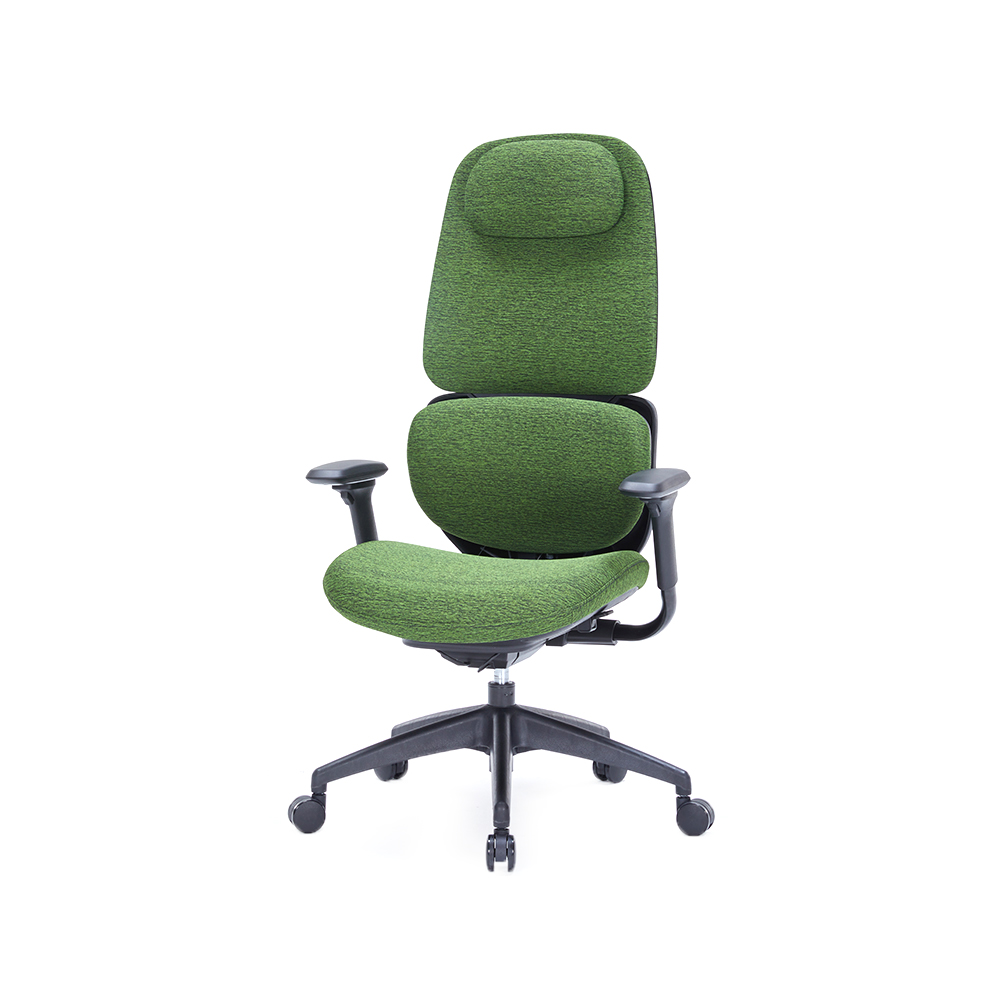
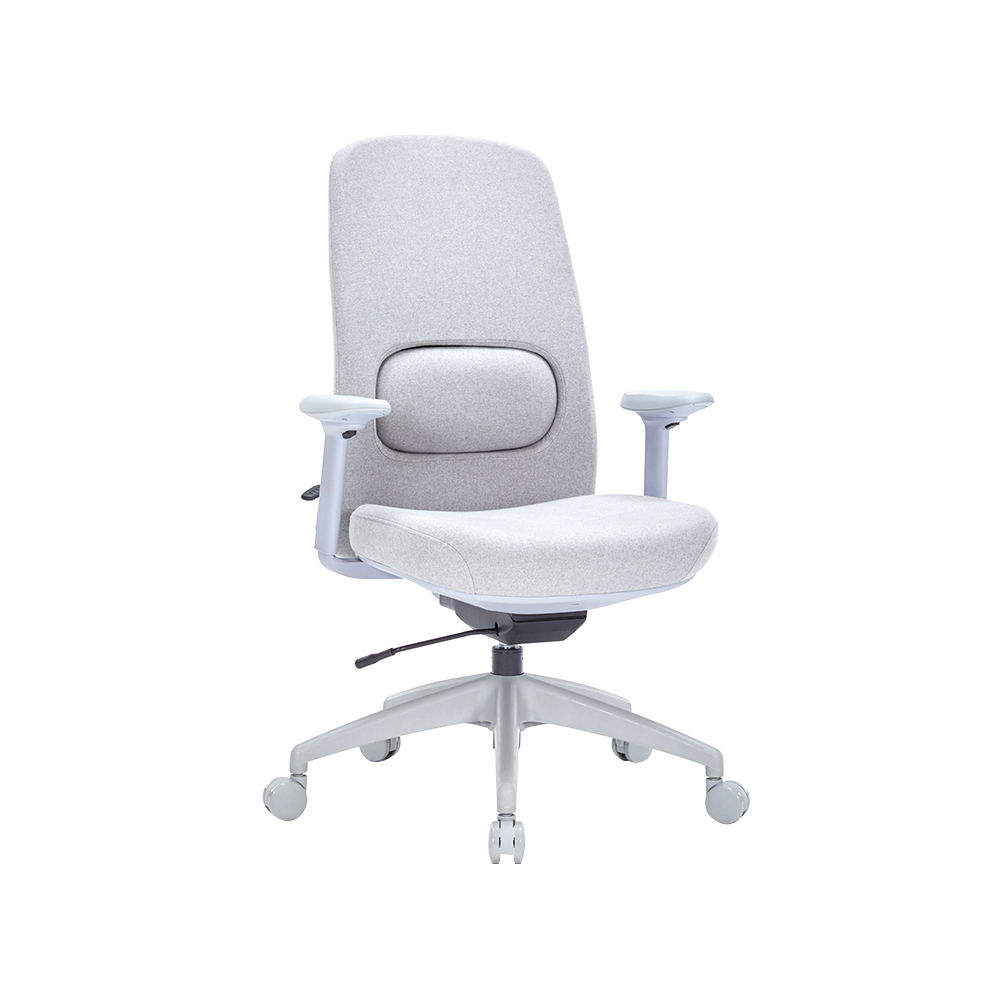
For a concrete specification example, look at an ergonomic office chair built around a lumbar and headrest frame, and compare its adjustment ranges against the targets in the table above.
The Bottom Line
The best chair for posture is the one whose seat depth, lumbar height and backrest angle can be set to your body and then locked in place. Buy adjustment travel, firm back support and a gas spring you can identify by class. Buy padding last.
Frequently Asked Questions
Does an expensive chair automatically fix posture?
No. Price buys materials and adjustment travel, not fit. A mid-range chair set correctly supports posture better than a premium chair left at factory settings.
Is lumbar support the most important feature?
It is one of three. Lumbar height, seat depth and backrest angle work together, and a strong lumbar pad on a seat that is too deep still leaves you slouched.
How long should someone sit before judging a chair?
At least thirty minutes, including one recline and one reach for the keyboard, because most posture problems appear after the first twenty minutes rather than the first two.
Can a mesh back be too firm for posture support?
Yes. Very high mesh tension on a narrow frame concentrates pressure along the spine. Medium tension across a wide frame spreads it more evenly over the back.
QUICK LINKS
PRODUCTS
CONTACT & INFORMATION
-
 PHONE NUMBER
-
 EMAIL
stellazhang@yimiga.com
-
 ADDRESS
No 366, Jingtu Road, Dipu Street, Anji County, Huzhou City, Zhejiang province, China. PC 313300.
CONNECT WITH US
Be the first to know about our news and updates.


Copyright © Zhejiang Zhongyi Furniture Co., Ltd.
All Rights Reserved.
 浙公网安备33052302000377号
浙ICP备14003933号-2
 Wholesale Ergonomic Chair Manufacturers